The day began like any other. We gingerly made our way out of our sleep sacks, exposing our bodies bit by bit to the frigid albergue air much like a toe to cold water. After layering on clothes that felt as if they had just been plucked from the freezer, we warmed up with a hot breakfast, loaded up our belongings, secured our rain gear (for it was sure to be another rainy Galician day), and headed out the door. While the day’s destination seemed to resemble all the others we had visited, with it’s impractically long and syllable-packed name whose very utterance seemed to suggest antiquity (we had already passed the likes of Castilblanco de los Arroyos, Villafranca de los Barros, Embalse de Alcántara, Calzada de Valdunciel, and Fuenterroble de la Salvatierra), it was different. Unlike the aforementioned, amnesia-inducing towns that had left us pulling out our guide books every 30 minutes to check their names over and over, this one was impossible to forget as it had been on our minds for almost fifty days: Santiago de Compostela. Despite knowing that our Camino would end that day, it didn’t feel real until, in the very ordinary moment of gazing around our surroundings to try and find a yellow arrow to make sure we were on the right path, we had the very unordinary experience of seeing the cathedral steeples rising like a triumphant finish line in the distance.
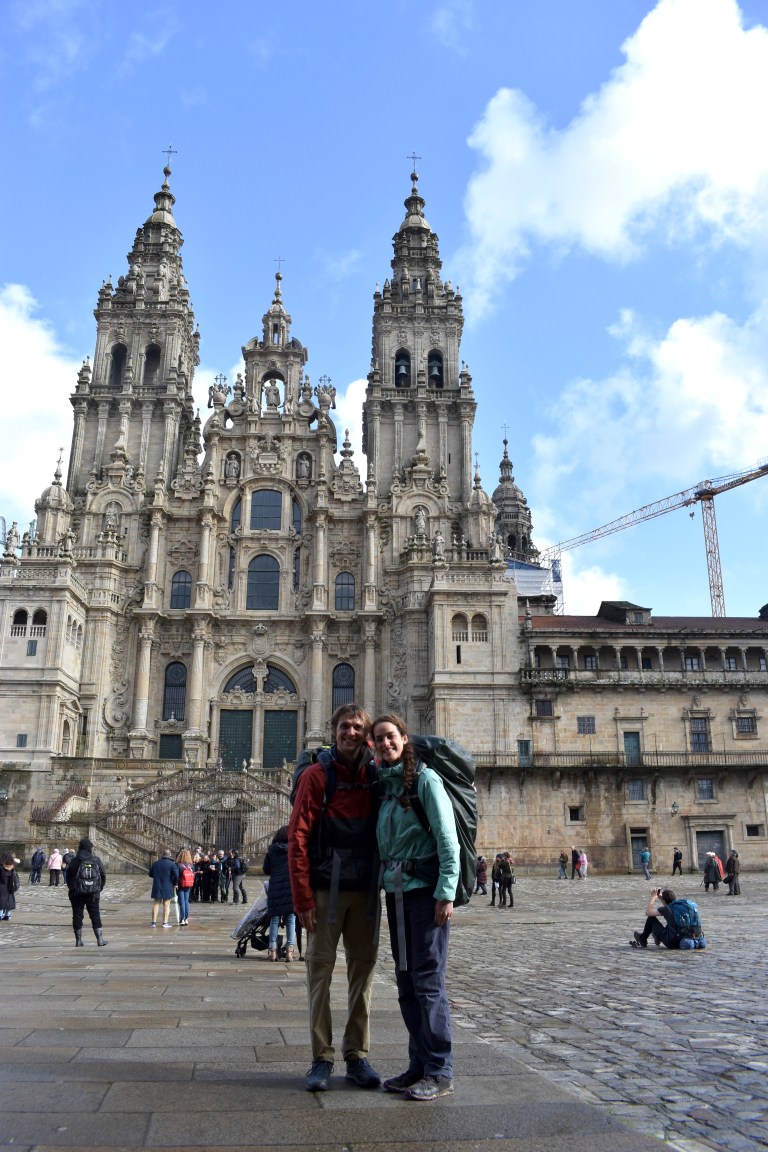
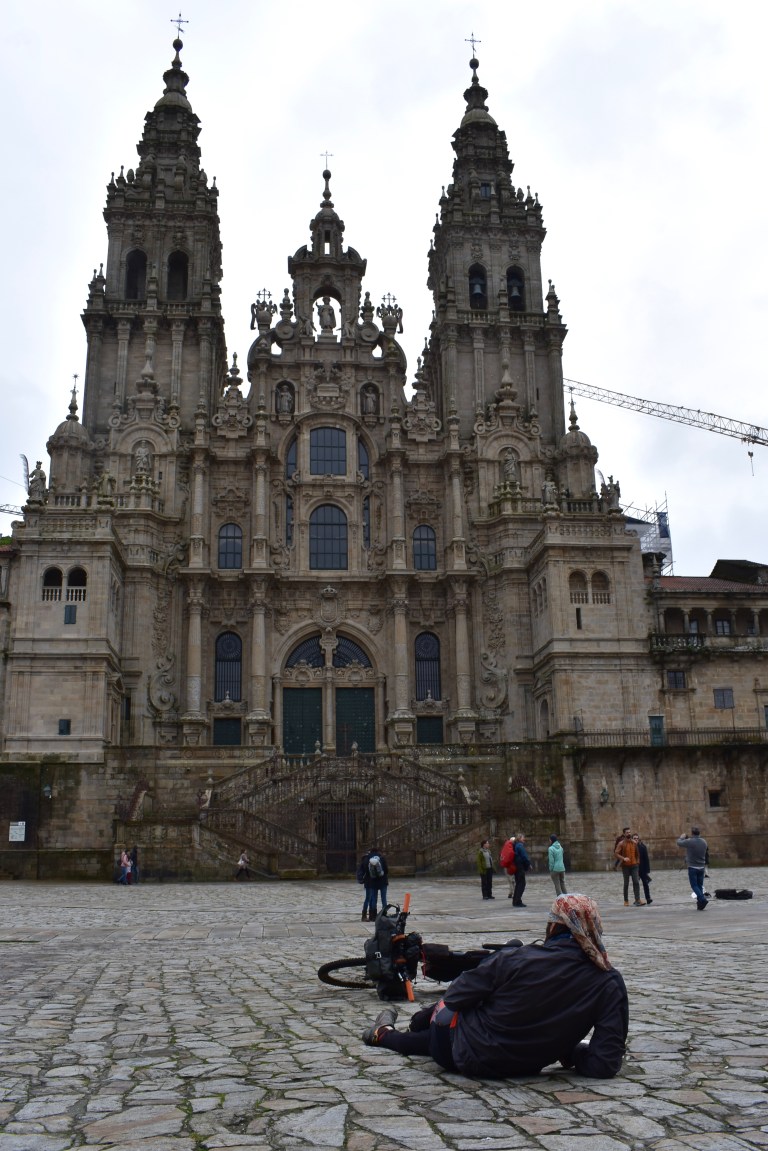
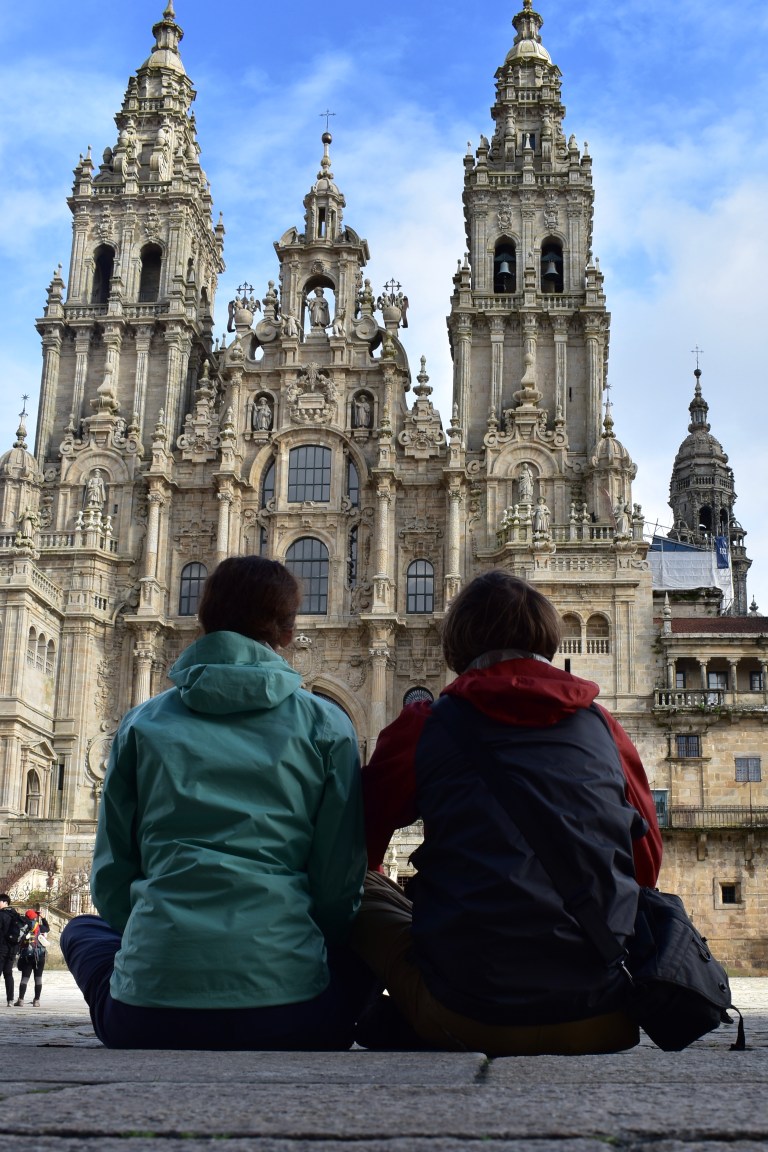
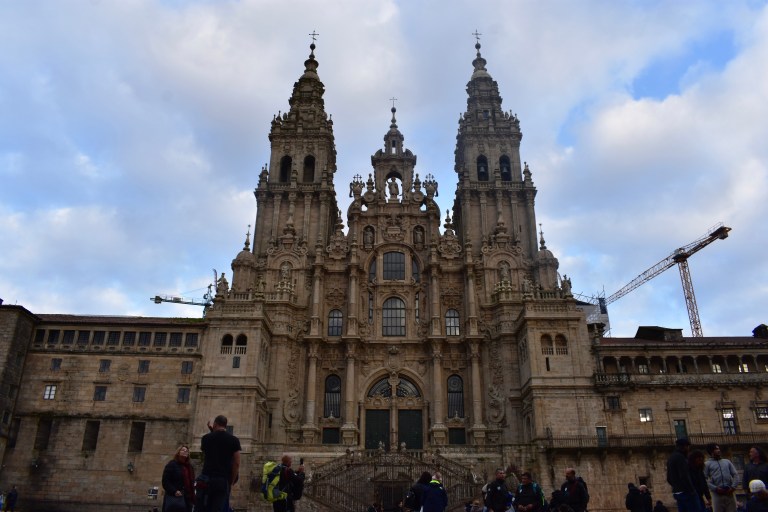
Like a dog who spends every waking hour trying to devise a way to escape over the fence, only to finally do it and then realize that she has no idea what to do with her newfound freedom, so did we arrive atPlaza del Obradoiro in front of the cathedral, the destination of every pilgrim on El Camino. We had walked for the better part of two months to arrive at that point, but once we were there, we weren’t quite sure what to do or how to feel. At least we had company. All around us pilgrims entered the plaza to the fanfare of their own internal rejoicing, their unbreaking smiles evidence of a journey completed. Amidst the echo of lively bagpipe music throughout the plaza, bottles of wine were opened, strangers hugged and high-fived each other, and loads both literal and figurative were unburdened as their bearers gazed in wonder at the front of the cathedral that had been a focus of joy for centuries. As we looked around at these scenes, we knew exactly what was to be done, which was, quite simply, to enjoy our hard-earned accomplishment. So, we sat down on the cool surface of the cobbled plaza, under the uncharacteristically blue Galician skies, and took everything in for we knew that the second we strapped on our backpacks and left the plaza, we would be crossing the far too thin and sudden line from pilgrim to tourist, and that was something we just weren’t, nor ever really would be, ready for.
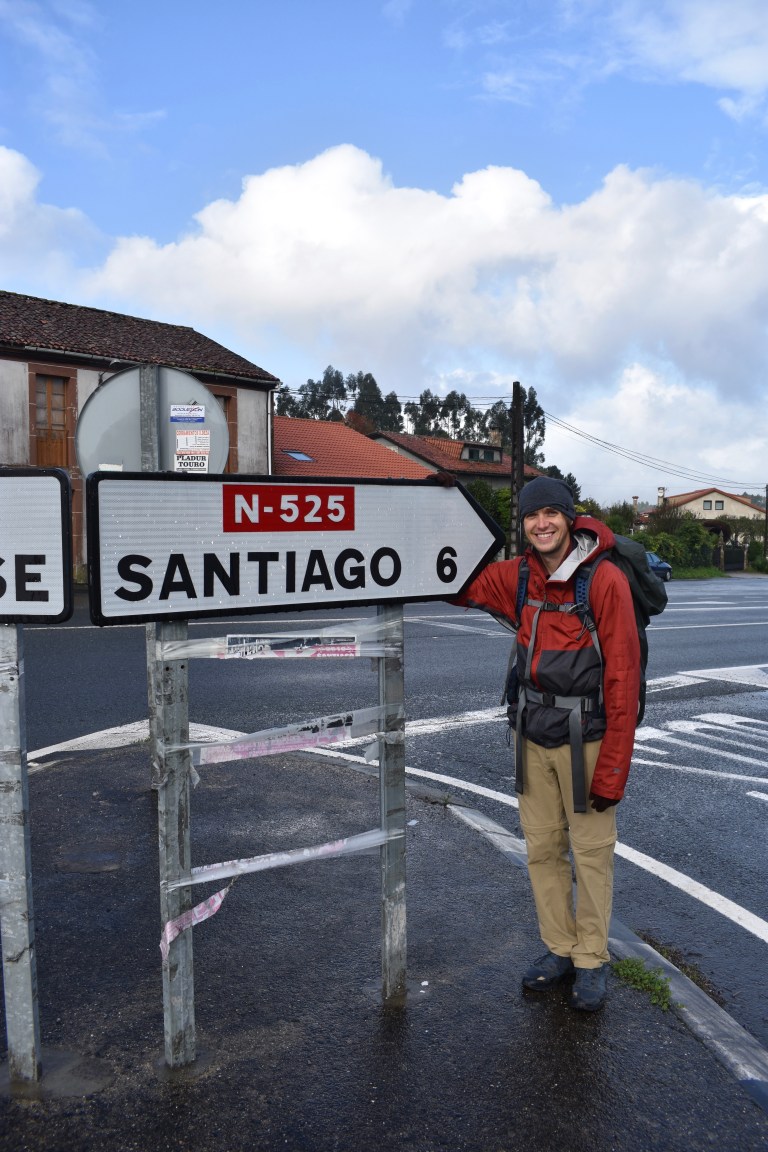
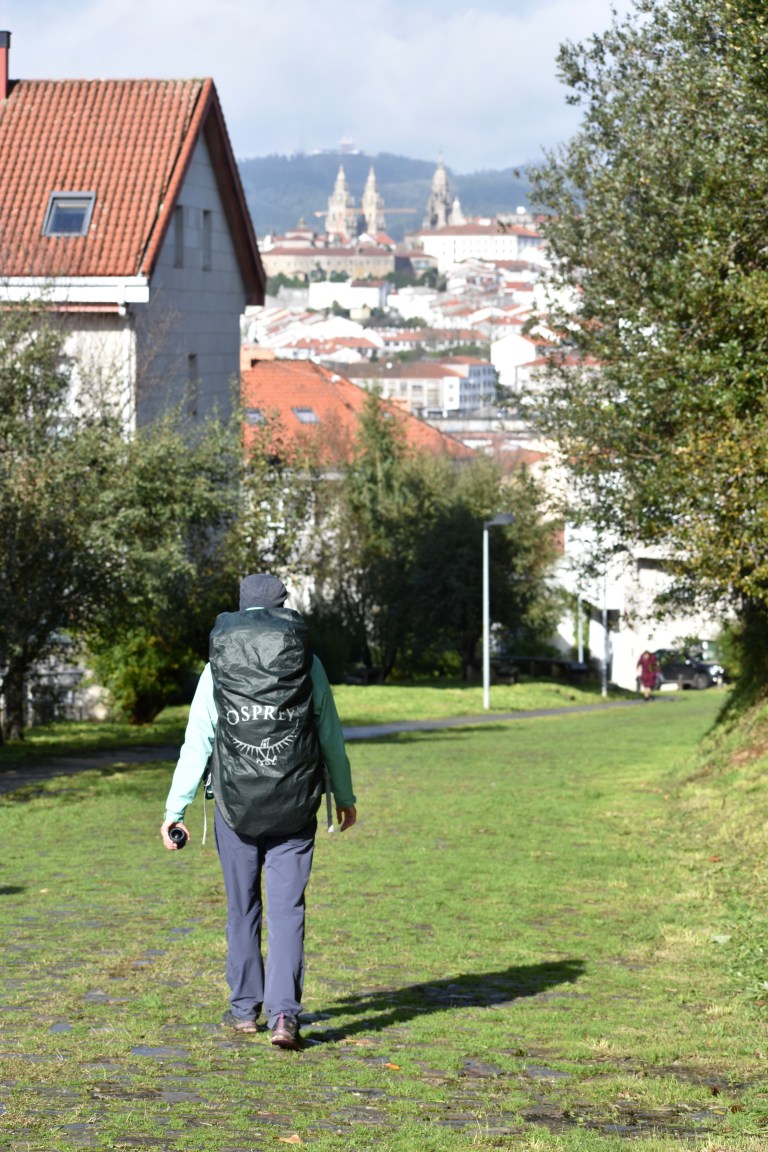
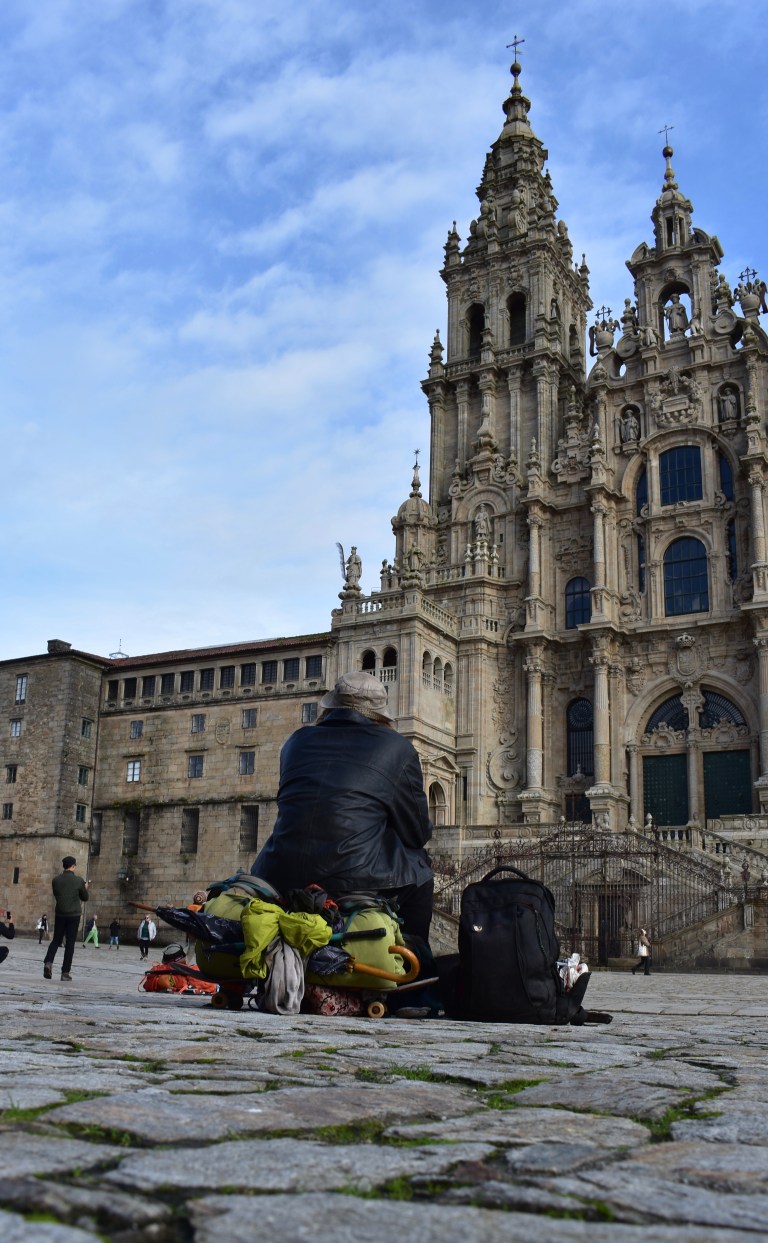
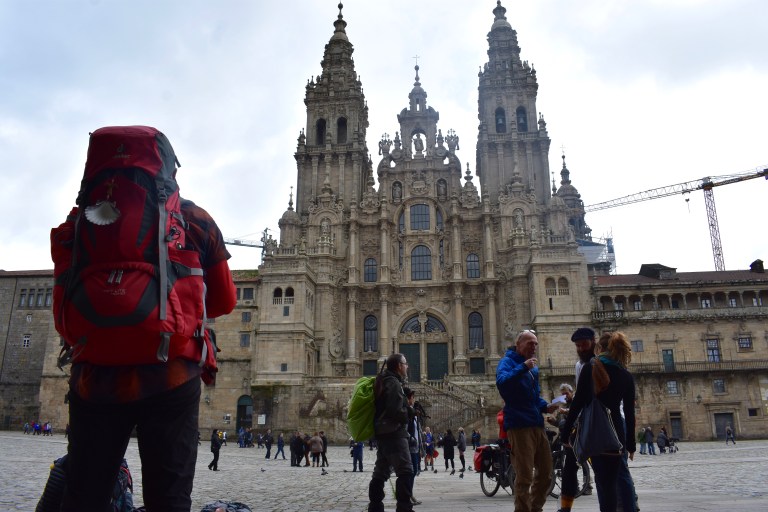
After beginning our journey with 1,000 kilometers to go, it was a surreal moment once we began seeing signs for the city in the single digits.Catching our first glimpse of the cathedral, we weren’t sure whether we wanted to quicken our pace or slow it down.We made it!A pilgrim sitting in front of the cathedral taking it in.Once at Plaza del Obradoiro, it’s common to come across people you’ve met along the way that you thought you’d never see again. The man wearing the red backpack on the left is someone we had walked with and parted ways with nearly a month prior to arriving in Santiago. We both entered the plaza at about the same time.
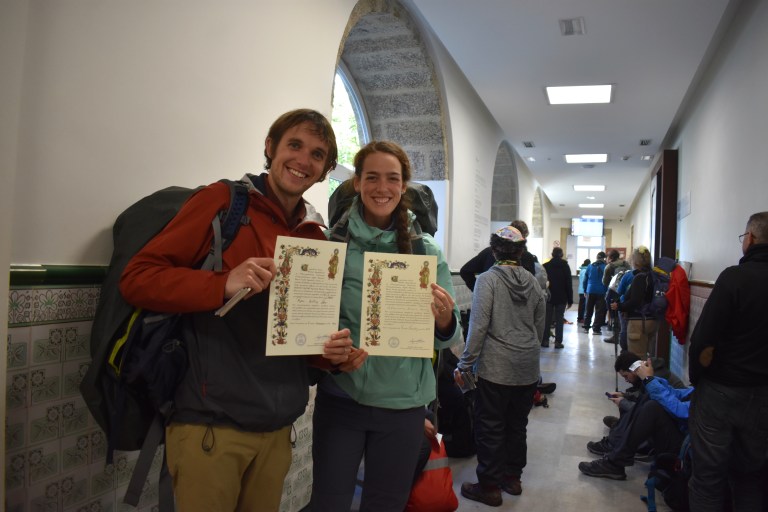
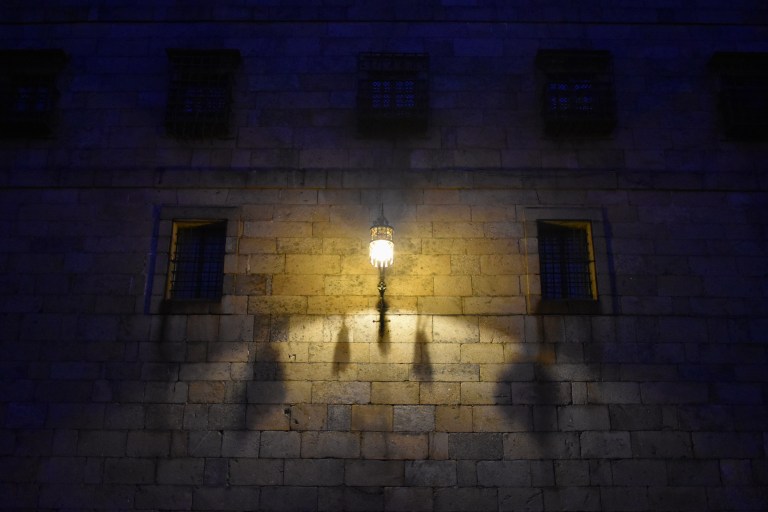
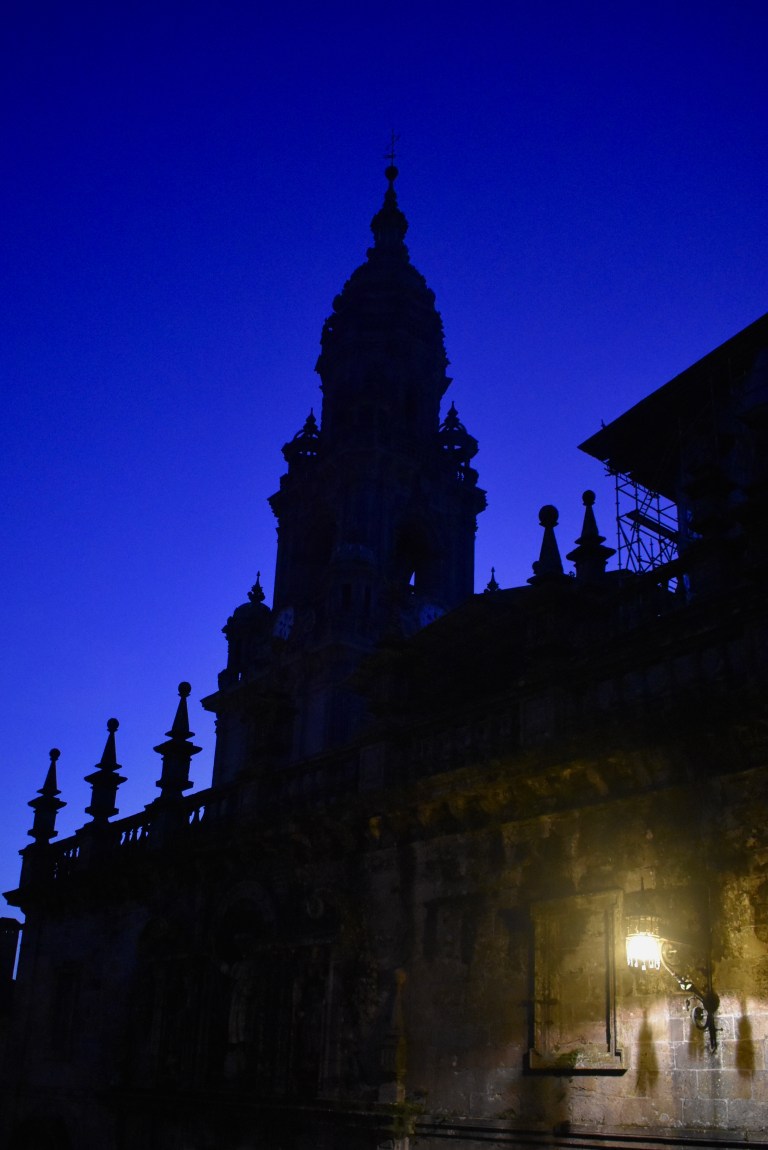
After finishing El Camino, you can go to an office to get a Compostela, a document saying that you’ve walked and completed the pilgrimage. While it was exciting to receive it, we knew that it meant we were no longer pilgrims.Nighttime in Santiago
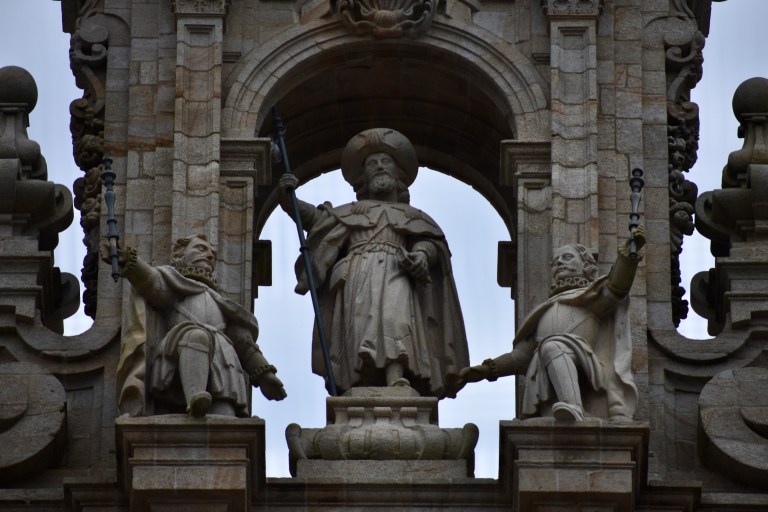
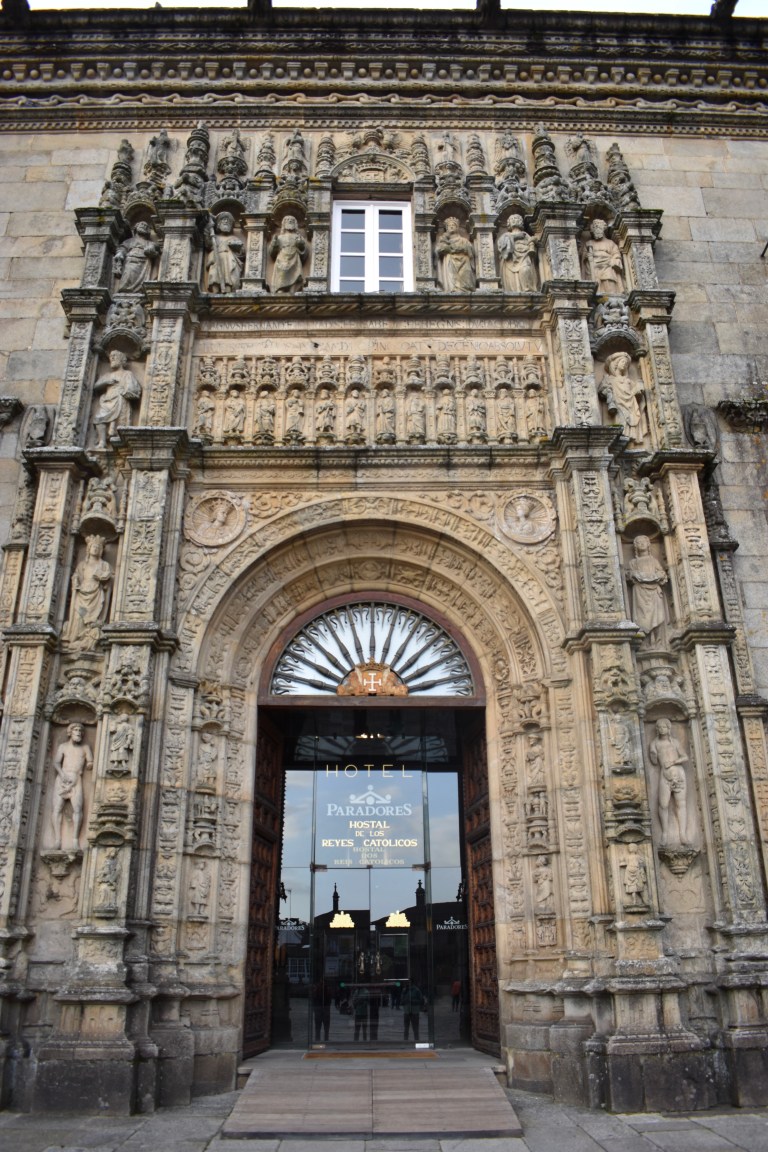
A statue of St. James atop the cathedralHostal de los Reyes Catolicos, a hotel built for pilgrims by Isabel and Ferdinand after they walked El Camino. Sadly, it’s now a luxury hotel that most pilgrims can’t even come close to affording.
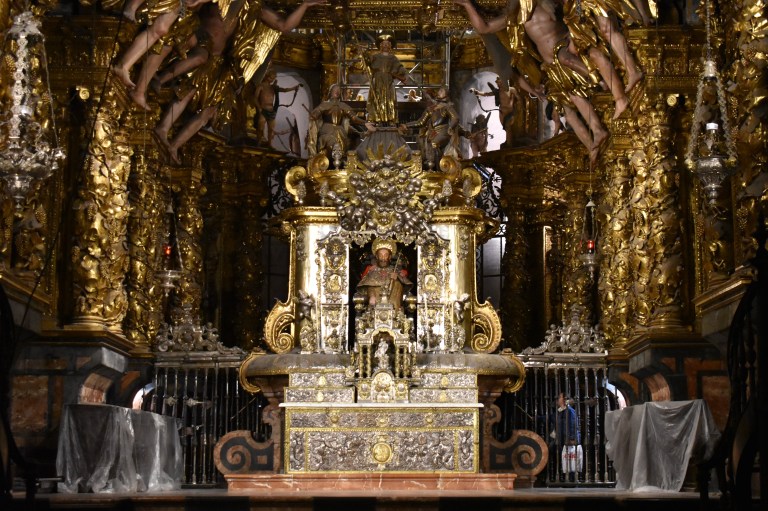
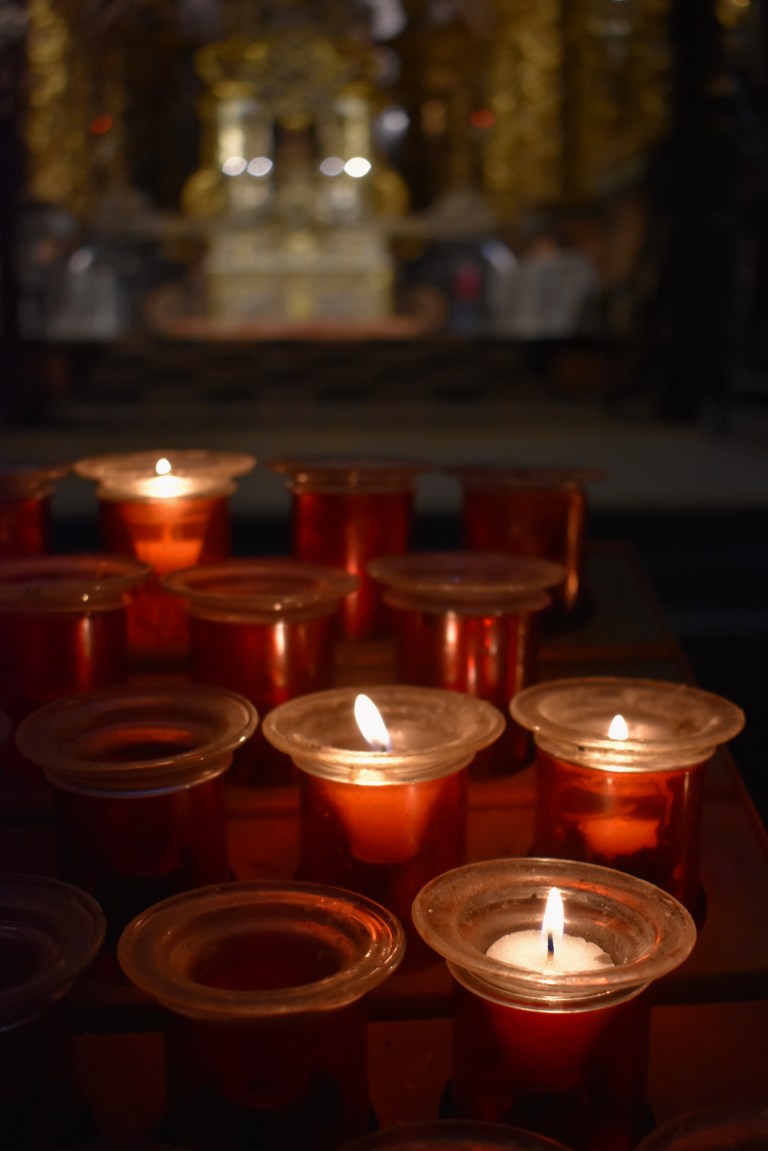
While the cathedral was under construction during our time in Santiago, we were still able to see its magnificent altar.Lit candles inside the cathedral
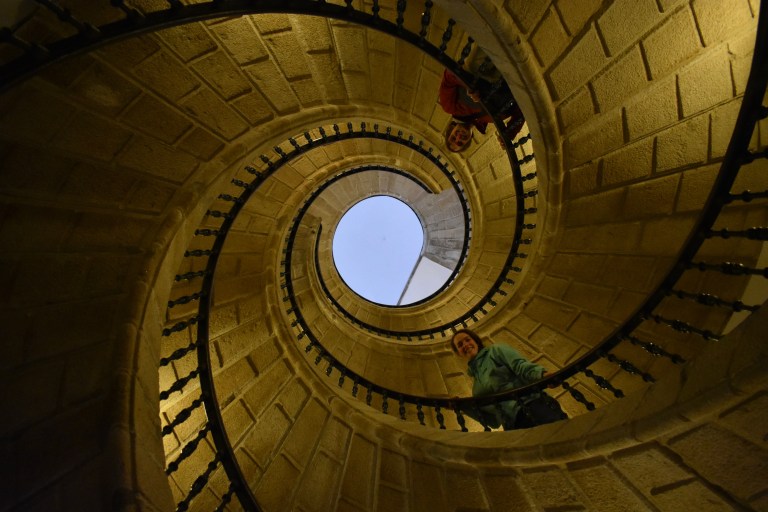
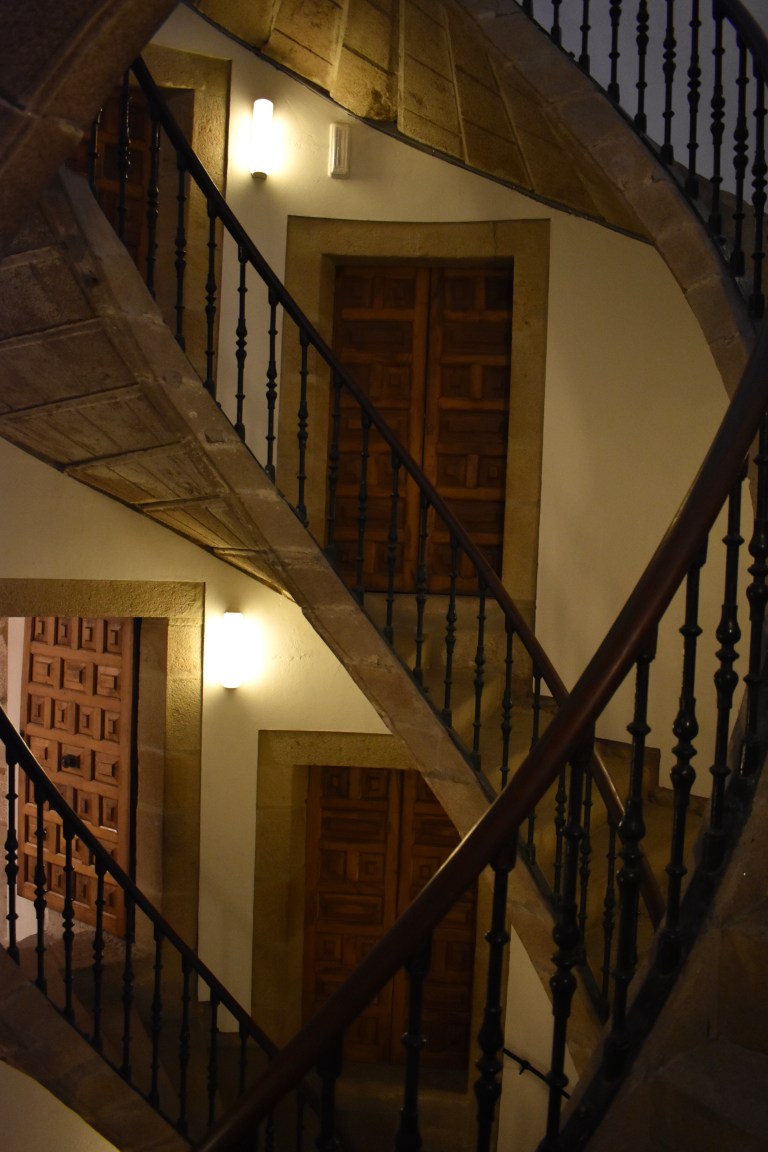
Winding staircases at the Museo de Pobo Galego
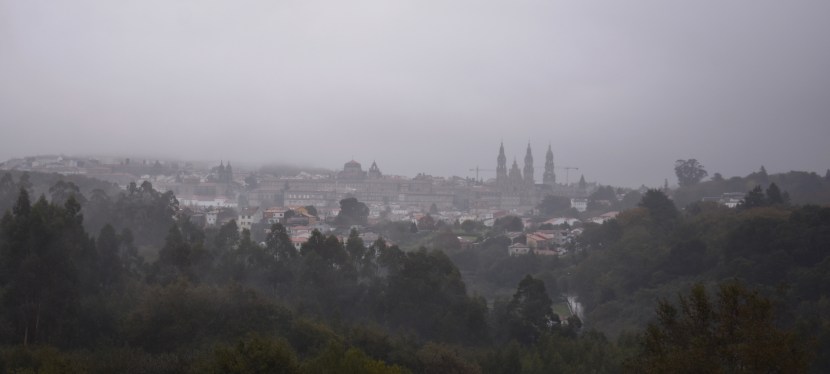
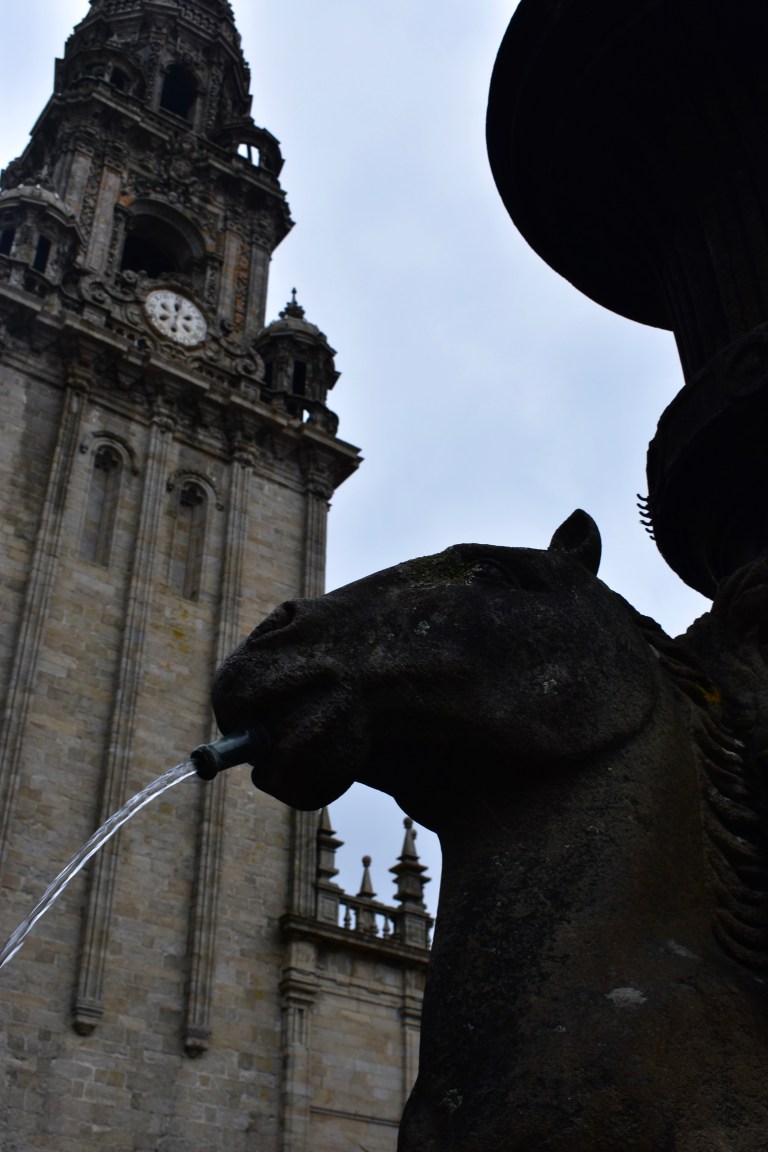
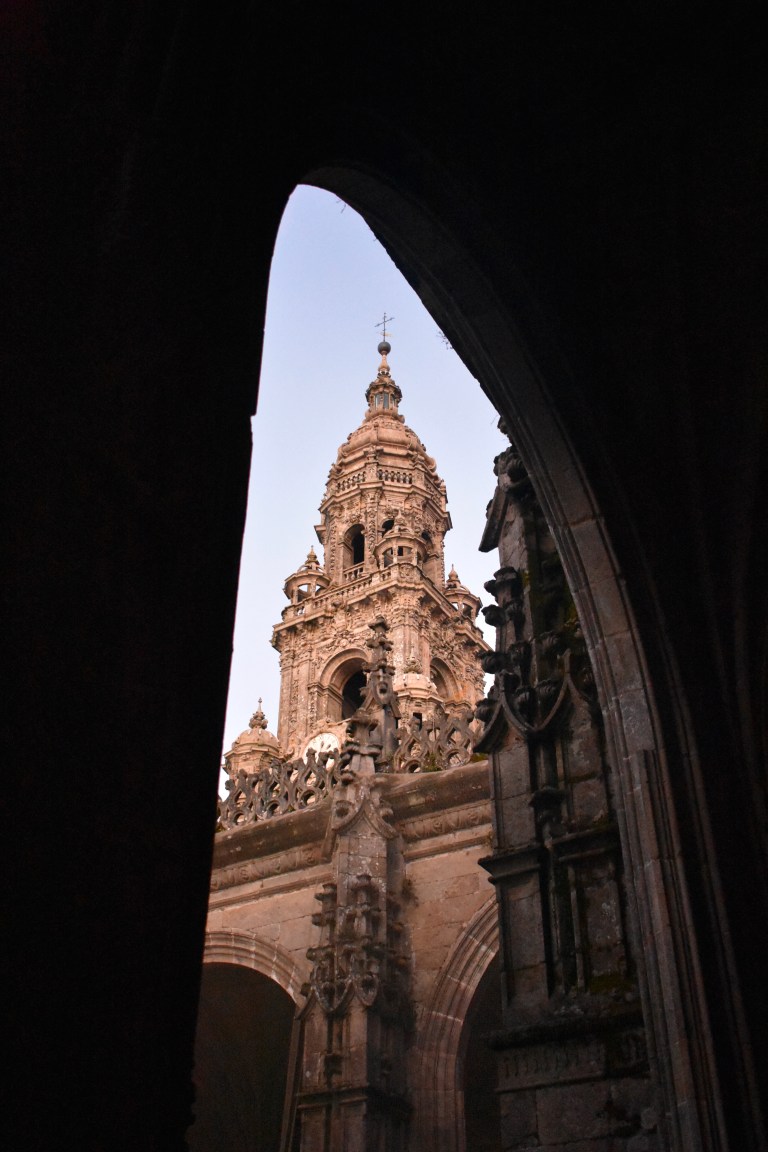
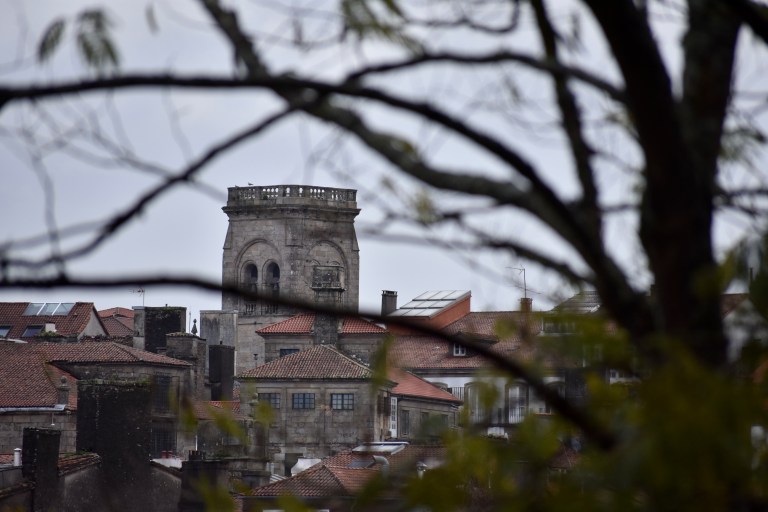
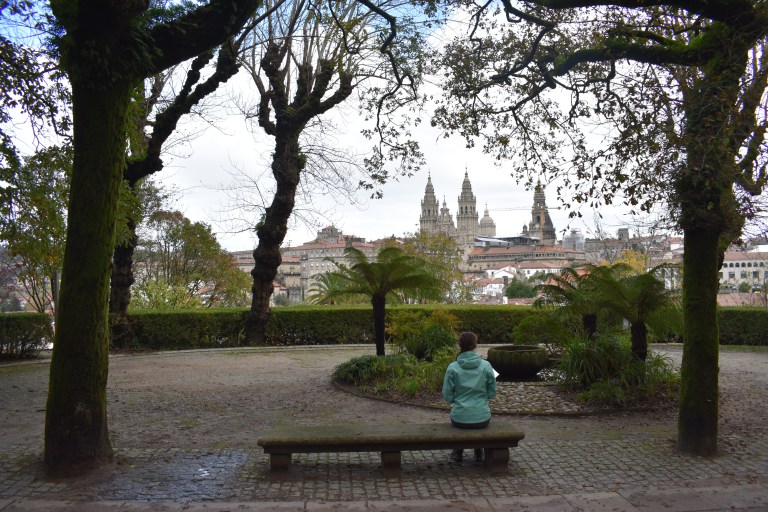
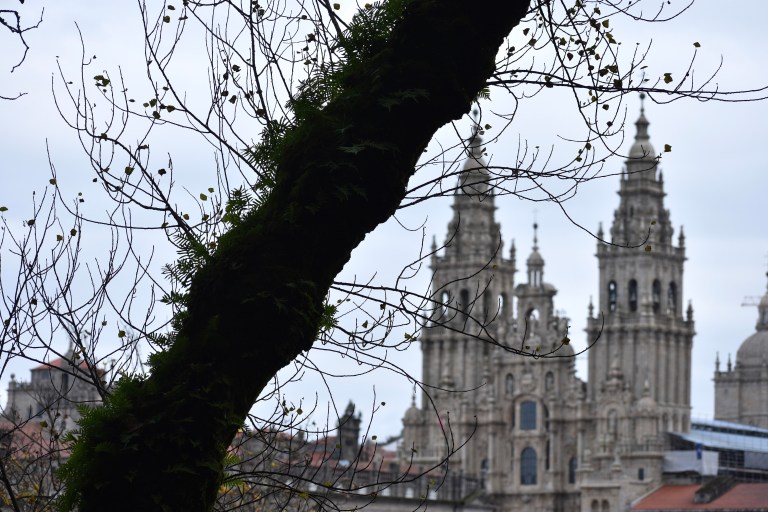
A view of the cathedral through the rain
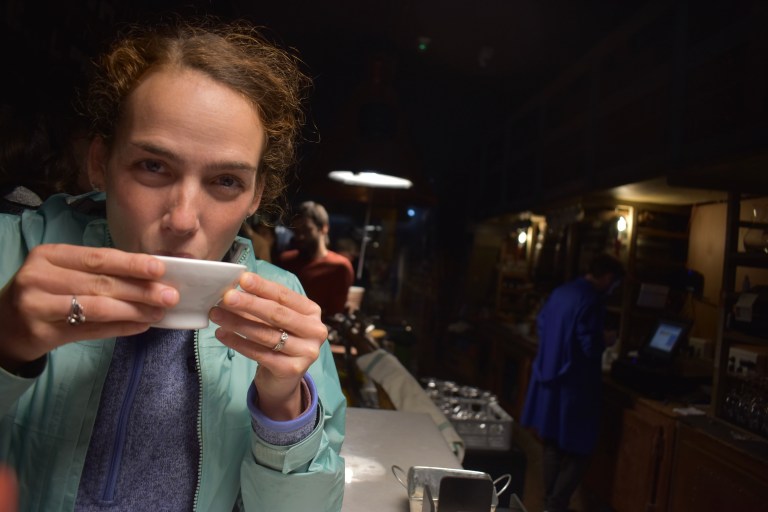
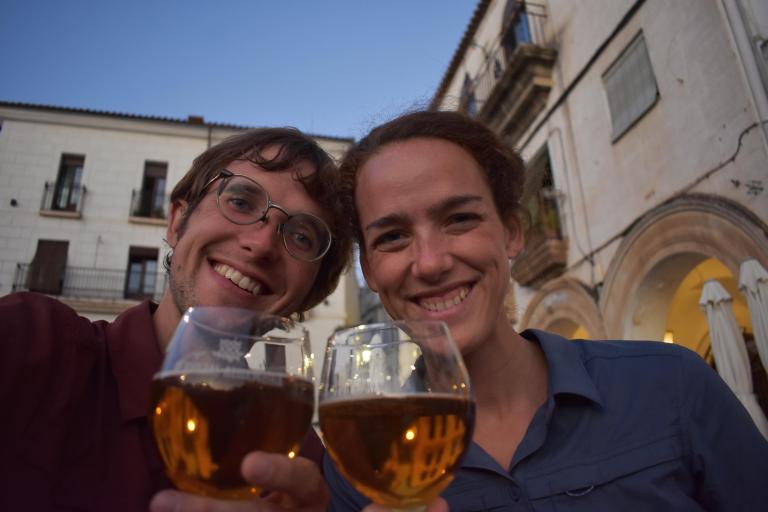
In Santiago, it’s not uncommon to be served wine in saucers. On our last night in the city, we sipped on many-a-saucer while reminiscing about our walk, a great end to a great journey.
Read on for a poem by Kate:
El Camino
Thud
goes the satchel
as it sinks down
into the dirt,
narrowly avoiding
the mud from that morning’s
Galician rain.
The pilgrim follows,
crossing his feet,
one leather shoe
over the other,
a hole worn through
the heel, exposing
his skin to the elements.
He looks up
at the stone and wood shrine
in front of him.
He made it.
Murmuring a prayer
of thanks
and sorting through thoughts,
he idles,
knowing when he picks himself up,
a journey has ended.
So it goes
for a millennia,
sole after soul
arriving to a place
physically transformed through centuries,
yet as a symbol remains
as solid and unbreaking
as a scallop shell.
Smack
sounds the Osprey
as it makes contact
with pavement,
just missing
the puddle from the rainstorm
hours earlier.
I follow,
sitting cross-legged,
one North Face shoe
over the other,
the rubber soles wearing down.
Soon I’ll need
to buy another pair.
I look up
at the mammoth structure of stone
towering above the plaza. I’m here.
I begin to whisper a prayer
of thanks,
but my breath falters,
not able to find words.
I linger,
when I leave, I will no longer be a pilgrim,
a chapter will end.
When walking El Camino, the variety of people one comes across can be just as numerous as the beds they’ve slept in or landscapes traversed.
In our experience, we have come across pilgrims that trek an upwards of sixty kilometers a day in an adrenaline-fueled test of their bodies endurance; or else a race towards a departing flight. And, on the less crazy end of the spectrum, those like Kate and I who are content with walking a fraction of that distance each day, teetering on the fine line of walking just enough to feel accomplished but not so much as to willingly bring chronic bodily ailments upon ourselves.
There are pilgrims who perform minor surgery on their feet day after day in the form of blister care and others who perform minor miracles by having no foot problems whatsoever. There are 87-year-old Italian priests and twenty-something college students. There are bikers, walkers, and apparently, horseback riders, though we haven’t seen any of the latter yet. There are early risers, late departers, eat-iners and going-outers. There are Spaniards, Germans, Dutch, Canadians, Brazilians, Israelis, South Koreans, and Australians. There are the religious and those without any religious affiliation whatsoever, but in search of something outside of themselves all the same. And, while El Camino is traditionally a religious pilgrimage to the tomb of St. James, there is only one thing that unites all the different kinds of people, and it’s not Christianity, rather, the unwavering devotion to the all-knowing yellow arrows, or flechas amarillas.
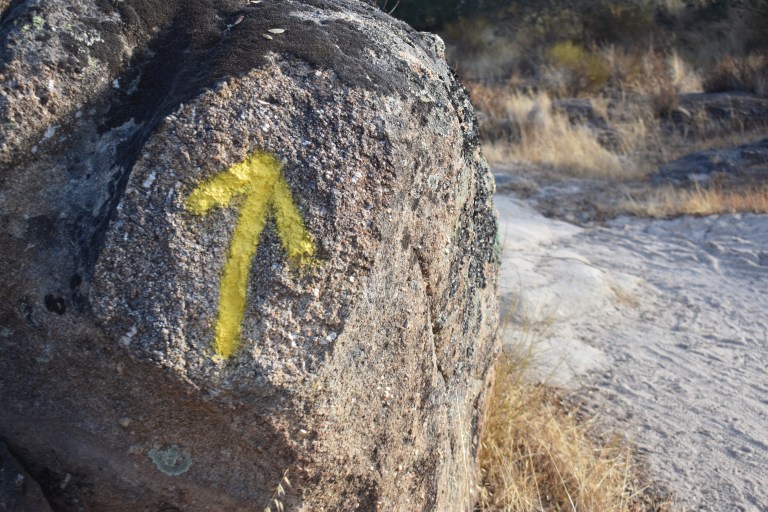
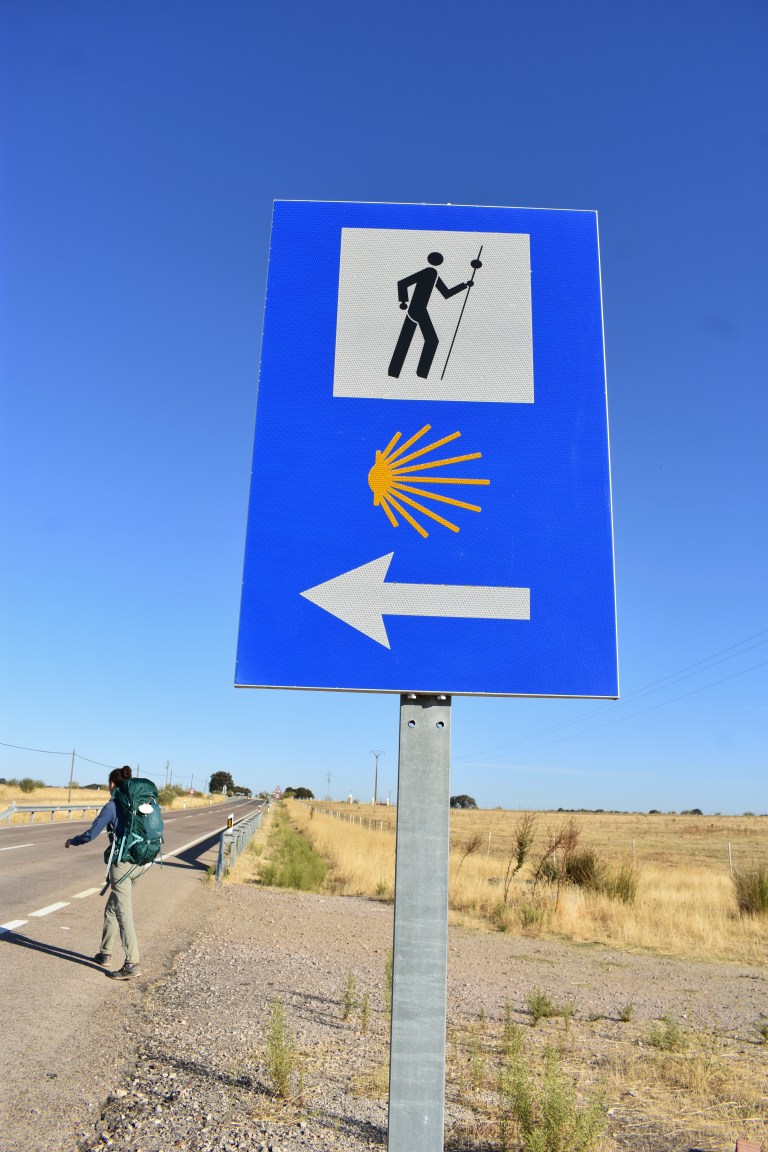
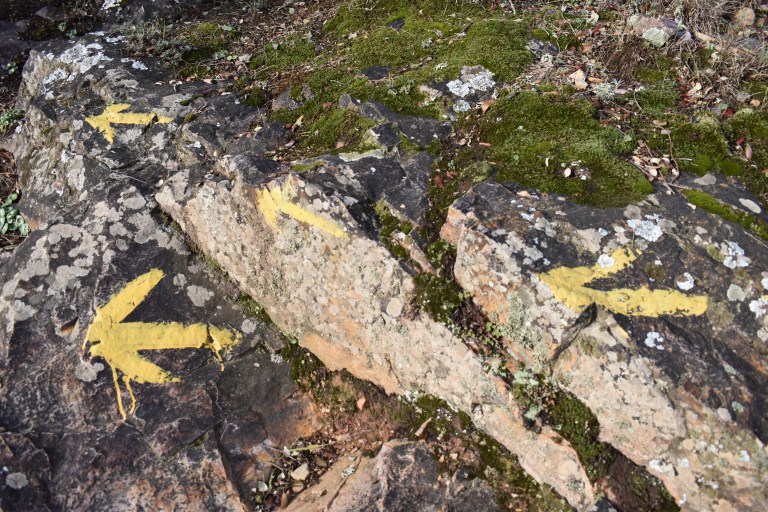
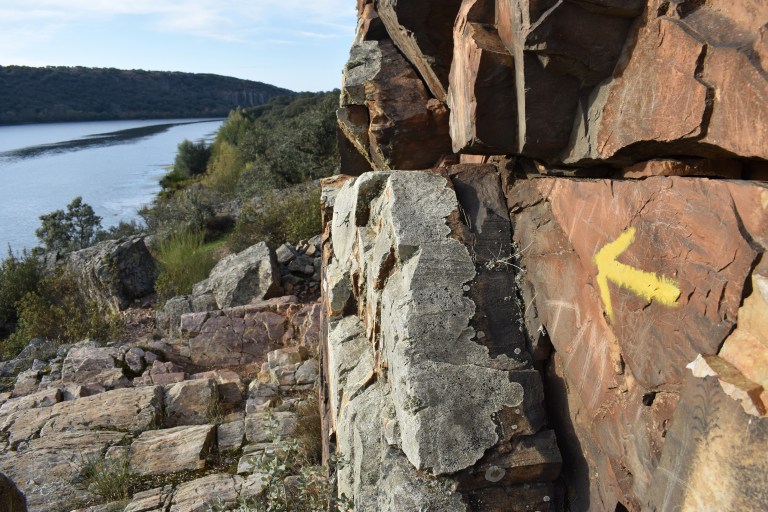
Painted on rock faces, tree trunks, street curbs, and traffic signs, to name a few, the flechas are an ethereal lifeline of sorts, pointing each pilgrim in the right direction. While on El Camino, when we find ourselves lost along the way or unsure of whether or not we are moving in the right direction, we pray that a flecha reveals itself, giving us a sign that everything is okay. When we are in the dark or at a crossroads and there are no flechas to be found, we curse them for abandoning us. “How could such an omnipresent force of good be absent at such a time?” is a question that has often passed through our minds. Though, no matter how sparse their presence has been or how frustrated their absence has made us, whenever a flecha is spotted, we are thankful for it, for we are assured that we are moving in the right direction. And on El Camino, as in life itself, that’s all you can really ask for.
Since their inception over three decades ago, the flechas have become synonymous with the various routes to Santiago and for good reason. Despite being a pilgrimage route for over a millennia, by the 1970s, the number of pilgrims arriving in Santiago had dwindled to the hundreds. Then, in the 1980s, a priest and El Camino scholar named Elías Valiña mapped out a route starting in the south of France and painted flechas along it every couple of kilometers or so to guide pilgrims towards Santiago. Elías chose to use yellow arrows because he had seen them guiding hikers through the mountains of France and took note not only of their visibility in the dull browns, grays, and greens of nature, but also of their durability to remain seen through variable weather and seasons. And so, the arrows were conceived and brought to life precisely at the time El Camino experienced a rebirth itself. The original route he mapped out, now popularly known as Camino Francés, attracts nearly 200,000 pilgrims every year and on countless other routes, including the one we have been walking on: La Via de la Plata, the arrows serve as a guiding hand, pointing pilgrims towards their destination, whatever or wherever that may be.
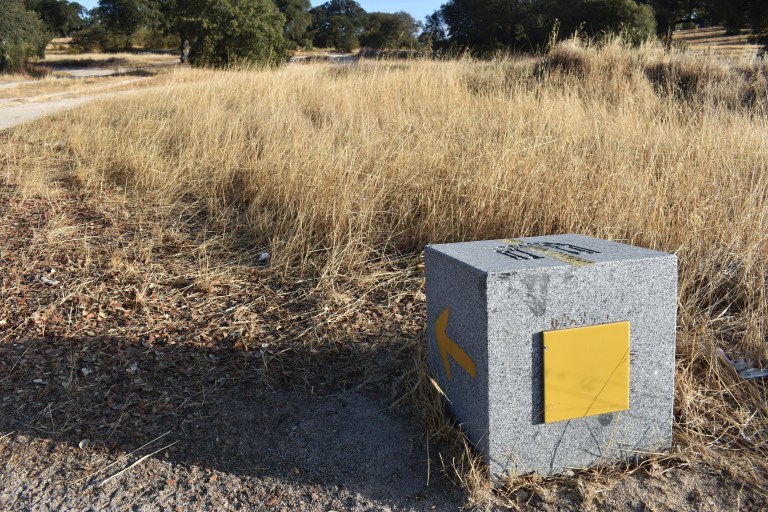
In the province of Extremadura, large stone blocks not only pointed us in the right direction, but also informed us whether or not we were following a Roman road.
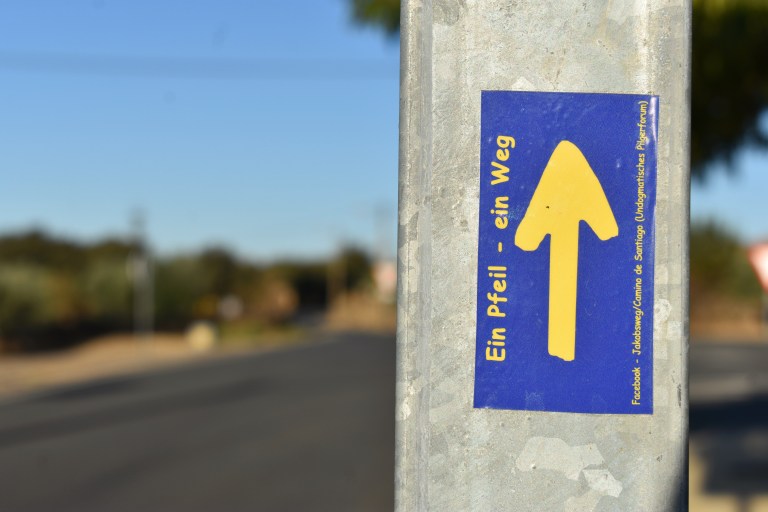
Occasionally we will come across flecha stickers courtesy of a prior German pilgrim.
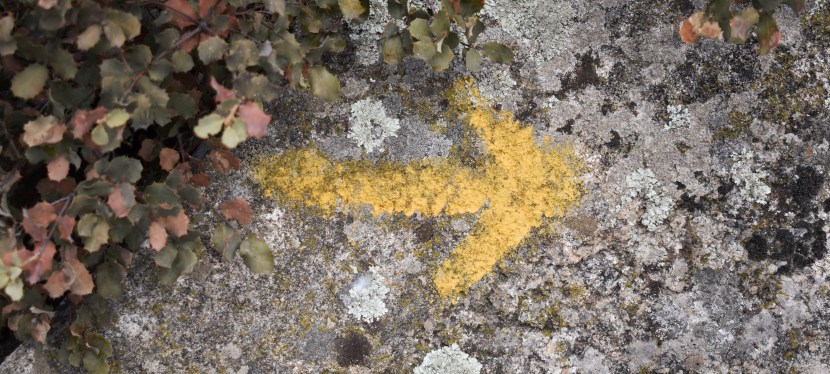
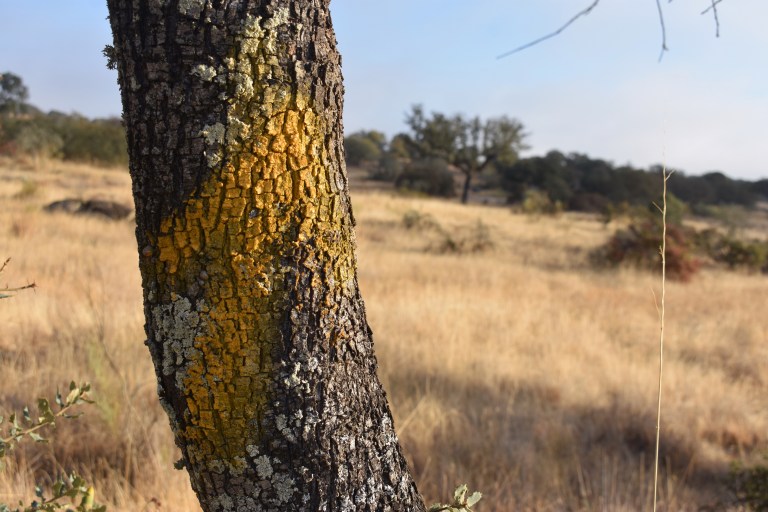
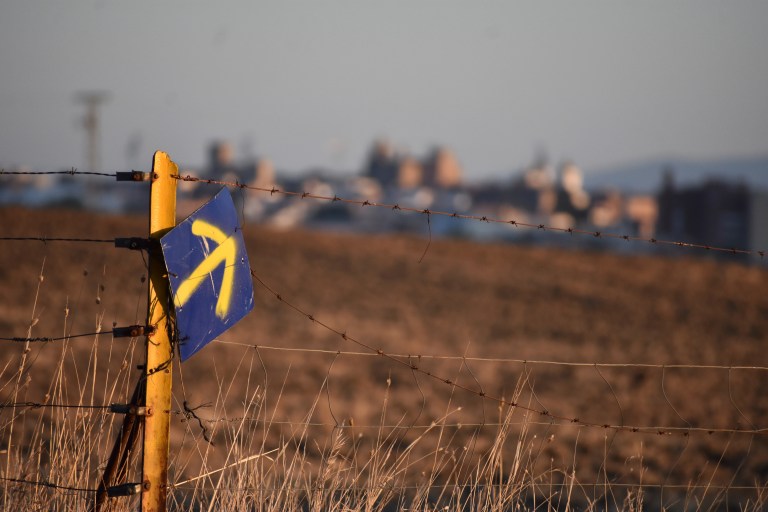
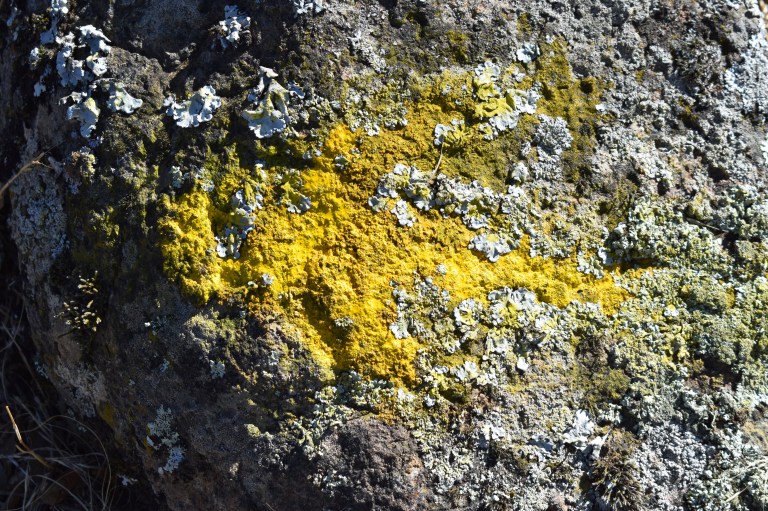
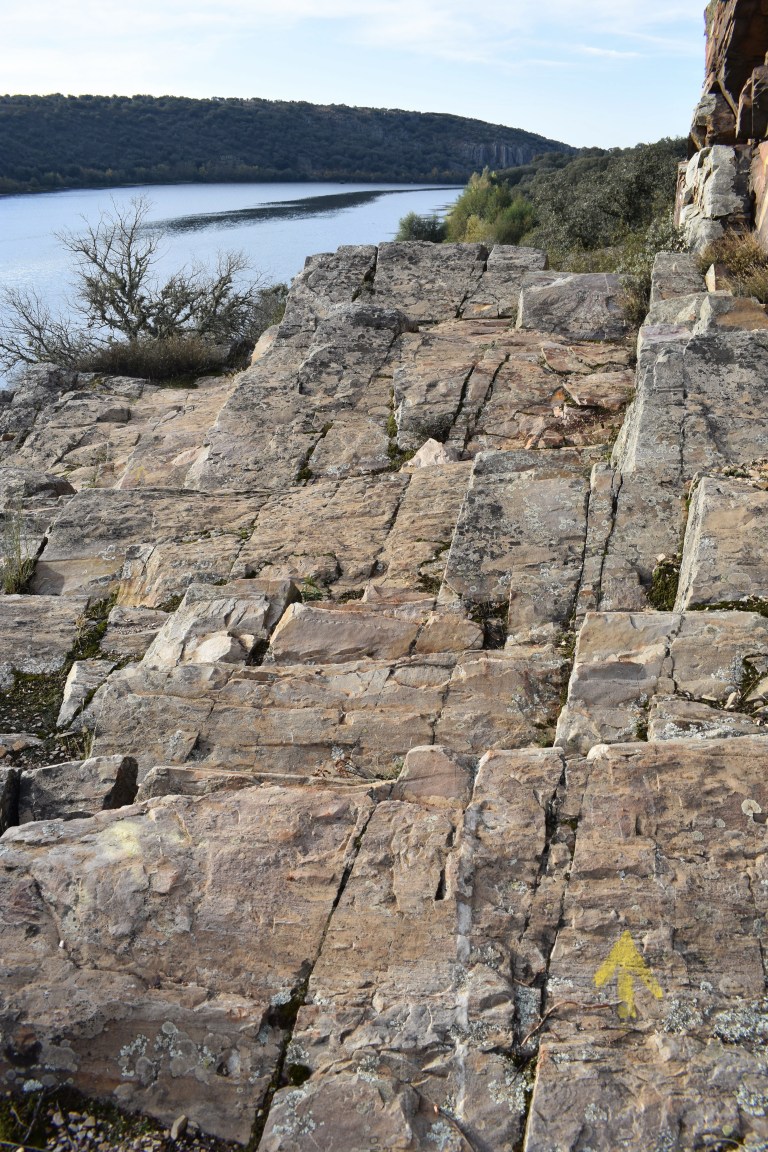
Can you spot the flecha in the distance?A flecha pointing us towards CáceresSometimes the flechas are almost indiscernible from yellow moss that also populates the tree trunks and stones of the Spanish countryside.A sign pointing us towards our albergue, which is always a welcome sight at the end of a long day of walkingSometimes, there is little to no doubt about which way to go
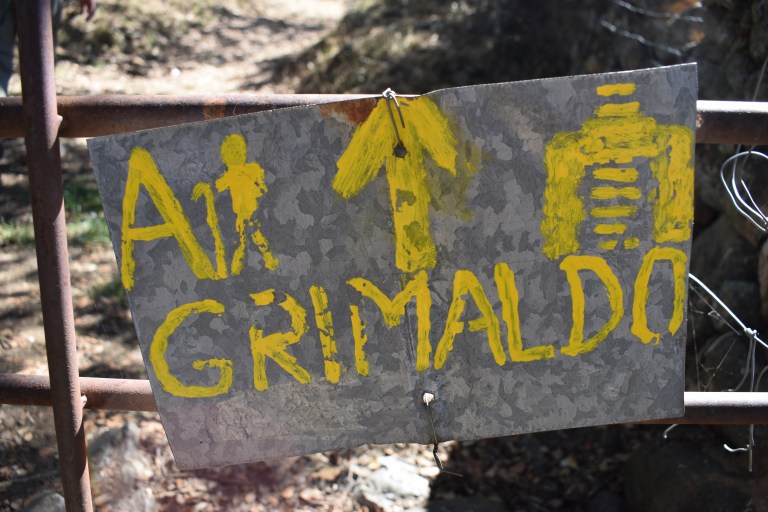
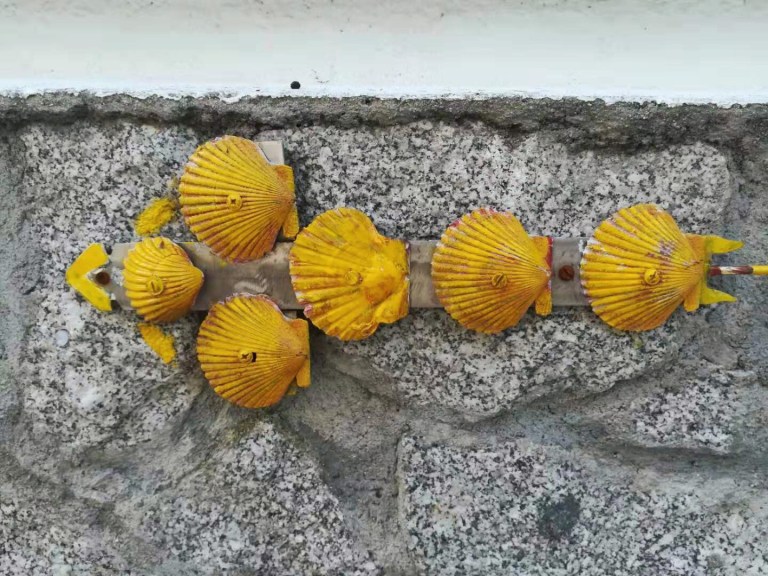
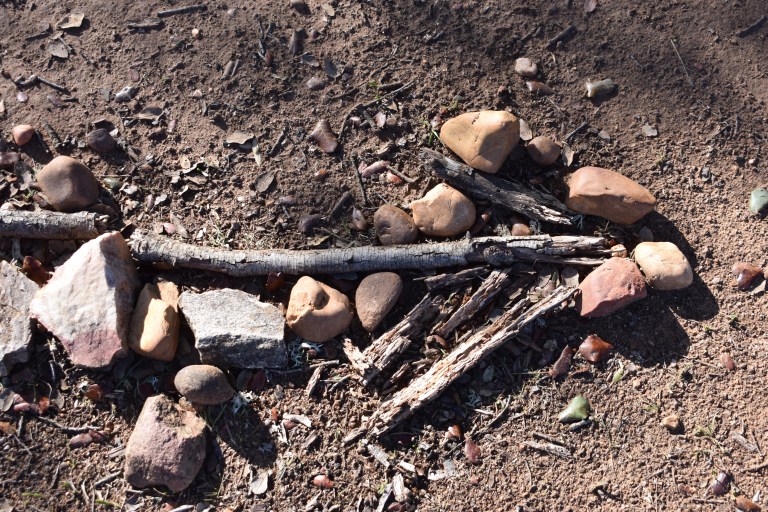
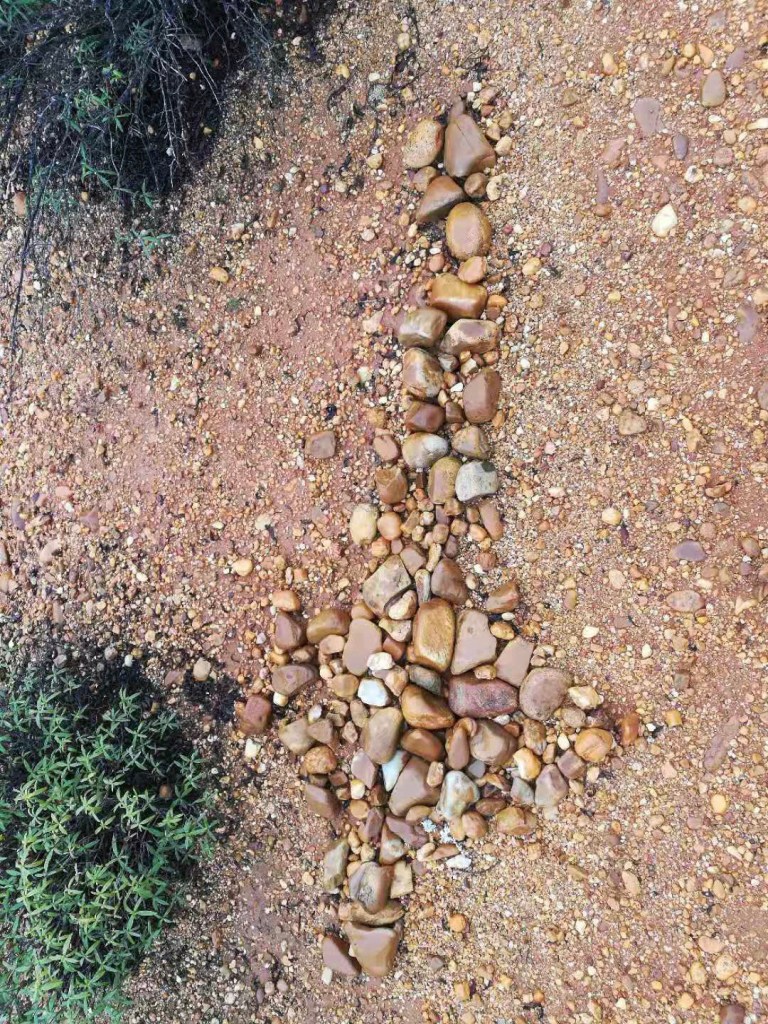
When flechas amarillas can’t be found, flechas in other forms, like this one made of sticks and rocks, will make an appearanceAnd here’s one pointing you towards Kate’s poem
Flechas Amarillas
On your right—
cows.
On your left—
trees.
Only one way to go—
straight.
It´s a flecha fiesta—
painted boulders,
trunks,
posts.
We come to a fork:
gray stones,
mossy branches,
wired rails.
Where are the flechas?
Fast asleep,
it´s time for siesta.
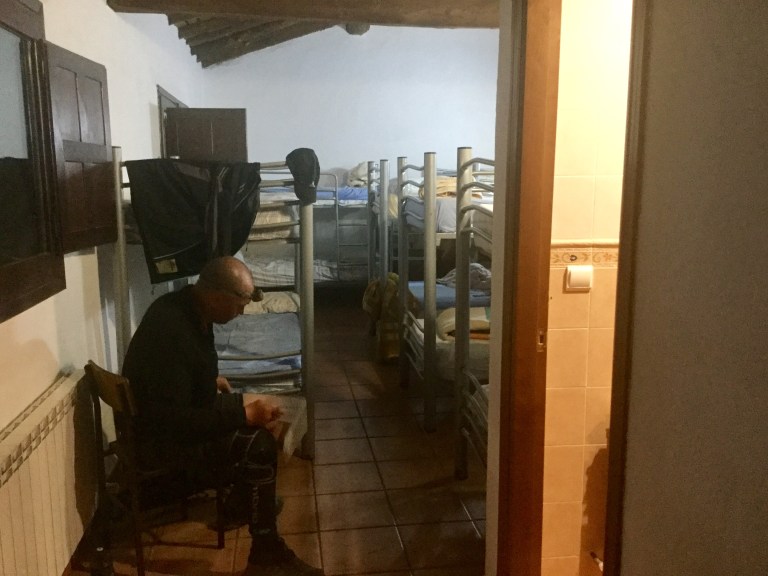
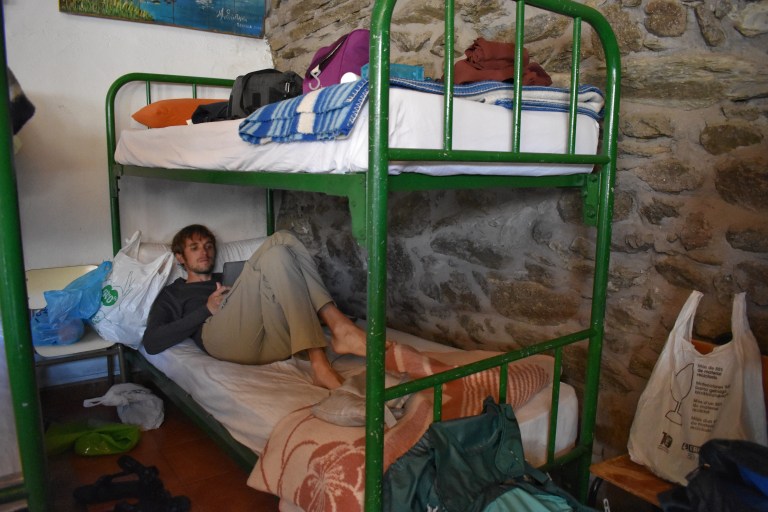
Lying in bed, half awake, half asleep, the alarm goes off. Never mind that the previous night’s sleep was fitful due to the bear-like snoring of the person in the bunk bed next to you or that the previous day was spent walking 18 miles through open fields under the glare of the Spanish sun, it is 6:00 A.M. and time to go. Any thought of hitting the snooze button is quickly put to rest as the other ten people sleeping in the room will be getting up shortly as well, eliminating any chance of having a dark and quiet refuge in which you could return to sleep. Contacts are placed in dry eyes, shoes on sore feet, and a backpack on a tired body. Another day of walking is ahead, this one a mere 15 miles!
So goes the morning of a pilgrim on El Camino, and if it sounds dreadful, I can assure you that it’s not. While the arrival of the alarm is never a harbinger of joy no matter the context, it is often accompanied by a much more welcome form of ringing, that of a bell in a village church, tolling six times in agreement with the hour shown on your phone. The place you woke up in could be anything from a centuries-old monastery in the middle of a lively city to a converted farmhouse on the outskirts of a quiet village. While you often have to share a room with others, you also get to share many more things with them, namely stories, meals, conversations, an occasional glass of wine, and above all, the camaraderie that comes with the shared hardship of traversing the world on foot day after day. And, though the body may protest the lacing of shoes and strapping on of a backpack, the mind is eager, for, while the day ahead is long, you will undoubtedly be walking under the stars, past a sunrise and through the effortless and inexhaustible beauty of the Spanish countryside. One could get quite used to waking up to that every day.
For us, a typical day on El Camino goes as follows:
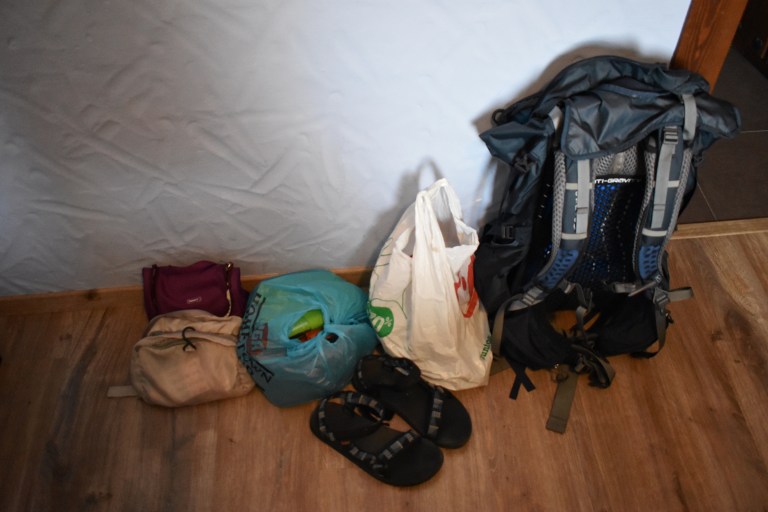
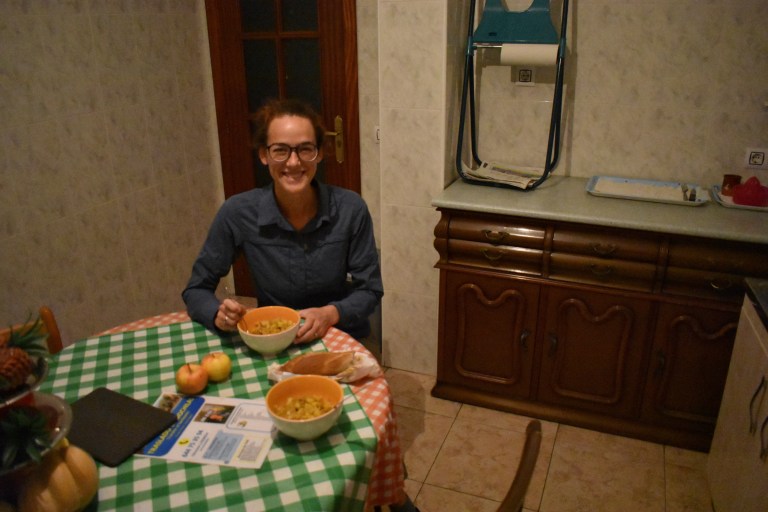
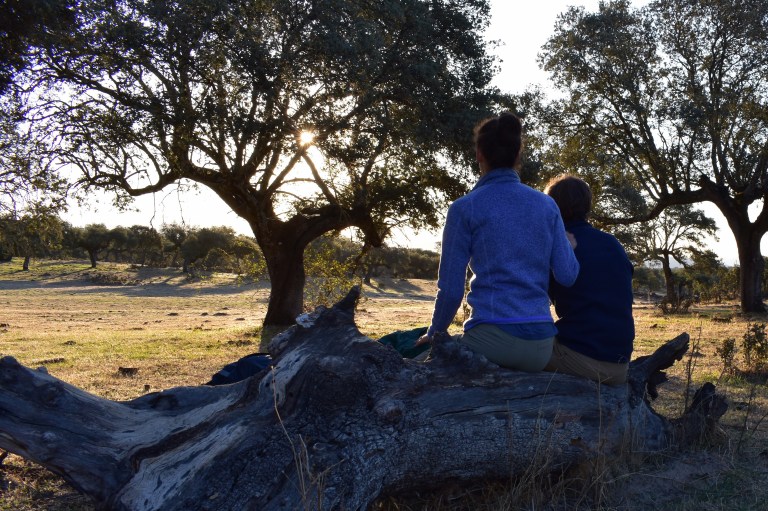
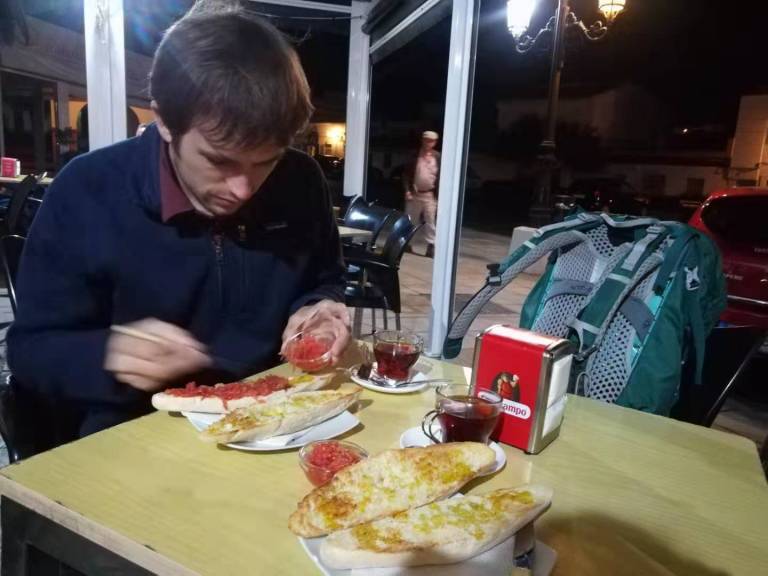
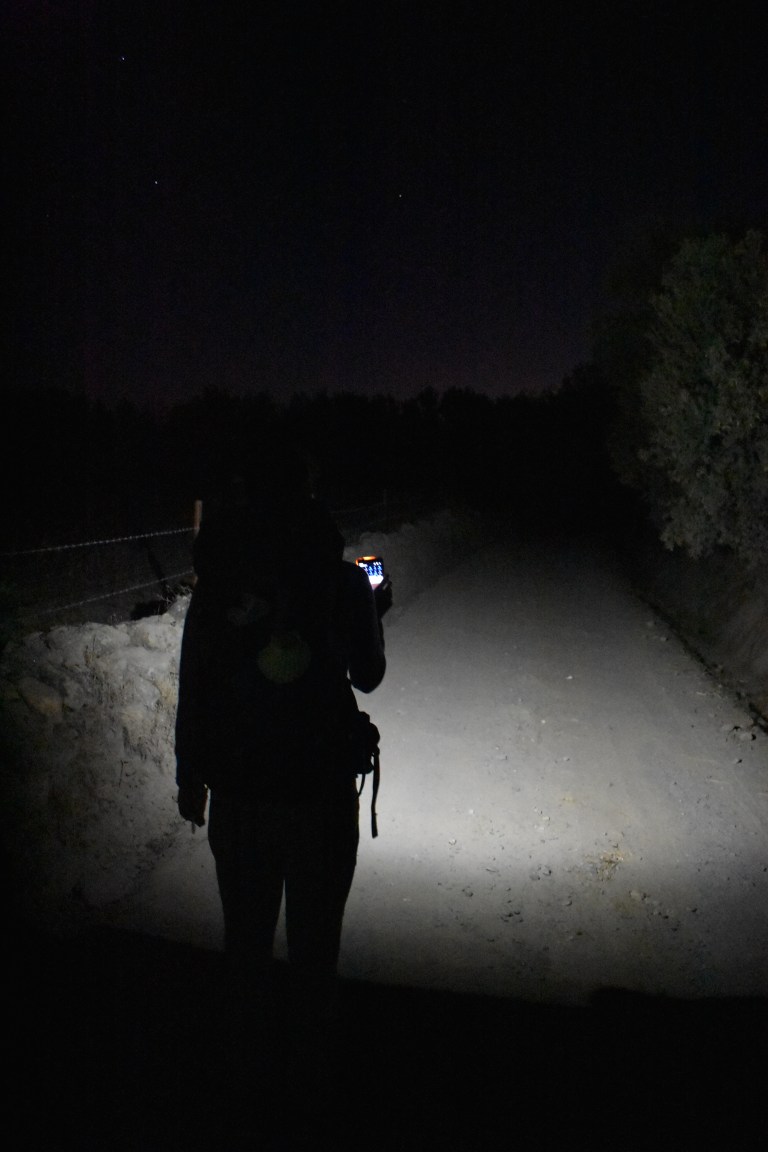
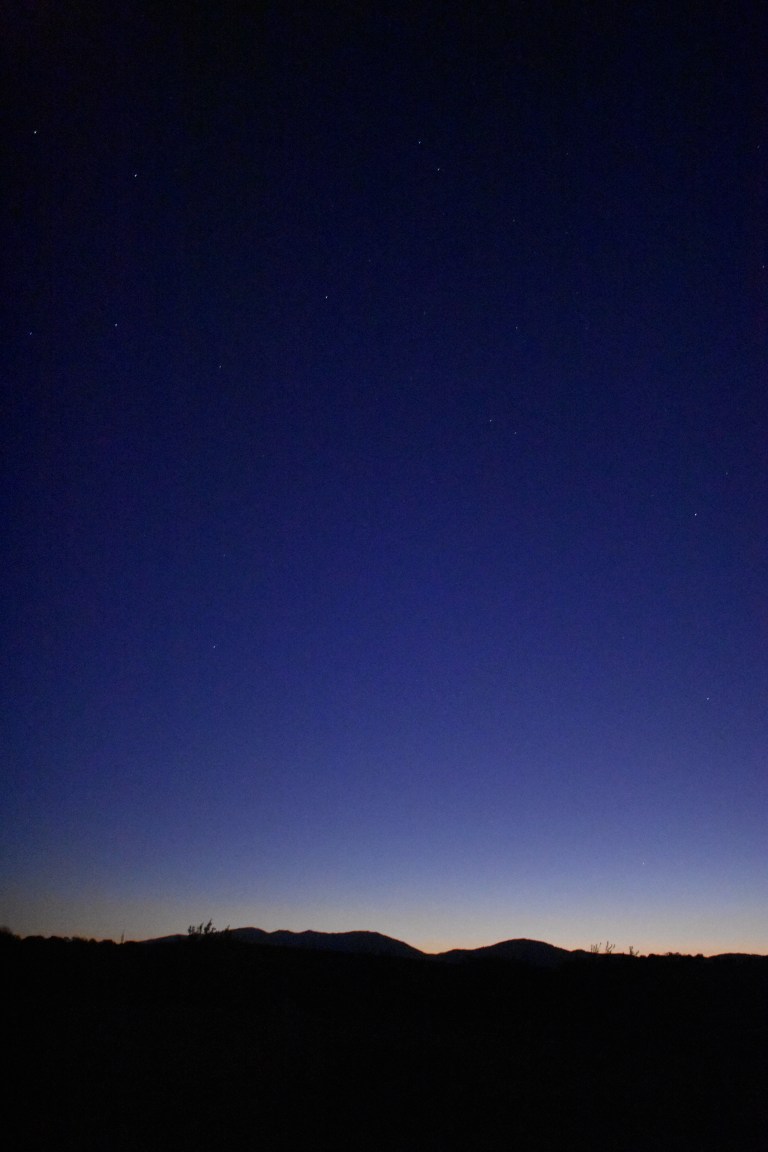
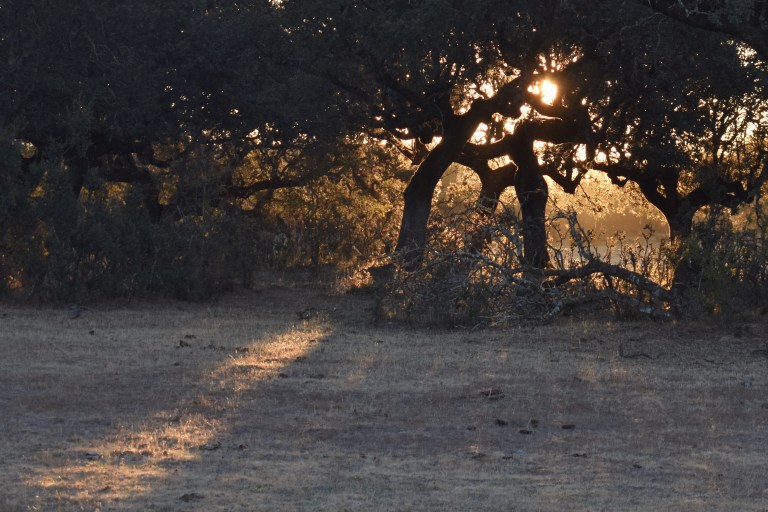
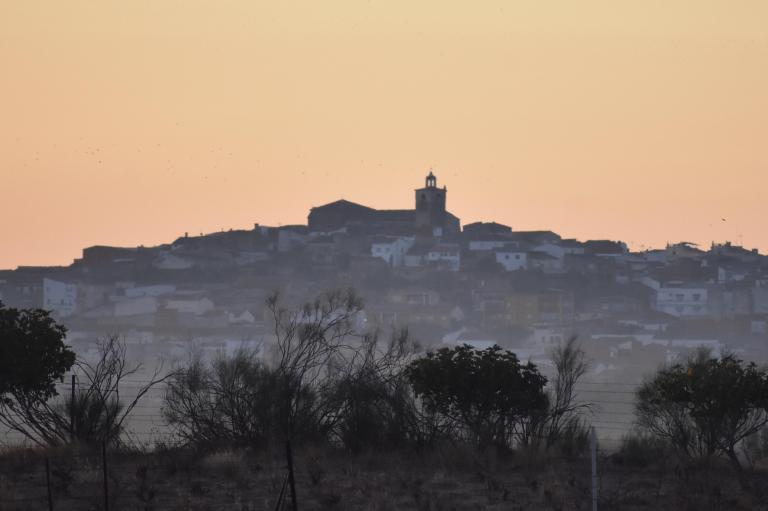
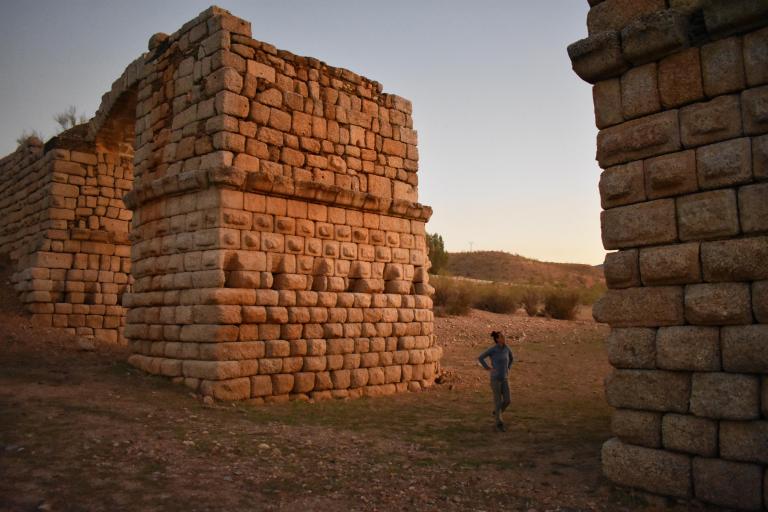
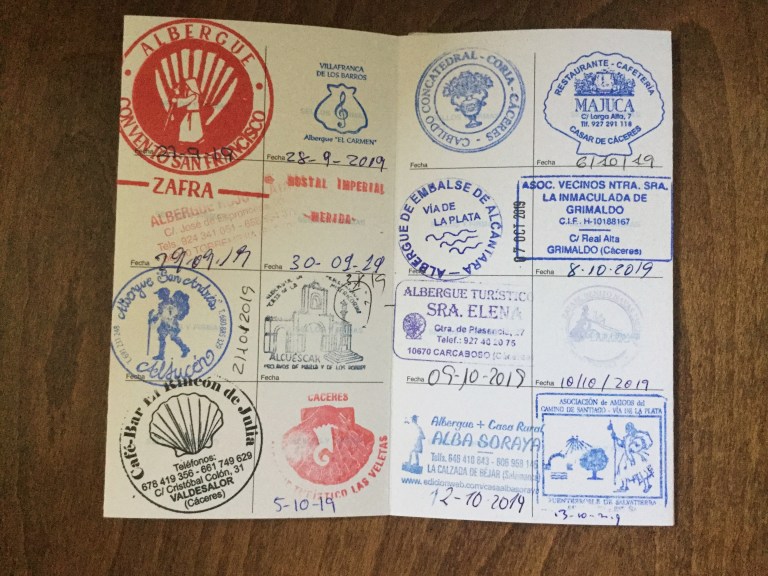
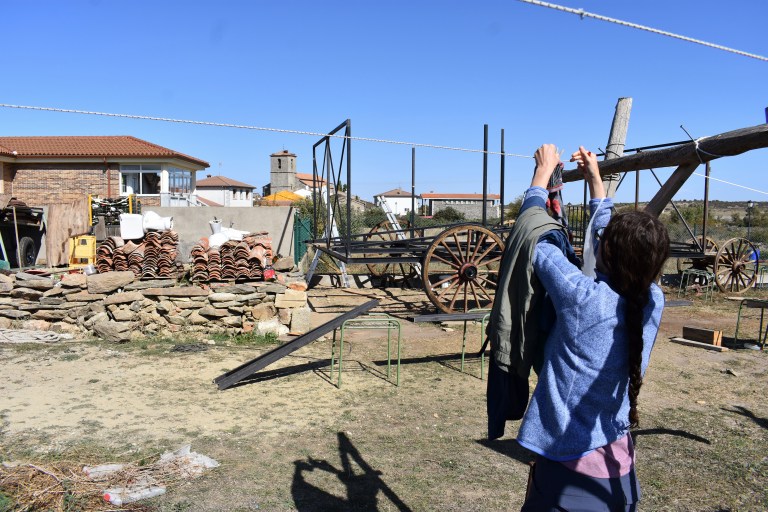
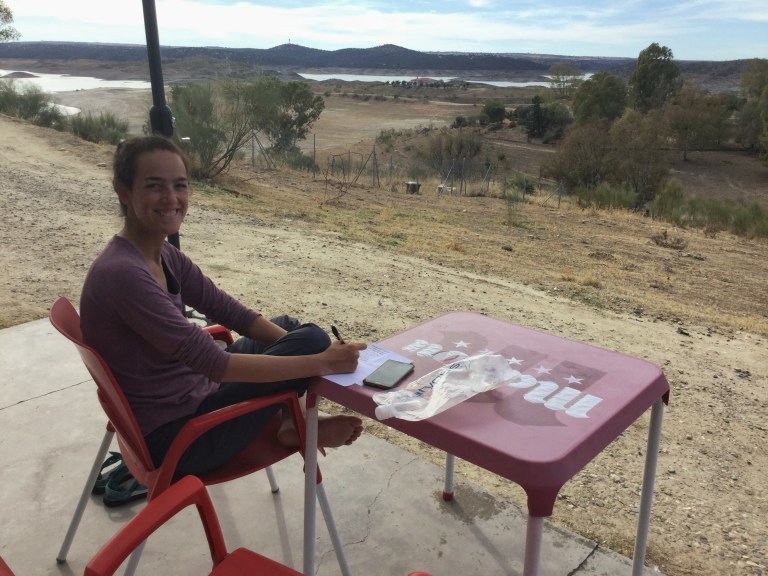
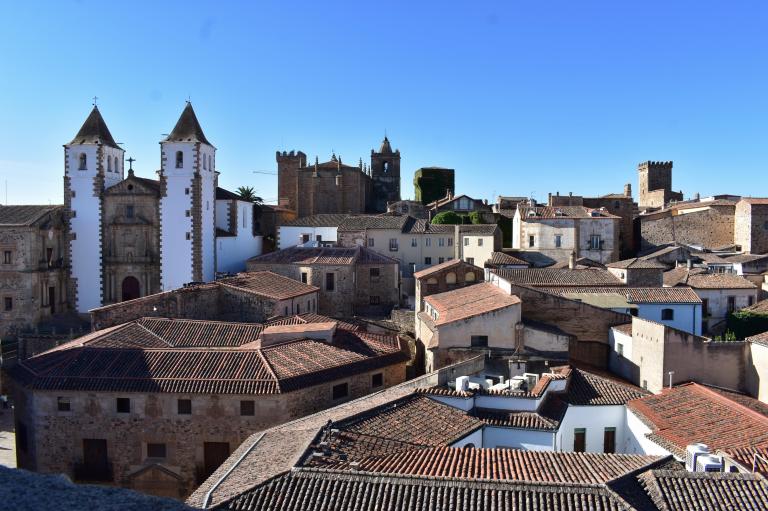
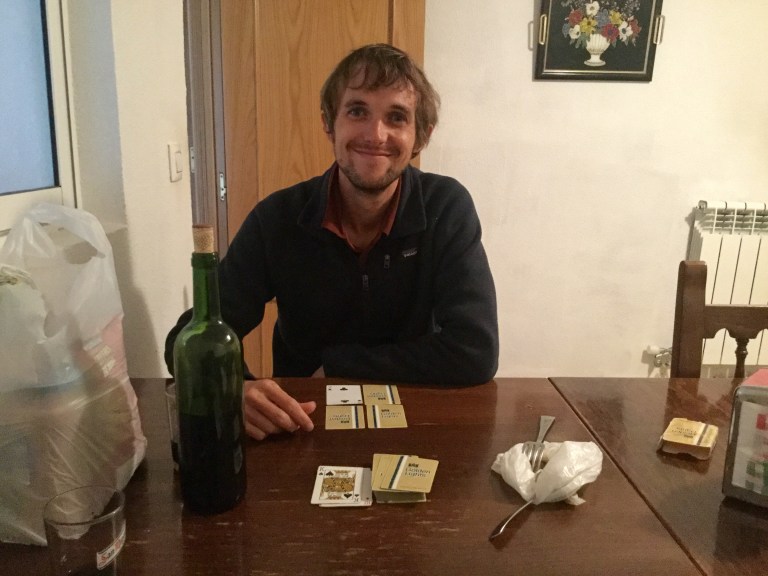
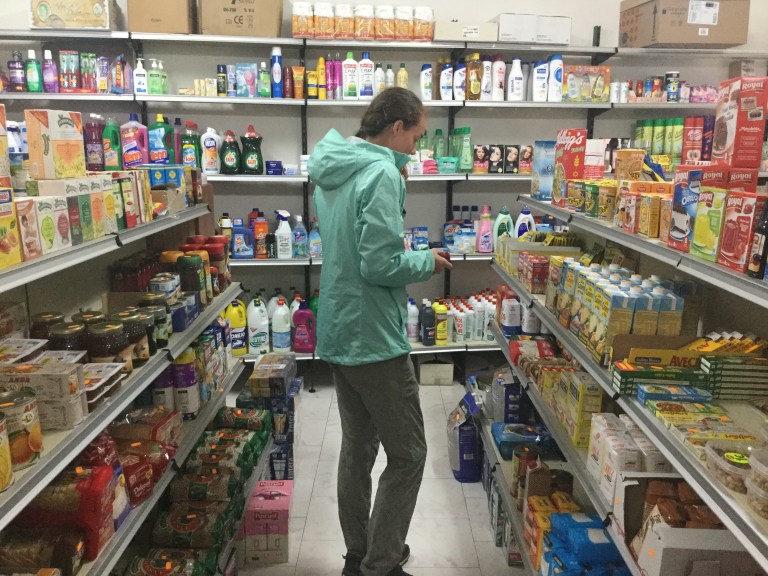
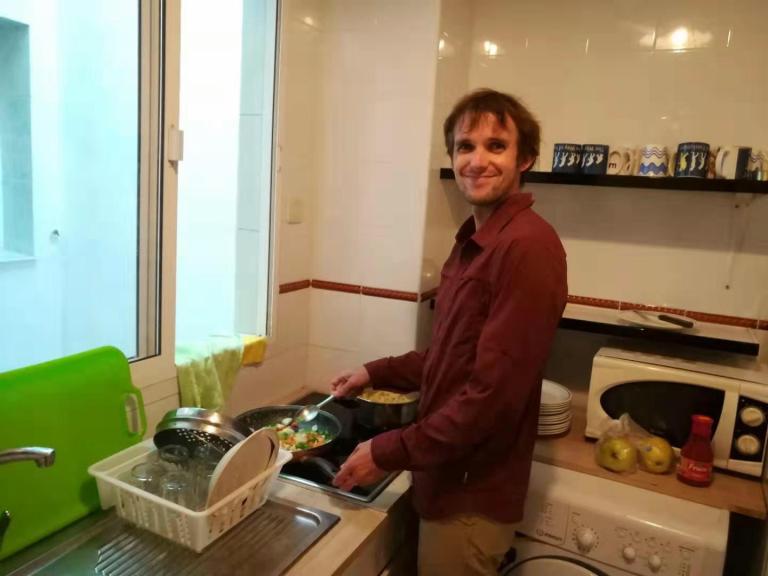
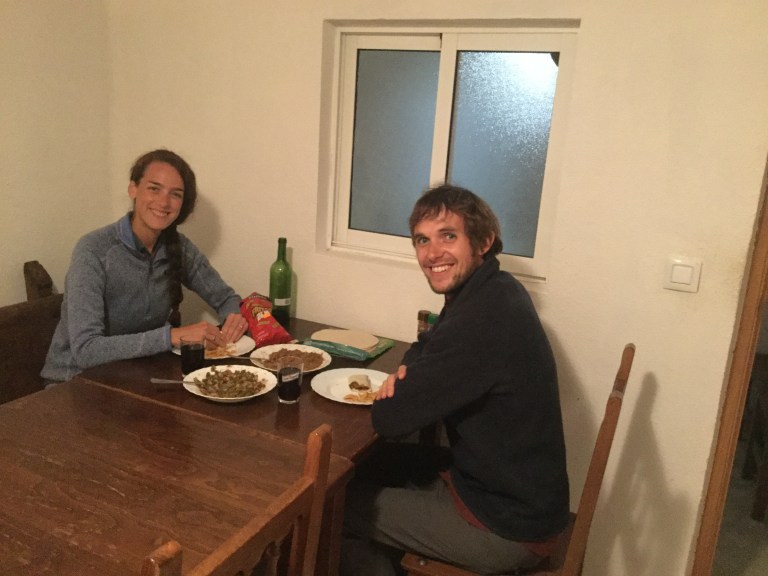
In the cases where we have a private room to ourselves or everyone else in our dorm is waking up at the same time as we are, the lights go on and we begin getting dressed and packing our things.Occasionally, you’ll have one or two people still sleeping at six, in which case we gather all of our things in the dark and move them to the common area of the albergue to pack up.To make things easier (and more water resistant) we have all of our stuff separated into plastic bags. So, in the morning, we just have to put the bags in our backpack and we’re ready to go.Sometimes we’ll have breakfast in the albergue……or on the road while watching the sunrise……or, if we’re lucky enough to have a café open at the ungodly Spanish hour of 7 a.m., go there for breakfast.Most days begin under the stars, which means poor visibility and frequent second-guessing ourselves about whether we’re going in the right direction or not.Though we’ve learned that if we keep the brightening horizon on our right, that means we’re going north and in the right direction.Our favorite part of the day is always at dawn, when the scenery is at its most beautiful and the temperature at its coolest.A hilltop village at sunrise.We’ve also been delighted at times to find a ruin or two sitting on the horizon as the sun comes up; like this castle……or this Roman bridge, which we unquestioningly made a detour to explore.After sunrise, it’s business as usual, trying to get into the next town as early as possible so the brutal heat of the midday sun doesn’t turn our trek into a trudge.In the days when we have longer walks we’ll stop in a shady patch for a picnic lunch, but usually we make it into the next town around noon and have lunch there.After getting our pilgrim credentials stamped and paying the albergue’s fee, which for us has ranged anywhere from free (though they ask for a donation if you have the means) to 15€ a night, we unload our bags, grab a bed, and get showered.Then we wash our offensively stinky clothes……and hang them up……before finally getting off our feet!To wile away the afternoon, we may work on a hobby like writing or editing pictures.If we don’t feel like working on a hobby, we will explore the village or city we are staying in for the night. The picture above is from Caceres, one of our favorite places we have explored so far.And cards are almost always played.Then, once supermarkets open back up after siesta, we will go get our groceries for dinner, and breakfast and lunch the next day.Then we cook……eat……and almost always enjoy a drink together before ending the day around 9:00 or 9:30 when most pilgrims, including these ones, head to bed.
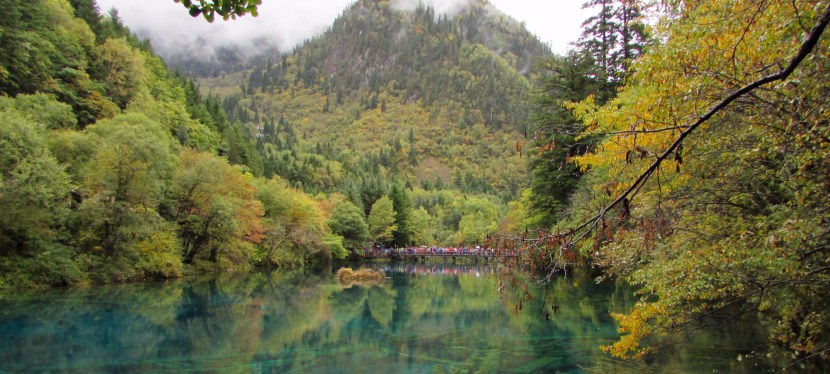
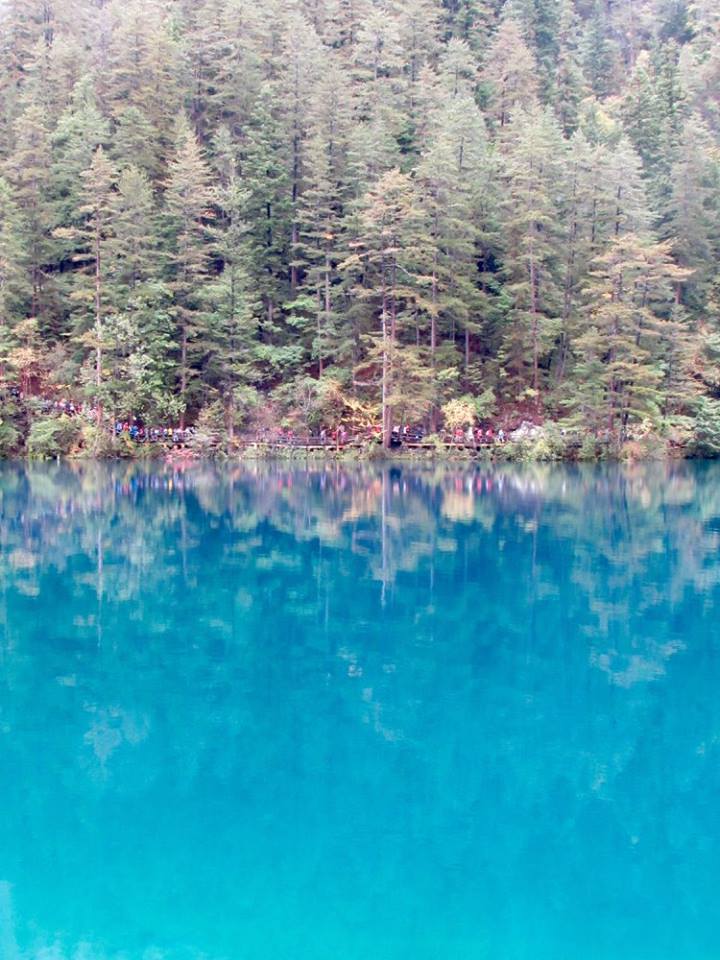
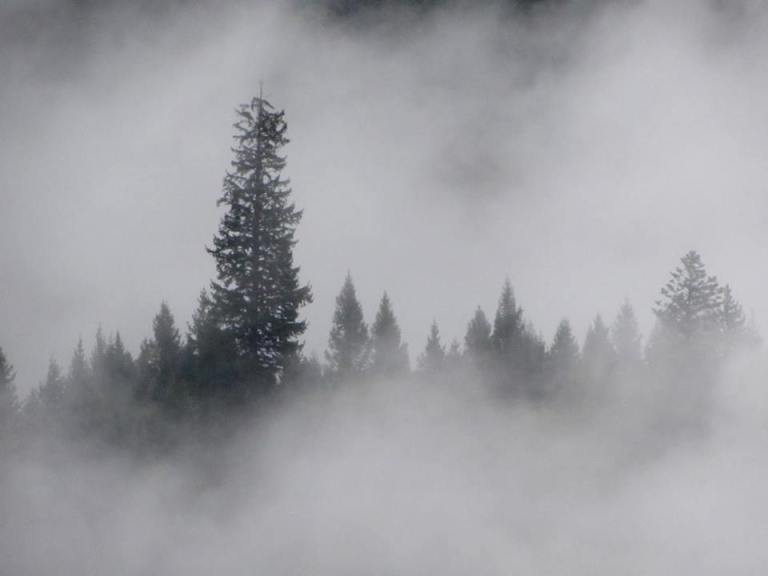
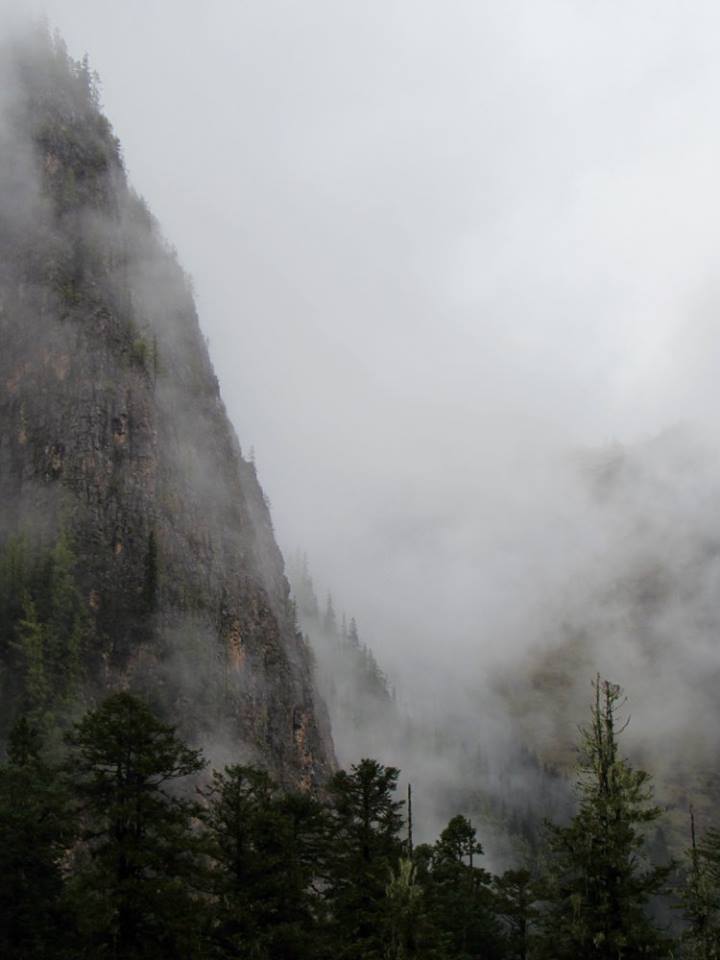
If the beauty of a place is measured by the amount of wows muttered and gasps taken while witnessing it, then China’s Jiuzhaigou National Park may very well be the most beautiful place we’ve ever seen. With lakes so blue they practically glowed through the damp browns and greens of the forest surrounding them to mountains capped with mist-blanketed evergreens, the park was never at a lack of sights to keep us in awe.
The surreal blue water of the parkFoggy evergreens high in the mountains
The beauty of the park and the area surrounding it was even evident in the taxi ride from the airport to our homestay, that is, when we weren’t closing our eyes, wincing in anticipation of death as our driver swerved from lane to lane dodging oncoming traffic and the occasional yak. After about an hour of this we pulled up to our accommodation for the trip: Zhou Ma’s Jiuzhaigou Homestay, a two-story house situated in a small Tibetan village clinging to the mountainside.
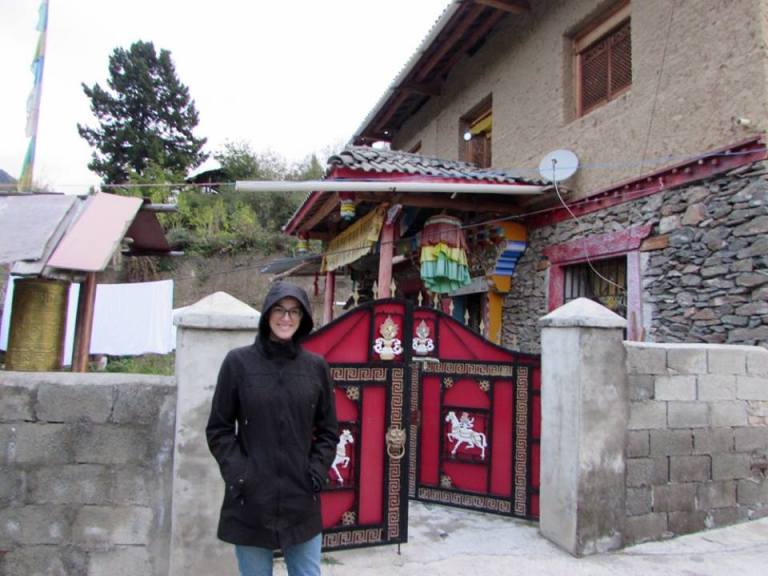
The outside of our homestay
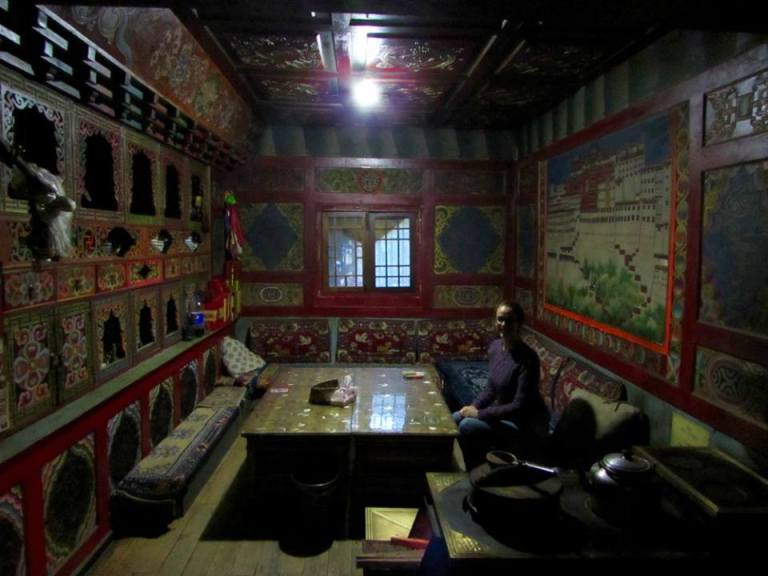
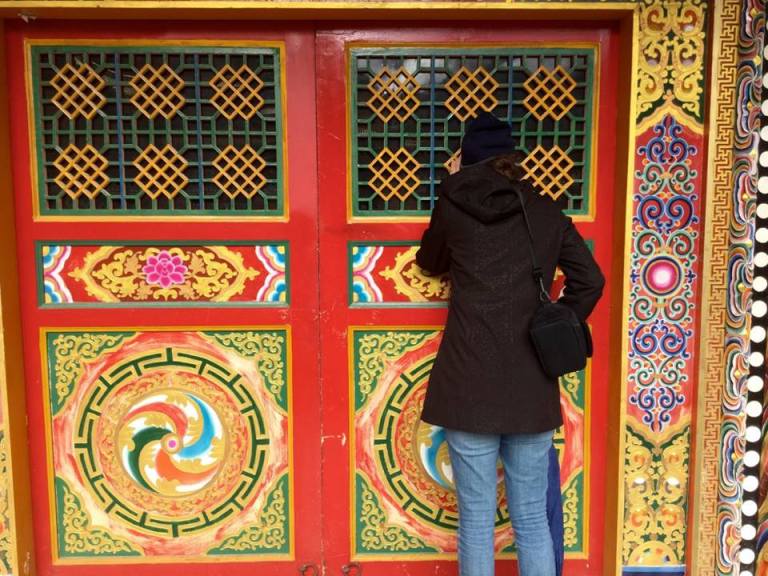
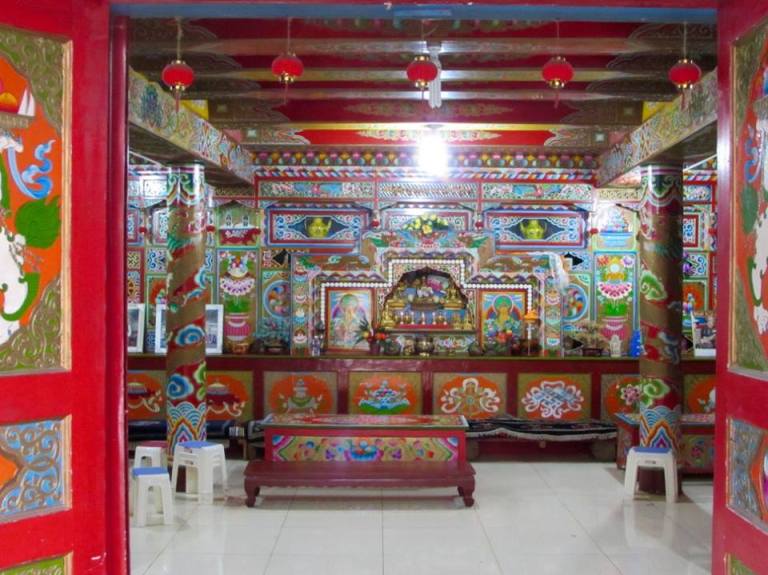
After spilling out of the death trap that had brought us there, we were greeted by the unfailingly charismatic Ama (Tibetan for “mom”) who had a small arsenal of English that she used more as a means of her own amusement than of communicating, made evident by the deep and hearty laugh that followed the small phrases she would utter to us as she gave us a tour of the house. Immediately upon stepping through the heavily ornamented front door, we were met with an elaborately painted and decorated interior, where not an inch of ceiling or wall was spared the stroke of a brush. Everywhere we looked was a work of art.
The front doorOur bedroom
The tour of the house eventually led to our room where we dropped our things and headed out into the village to do some exploring since the waning nature of the day made going to the park out of the question. However ambitious our intentions were though, they were quickly trumped by our weariness from travel and we were soon back in the house, waiting in the common room for our much anticipated home-cooked dinner. As we were the only ones staying there that night, it was a VIP affair with Ama cooking for us and sticking around to chat with us in an unpredictable blend of English and Chinese. This continued for about an hour or so until our mental capacity to continue a conversation in a language we barely grasped failed us and we bid goodnight to Ama and headed up to our room.
Waiting for dinner in the common room
Our second day started early as we wanted to get to the park as close to opening time as possible due to the forums we had read before the trip telling tale after tale of people having to wait in long and chaotic lines just to get a ticket let alone get into the park. Having lived in China for over two years, our imaginations ran wild with apocalyptic images of mobs of people shoving and shouting and complete mayhem unfolding and ruining what we had hoped would be an escape from the headaches of Shanghai. The reality of it, luckily for us, was far from this. The amount of people there was in typical Chinese fashion, but the scene was nowhere near the one we had pessimistically dreamt up.
After maneuvering through the clusters of tour groups, we found ourselves at the ticket counter where we had decided that we would try to pull a fast one on the ticket attendant by pretending we were university students in hopes of cutting the steep $50 entrance fee per person in half. So, we confidently handed over Kate’s long expired college ID and Ryan’s Ohio driver’s license, hoping they would pass as valid student IDs as they have before. Unfortunately for us, the woman spoke fluent English and it only took her a matter of seconds to see through our facade and hand our cards back to us one by one, saying in a scolding tone, “This is past due and this is a driver’s card…620 RMB.”
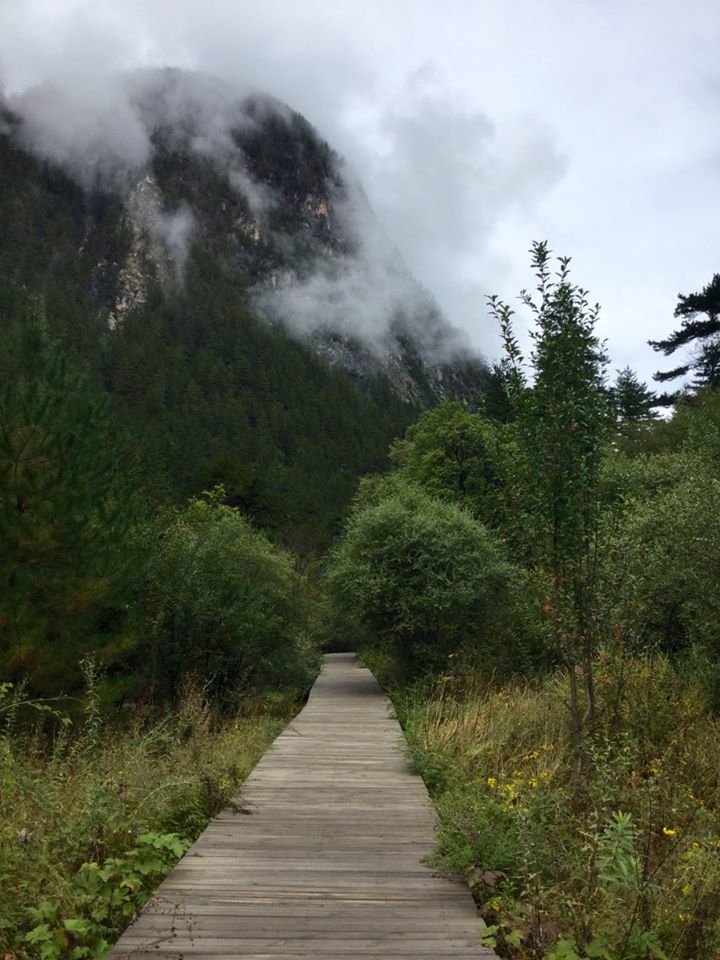
Dignity gone, but tickets in hand, we headed towards the main gate and shortly after entering found ourself in the long lines promised by the various guidebooks and forums. It didn’t take us long though to realize that the lines led to the buses that ran from site to site in the park. Wanting to see what was in between (isn’t that the point?), we hopped the railing and within minutes went from something akin to a death metal mosh pit to a secluded wooden plank road winding through the wilderness.
Starting down the path
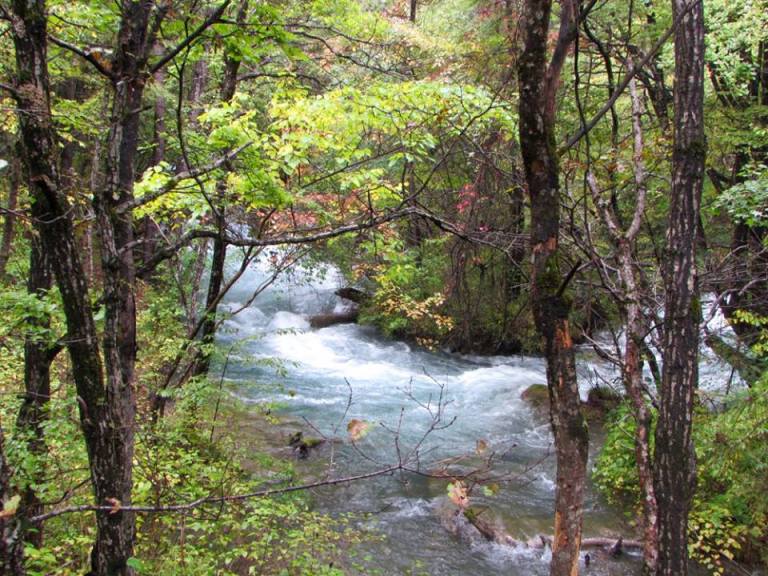
The first thing that caught our eyes (and ears) after getting on the path was the river running alongside of it. Not only was the roar of the violently rumbling water just a few feet away something to behold, but also the clarity of it was unlike anything we had ever seen before. It would set the tone for the rest of our time in the park, a constant state of awe and bewilderment at nature the way it was intended to be: vast and void of the trace of human touch.
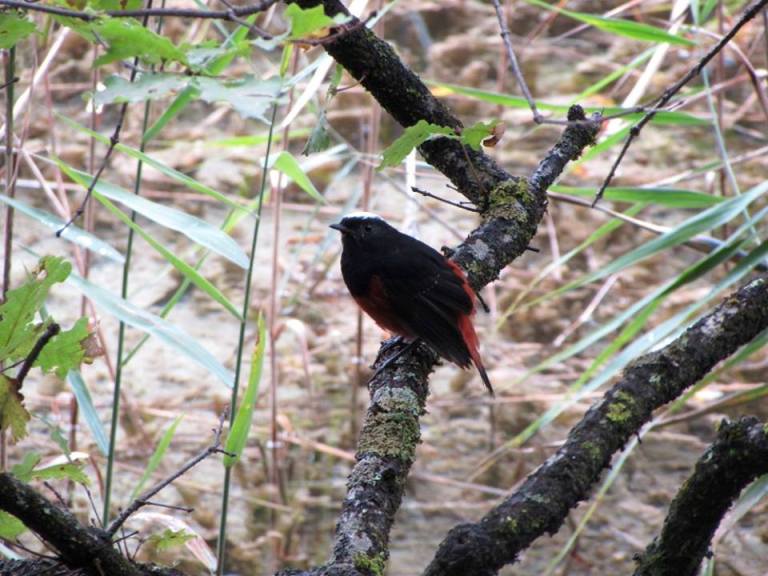
Typical scenery along our hikeThere were of birds hopping about near the river
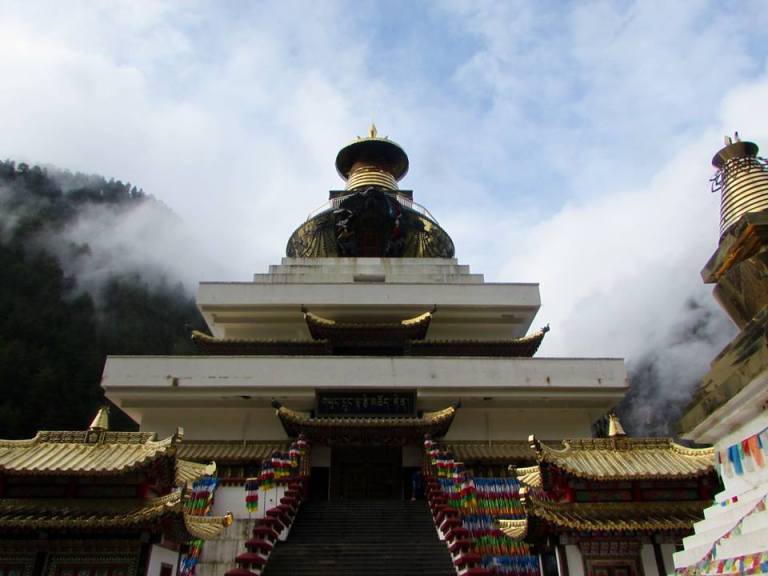
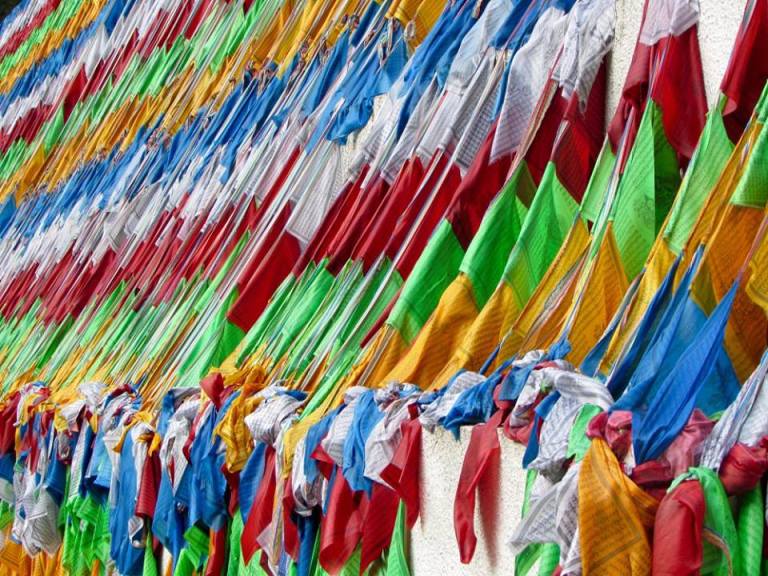
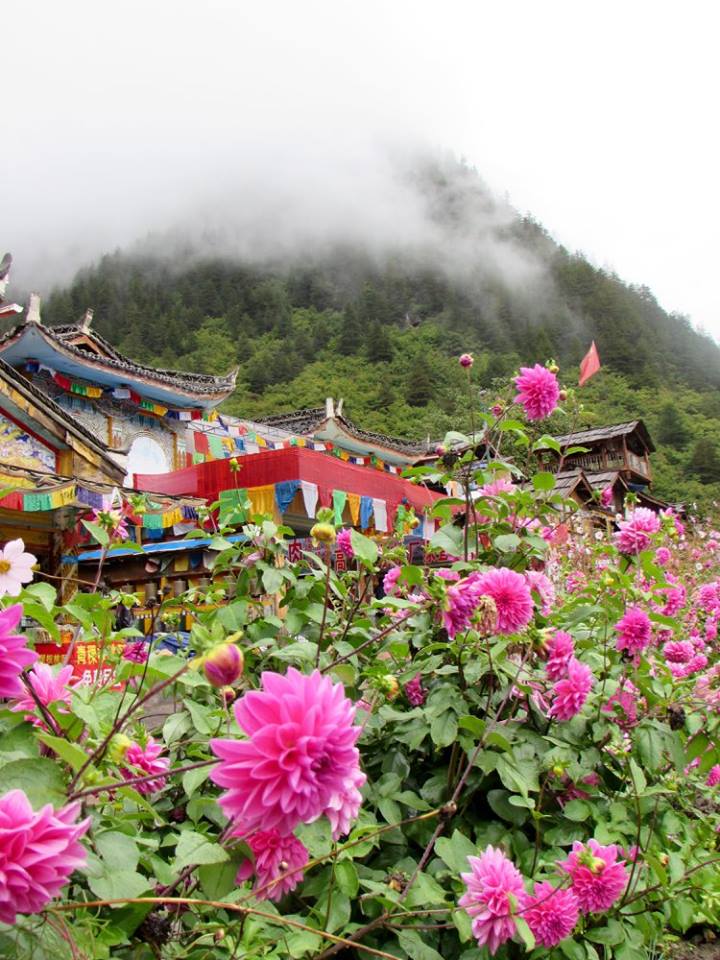
Eventually the path would take us away from the river and towards the park’s resident Buddhist temple. From a distance, the temple seemed rather routine, a white building capped in a golden dome, but as we drew closer, the temple took on the characteristics of the park that inhabited it. Colors exploded from its exterior in the form of Buddhist prayer flags hung all about and the paintings that, much like our homestay, seemed to occupy every square inch of the walls surrounding the temple.
Zharu TempleThe main door to the templePrayer flags hanging down from the temple’s first floorKate peeking in
The sun, which had just miraculously burst through the rainy skies we had grown accustomed to during our hike, shone off of the temple’s golden roof, illuminating the valley in which it sat. If we had been Buddhist, we might have described the experience as spiritual, but as far as we were concerned, we were just happy that the rain had finally stopped.
The sun shining off of the temple’s golden adornments
After the temple, we found our way back to the familiar wooden plank road and walked…and walked…and walked…and, well, you get the point. There were of course breaks every now and then, most notably for a yak meat sandwich prepared for us by Ama, but, most of our time was spent upright, moving further and further into the park. Despite spending nearly ten hours that day on our feet, the fact that we were walking always seemed to be an afterthought. Our focus was never on the path and our striding feet directly below us but rather what that path stretched into. We walked past villages, over rivers, under the shadow of a mountain, past waterfalls and, no matter how hard we tried, there was never the sound of an engine to be heard or a sign of modernity to be seen. You could get lost in it, and we did, for hours. That is until we hit one of the major waterfalls in the park: Shuzheng Waterfall, which sadly meant reentering civilization or at least representatives of it. In what felt like a blink, we went from the seclusion of our beloved plank road to having to wait in line just to advance further along it.
Eating our yak sandwichesThe wooden plank road
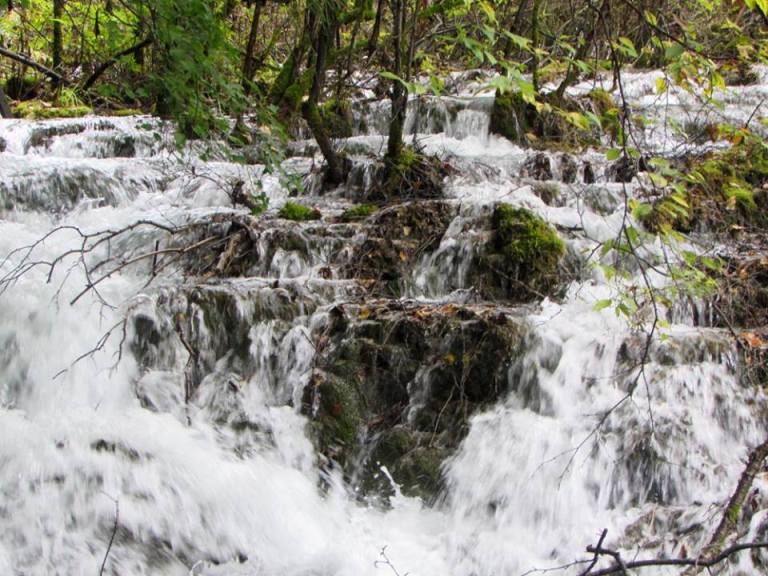
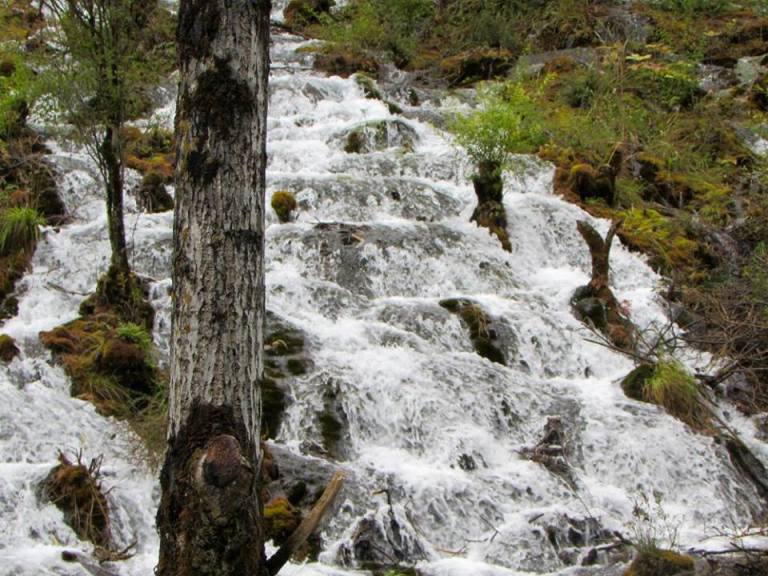
The slowing of pace was welcomed though as it allowed us a significant amount of time to take in the falls, which were unlike any we had ever seen before. Our experience with waterfalls is a river falling over the edge of a cliff in a few, steady streams to the rocks below, but this was more like a lake sliding down a mountain. The water shot in countless different directions, following the grooves laid out by the eroding effects of time. As we climbed upward alongside the falls, deafened by its incessant roar, we began to wonder when exactly we would reach the top of it. Up and up we climbed and still no sign of an end. When we finally did reach the top it was sort of anticlimactic as the source of all that violently tumbling water was not a tumultuous river or lake but instead a relatively shallow and calm pond, which was amazing to us. Perhaps even more amazing yet was the fact that it never stopped. Hour after hour, day after day, the water goes through a Hulkian transformation, falling down the mountainside. Even as you read this it is happening.
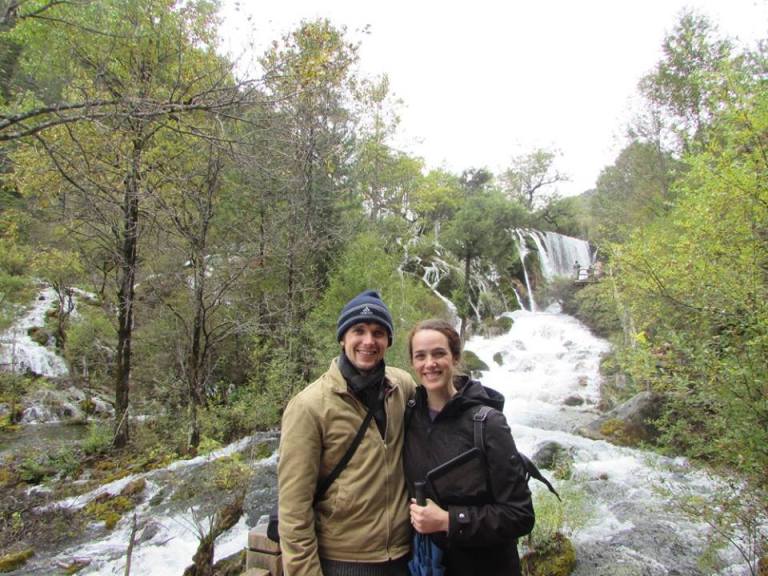
Shuzheng WaterfallThe water sliding down the mountainsideUs in front of the falls
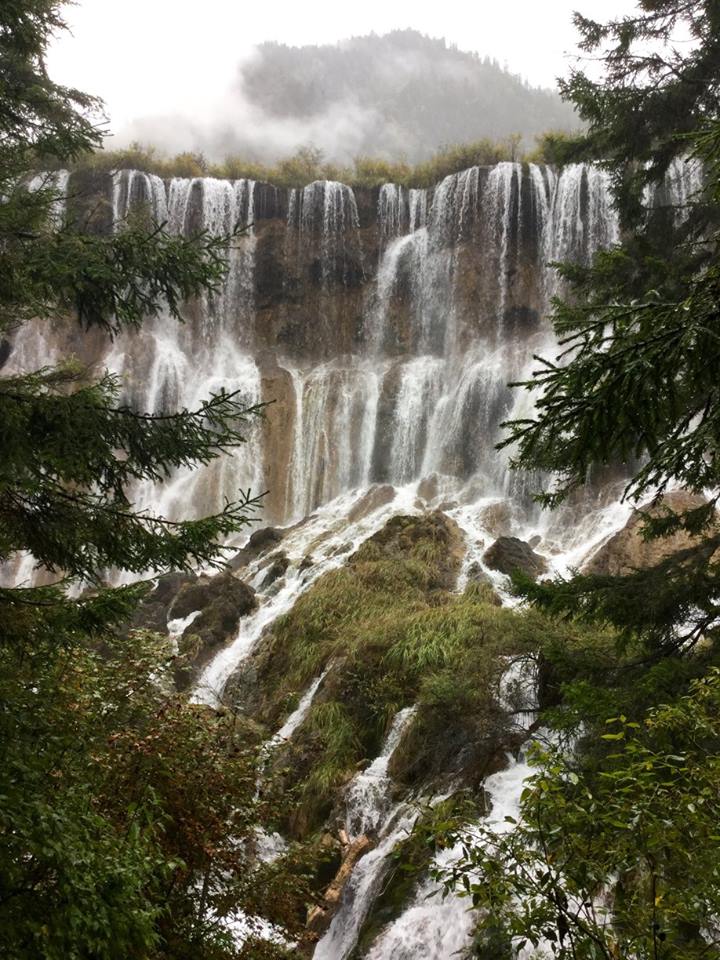
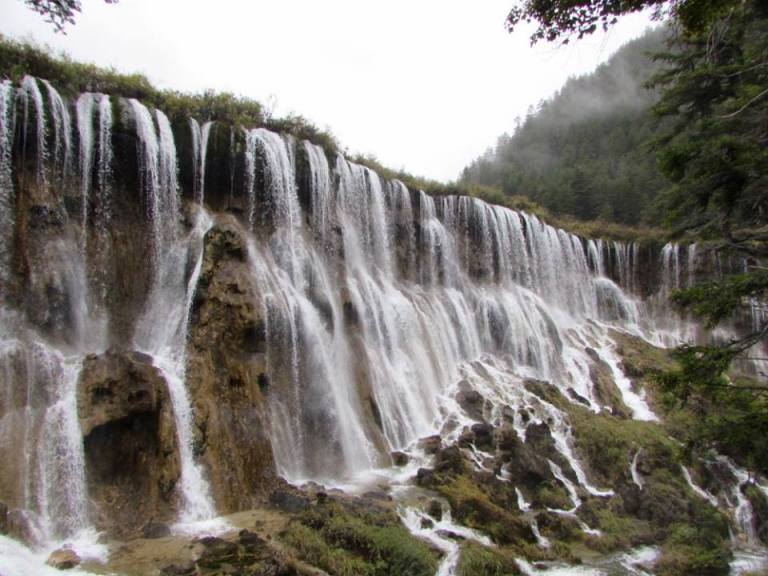
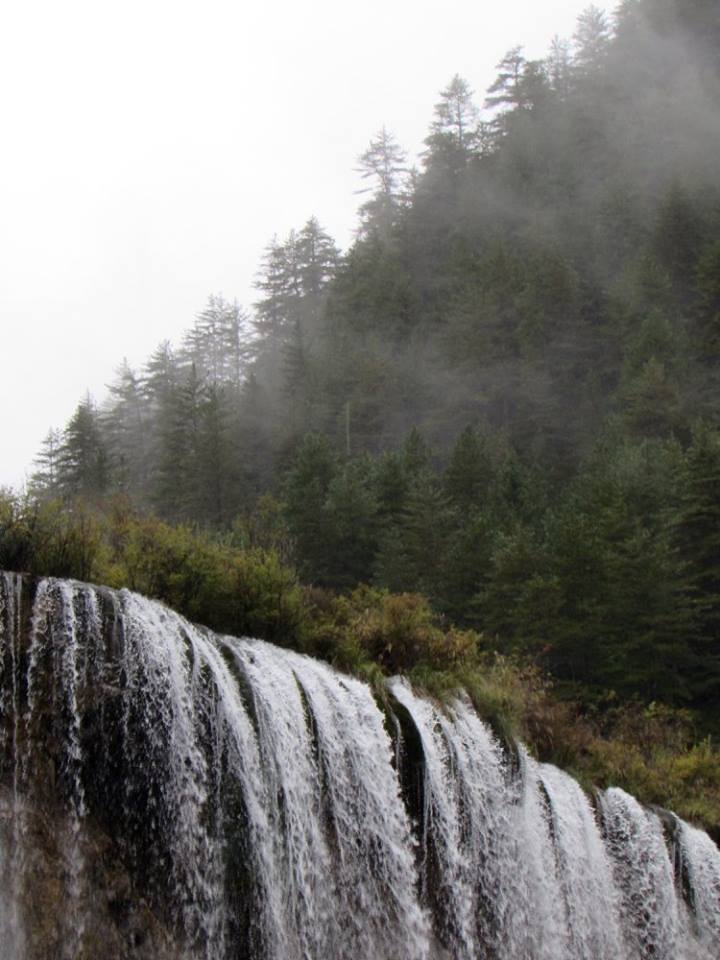
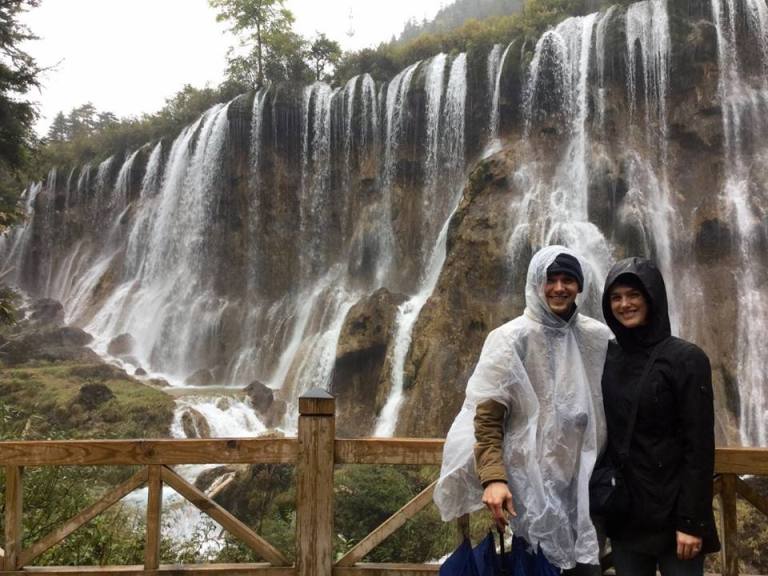
The path followed the water for the next hour or so and we watched it turn from a calm and shallow pond to a body consumed by reeds and trees to the point of the water being barely visible, to a rolling river to, finally, another waterfall: Nuorilang Waterfall. While it shared the same natural name as Shuzheng Falls, Nuorilang was more of a distant cousin than of immediate relation as the differences between the two were many. For starters, this one didn’t slide down the mountainside like Shuzheng appeared to have done but rather thrust itself off of the cliff side, crashing into the rocks below and creating a white and foamy mess that fizzled off into the distance. The cliff, to our delight, stretched off across our line of vision as far as the tall evergreens scattered about would allow. It was truly spectacular and we might have enjoyed it more had another waterfall provided by the clouds overhead not picked up dramatically, making the decision to call it a day and head back to the homestay all the easier.
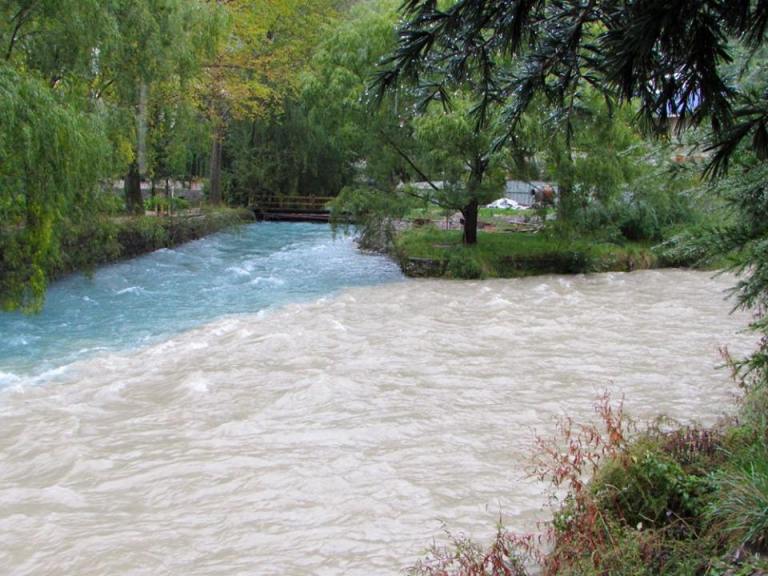
Nuorilang WaterfallIt was much bigger than the last oneA close-up of the water as it falls over the cliffsideThe raincoats are back on as Nuorilang wasn’t the only thing producing falling waterAs we left the park we saw this: the point where the river from inside the park met with the one from outside of it. Can you guess which one is which?
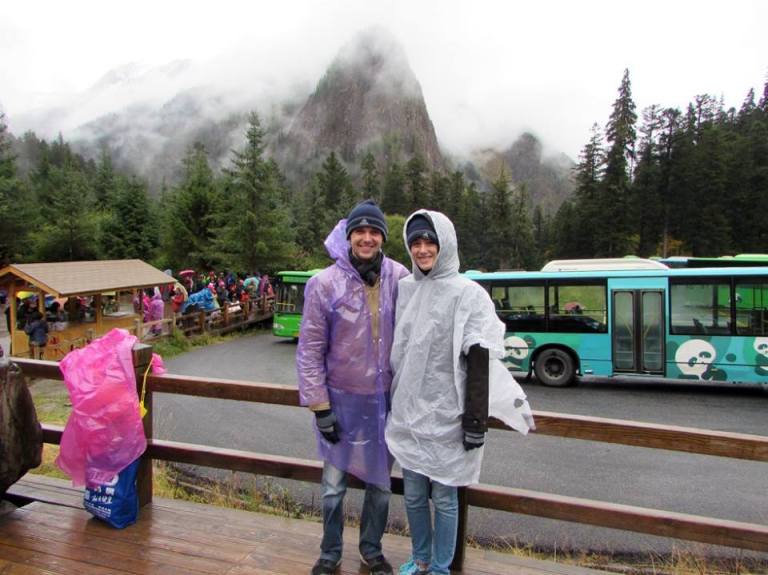
If you look at a map of Jiuzhaigou, you’d unmistakably see the letter Y stretched across it, with each line of the letter’s body representing a different valley in the park. From the bottom of the Y to the top is around 30km and, despite hiking from dawn to dusk the day before, we had barely made it to the point where the three valleys connect. Walking Jiuzhaigou in its entirety was out of the question. Instead, for our sday there, we would have to use the shuttle buses if we wanted to see the extremities of the park that our legs couldn’t take us to. This was a difficult decision to come to because we’d much rather hike the park as opposed to ride through it and, as we had experienced the day before, the bus scene was nightmarish. If you’ve ever seen a movie about the apocalypse where hordes of people are trying to push past a line of soldiers, you might have an idea of what the lines leading up to the buses were like, only this scenario, a seat on a bus, was far less dramatic. But, as our experience in China has taught us, an open seat on public transportation is about as dramatic as it gets for the Chinese.
So, bit by bit, we pushed and squeezed and cursed our way to the front, the experience transforming us into rabid animals as we fell victim to mob mentality. As the next bus pulled up, chaos ensued (the video below, taken further inside the park, is a much tamer version of what we experienced at the entrance). Despite being the first in line for it, we were somehow not the first people in. As we finally made it to the door, a little old woman (a bowling ball as we call them due to their ferocity and crashing nature towards an open seat on the subway) came barreling through. We dared not interfere with her and instead followed the open path she created to finally get on the bus and have a seat. It was about the worst possible way to begin a park experience.
Our first stop was Shuzheng Village, which shared the same name as one of the waterfalls we had seen the day before. Jiuzhaigou literally means “valley of nine villages” so we figured it would be in our best interest to see at least one of the park’s nine namesakes. So, after getting off the bus we ditched the crowds as best we could and made our way into the village. Like the valley itself, the village, at least from the outside, seemed not to belong to this time. Colors, much like everything else we had seen in the park up to this point, were the theme. From the peeling paint of the buildings’ exteriors to the souvenirs being sold inside of them to the colorful flowers shooting up from fields surrounding it, the village was never at a lack of dullness. Unfortunately, the same could not be said for its atmosphere as there was an air of unwelcomeness as we walked through the streets. Their lifestyles had been exploited for a profit and we represented the reason why. We felt like we were intruding on something we weren’t meant to. As we found out there and in many other places, people’s lives aren’t meant to be an attraction, no matter how different they may be.
Flowers outside of Shuzheng VillageOne of the souvenir shopsLooking our from inside the village
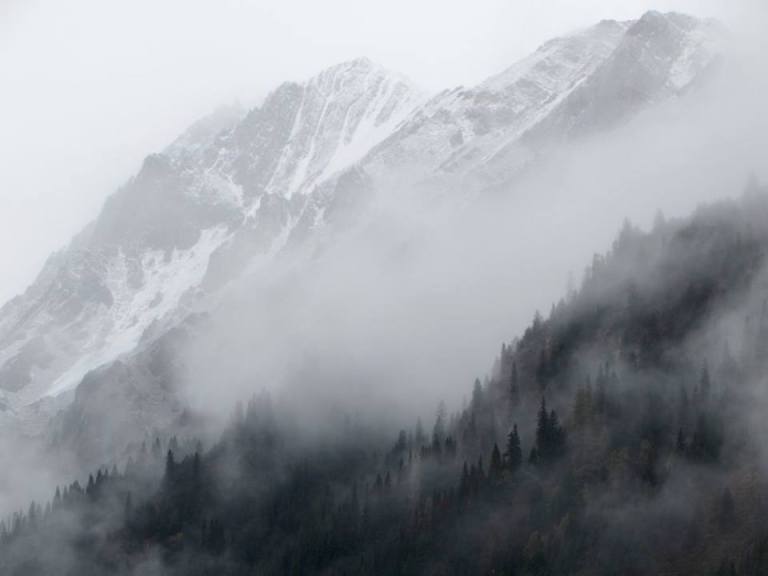
Once out of the village, we decided to hike for a little while before getting back on a bus to head to the farthest reach of the park, the Primeval Forest. Located at a higher altitude than what our previous explorations had allowed, the forest was much colder than the comparatively warmer confines of the lower valley. After getting out of the bus we were met with one of the more beautiful scenes we would witness in the whole of our time in Jiuzhaigou. At our backs, the deep and dense forest stretched off into the distance and, in front of us, a purposeful distribution of mountains were strewn across the horizon, each one covered with evergreens that appeared black in the dim morning light. A thin veil of fog covered the entire scene, appearing motionless as it sat in the vacant spaces between the trees. And, to cap it all off, as we looked out at the scene the snowy peak of a mountain slowly began to materialize from behind the fog. It was as if the scene was scripted, a show put on by nature for its admirers.
The fog, which seemed frozen in place, hanging over the sceneryThe ice-capped mountain after it materialized from behind the fogGetting ready to head into the forest
After the fog had dissipated and the show was over, we turned our backs on the scene and headed into the forest. Deep and dark and motionless, there’s a good reason why forests are always depicted in stories as being mysterious places full of danger. Their empty spaces allow for one’s imagination to fill them with all kinds of fantastical and terrible things. Luckily for us, this particular forest had a familiar wooden plank road winding through it. Familiarity, it seems, is the best antidote for fear.
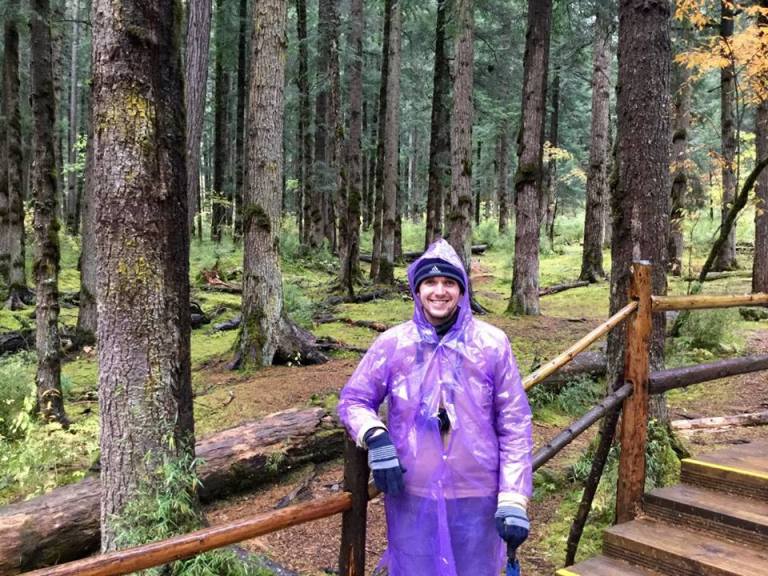
The Primeval ForestStopping for a quick picture inside the forest
With the plank road, there was also no need to worry about losing our way. Instead, we occupied our minds with the stillness and complete tranquility that stretched as far we could see in any direction we cared to look in. Even the people seemed quieter and calmer than in other areas of the park. Perhaps we imitate the environment around us. Near the hectic and noisy waterfalls, people were rambunctious, but in the forest, those same people barely made a sound.
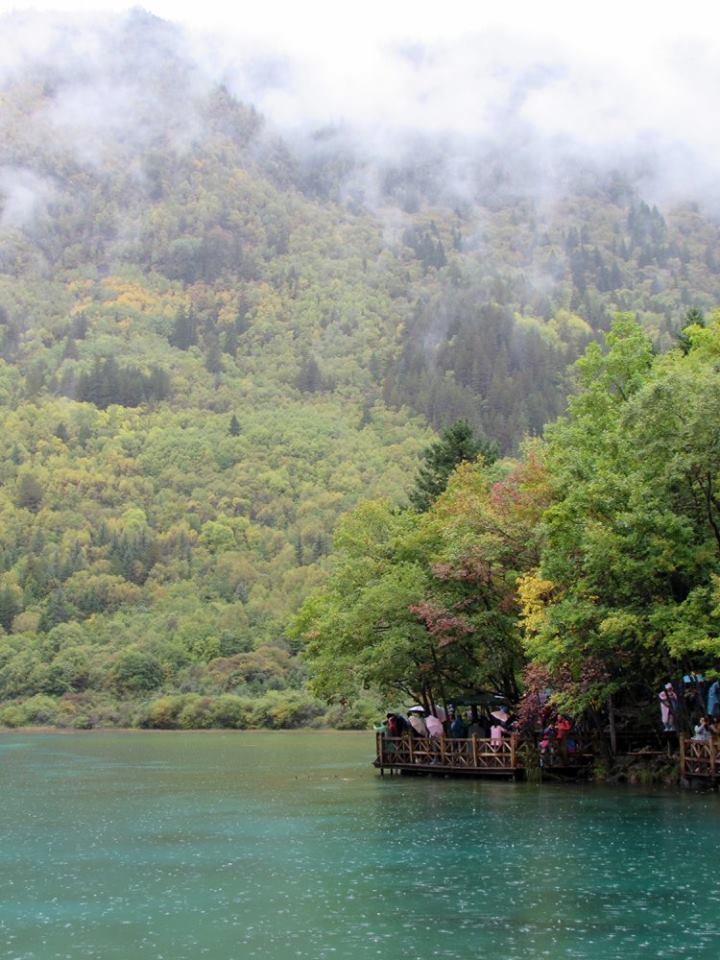
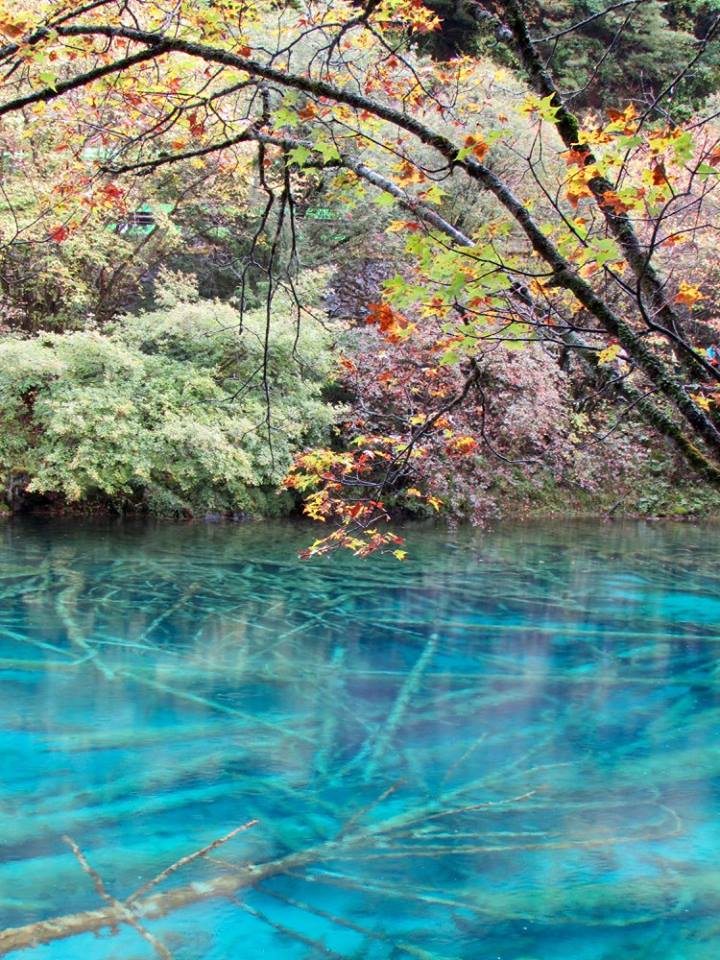
After leaving the forest, we hopped back on a bus en route to our next destination: Five Flower Lake, one of the sites we were most looking forward to seeing. The lake got its name because the different colors it takes on makes it resemble a flower garden. The color we were seeing that day was an icy blue, as clear and as crisp as one could imagine water being. The lake sunk to a depth of about sixteen feet and every inch of it was as visible as the fiery leaves floating on the surface.
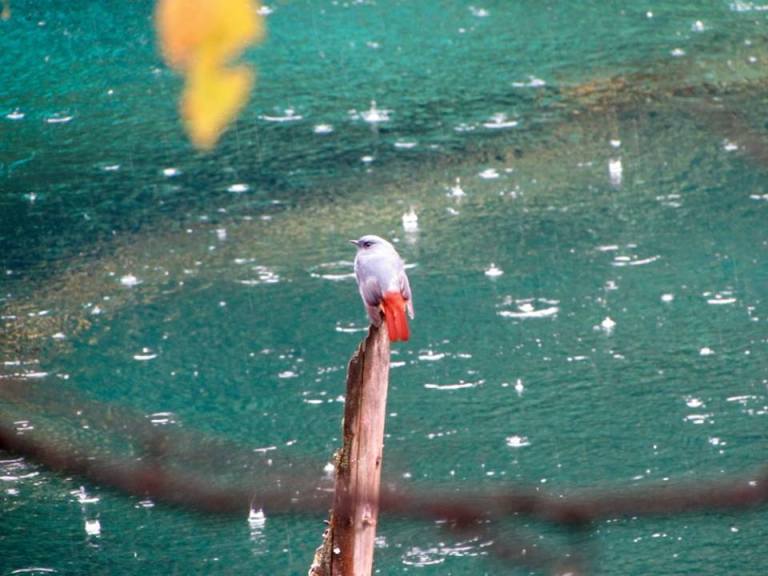
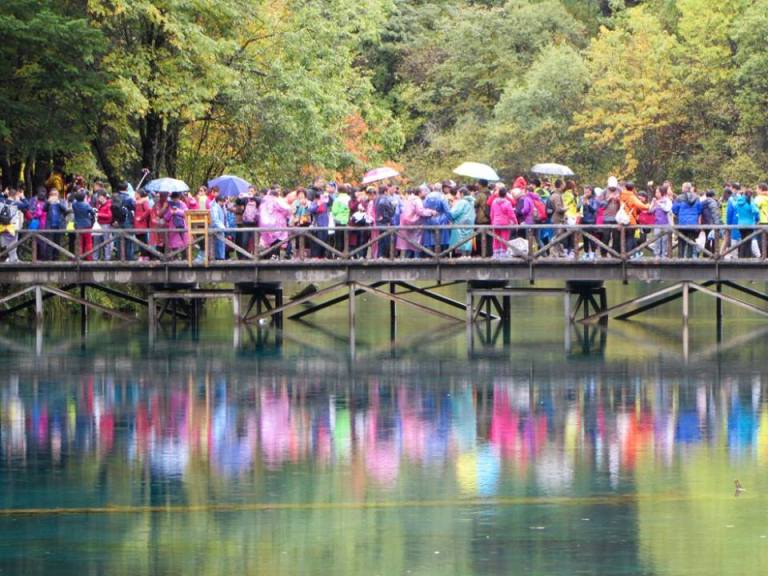
People admiring the lake, whose surface is blemished by the ripples of raindrops in this pictureA bird seemingly unbothered by the rainThe lake was one of the more popular places to see as evidenced by this crowded bridge running across it
If the water wasn’t enough to incite one’s sense of awe, the trees, laying jumbled like a game of pick-up-sticks beneath the surface, would certainly do the trick. As we looked down it felt like we were gazing upon an ancient shipwreck, whose demise was violent but now sat peacefully preserved in the water. The scene didn’t move or change, but we couldn’t look away. So, as the rain stopped and the crowds moved around us, our eyes stayed fixated upon the lake while our minds struggled to grasp the beauty of it. Sadly, we had other corners of the park to explore and, after leaving Five Flower Lake and enjoying another yak meat sandwich, we were back on a bus and heading to the pragmatically named Long Lake.
Fallen trees paralyzed below the surface of the lake
The lake couldn’t have been more different from the one we had just seen. Whereas Five Flower Lake was shallow and small, Long Lake was deep and, well, long. So long in fact that we couldn’t even see the end of it as it winded around the corner of a mountain and out of sight. It’s said that when someone experiences the grandeur of nature, they are humbled and inclined to be more empathetic towards others as they are reminded that there are things much bigger and eternal than themselves in this world. Long Lake seemed to have had that effect on the people looking out at it. Much like the forest earlier in the day, everyone there was in a state of quiet contemplation.
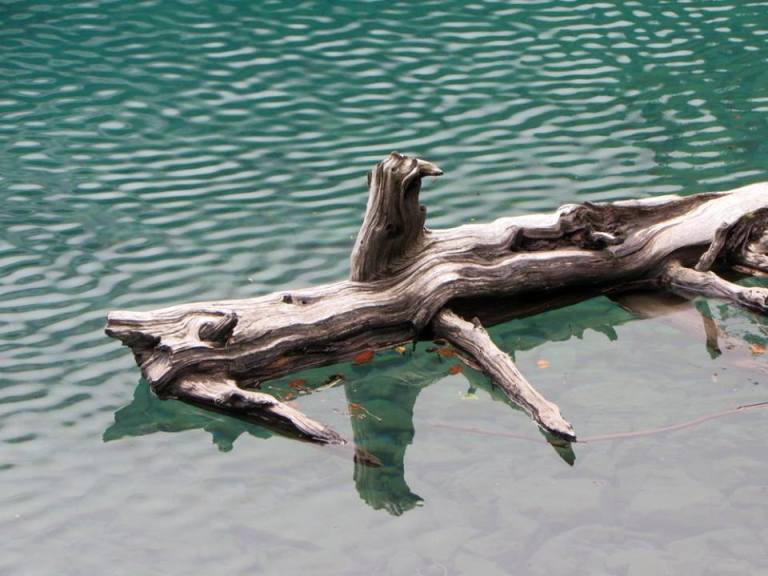
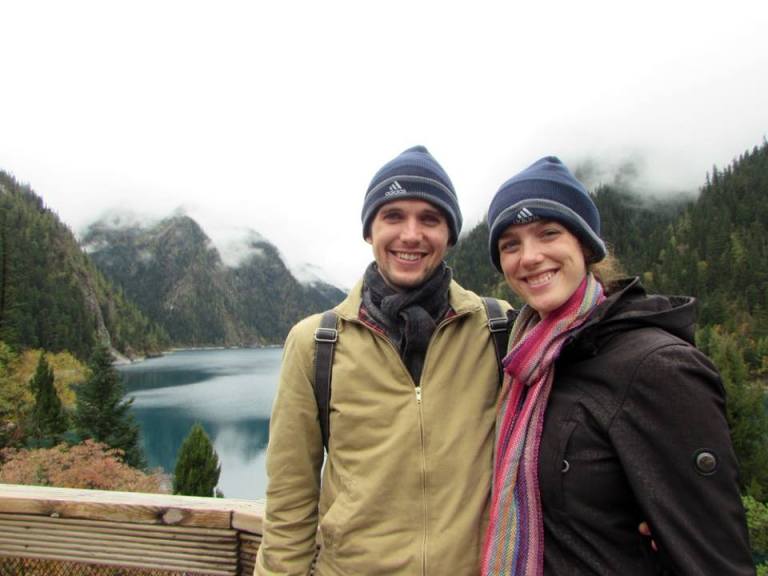
Long LakeA fallen tree that hasn’t yet sunkUs in front of the lake
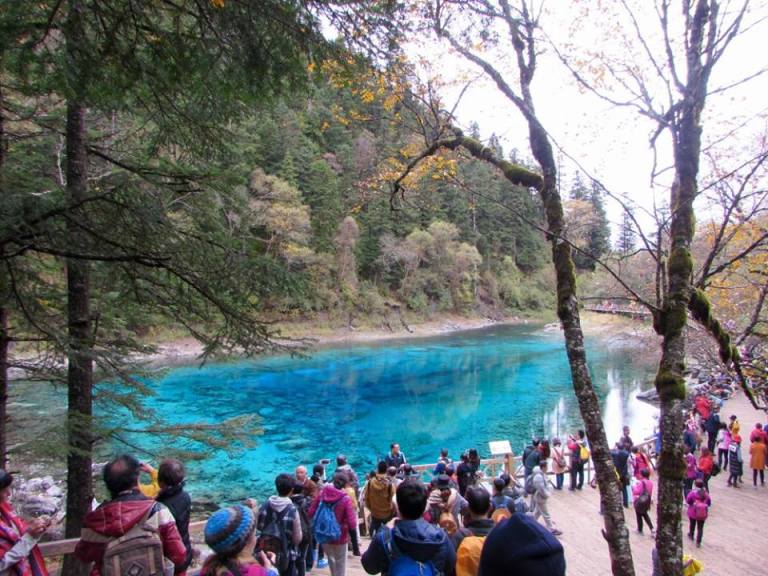
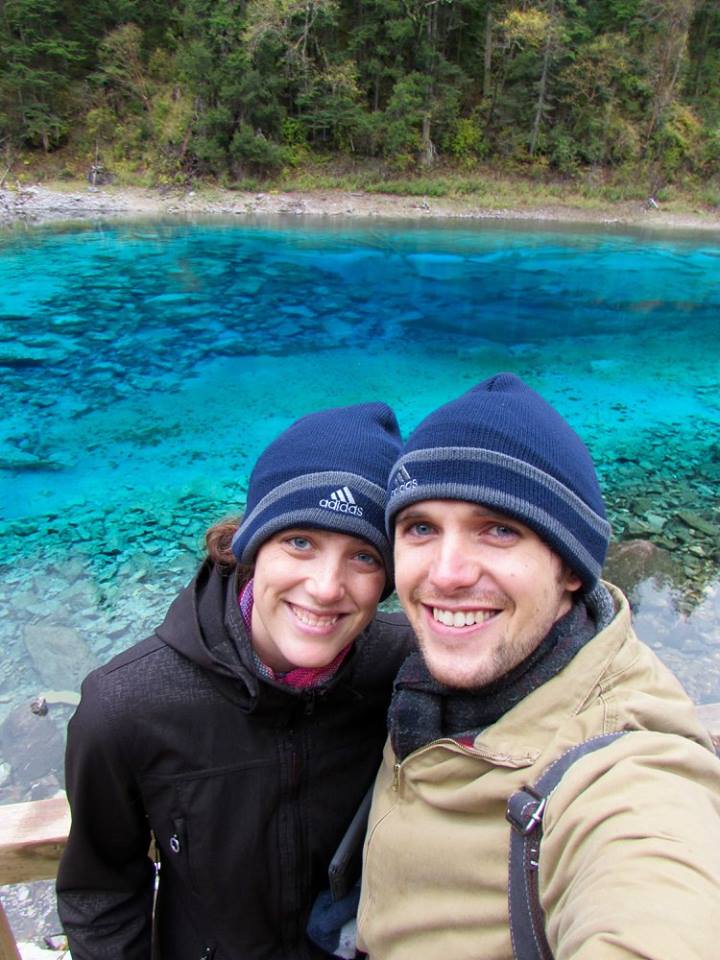
With our day now nearing its end, we wanted to see one more lake before calling it quits and decided to hike to the Five Colored Pond, which laid a little further down the valley from Long Lake. The hike there, to our delight, was secluded and, after about a half hour or so we were alerted to our arrival at the pond by the bright blue we saw filling the spaces in between the trees ahead. We giddily descended to the lakeshore, which, like Five Flower Lake, was shallow and small and crystal clear.
People gathering around the Five Colored PondOur last picture inside the park
Sometimes it’s hard to imagine natural water as being blue. Sure, when you’re a child and coloring an ocean, you make it blue, but rarely does reality reflect that. Rivers run brown, lakes become murky and almost greenish, but this water was truly blue. Not knowing when we would get to see anything like that again, we stuck around, looking out at it all before finally convincing ourselves to head back to our homestay.
That night for dinner, a final home-cooked meal capped off our experience of Jiuzhaigou and the next morning we boarded a bus for Chengdu, the next leg of our trip. It was hard to leave the park and homestay behind us and, even as we write this now, our hearts ache knowing that, most likely, we will never get to experience it again. It will forever be a memory, and what a memory it will be.


















 Worn Out Shoes