Kyoto

The lines leading up to the opening subway doors were neat and orderly and, after all the departing passengers had left, we patiently filed into the car, making our way to one of the many plush red velvet seats available to us. As we nestled ourselves in to the seats, which also happened to be heated, and lazily gazed around the car, it became very clear that we weren’t in China anymore. Sure the faces looked the same and the buzz of a big city was still ringing in our ears, but there were also sounds of birds and wildlife being played over the subway speaker system. This was Kyoto, it was different, and we liked it.

Our home base for the trip was Khaosan Kyoto Guesthouse, which was tucked away in an alley just off of one of the main shopping streets in the city. We arrived late in the afternoon so, wanting to make the most of the little time we had in a city of 2,000 temples, we made a brief stop to drop off our bags before heading off to the Arashiyama district in the outskirts of the city.

After arriving in the district, we wondered if we had gone to the right place. Temples, bamboo forests and monkeys were the attraction, but as we exited the subway station, our eyes were met instead with a surrounding of tree-blanketed hills roller-coastering their way around the skyline and a clear, gentle river running in between. Unsure of where to go, we decided to follow the scattered clusters of people meandering towards a bridge that crossed to a small town just over the river. As we crossed the bridge, the tranquil atmosphere that accompanied the walk up to it soon disappeared into a bustling one as we entered the enclave of one and two story buildings. The streets buzzed with tourists scrambling to try the wide array of new things awaiting them (which were many) ranging from fried seafood on a stick to rickshaw rides.

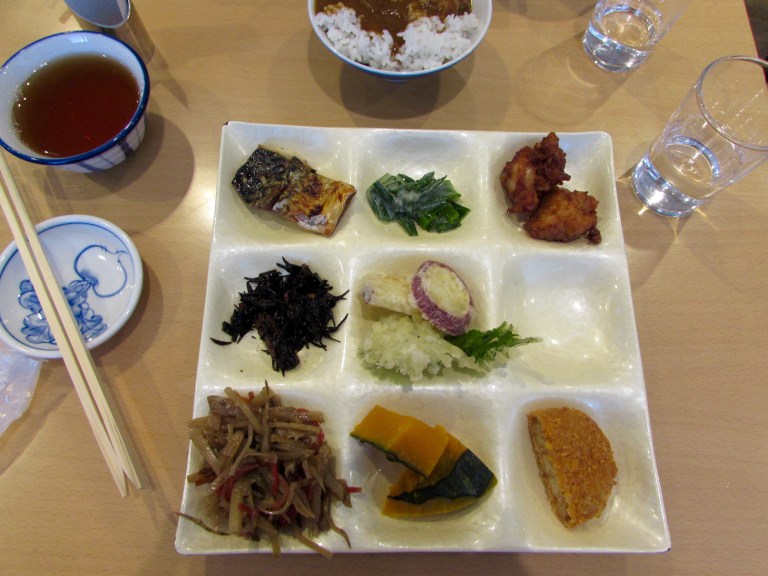
We decided to save the commotion for later and settled on a buffet which was a unique experience unto itself. The buffet featured an assortment of bite-size dishes that included everything from steamed pumpkin to fried potatoes to pieces of colorful tofu molded into little flowers, with all of it being served up in small baskets placed around the room. Our plates, large and square with nine separate sections indented into them, were ingeniously designed to accommodate the bountiful selection before us. We were allotted 60 minutes for the buffet but, despite our valiant efforts to fill each of the minutes as fully as we had each of the sections of our plate, our stomachs waved the white flag at just 45 minutes and we decided to leave early. In need of a good walk after this, we headed to Tenryu-ji, one of the main temples in the area.
IMG_7558
The first of several plates.

Before coming to Japan a student had asked Ryan why he was going through all the hassle of going to another country to see temples and mountains when he could see both of those right in China. The answer to that became clear as we entered the temple. It undoubtedly shared many similarities with temples we had seen in China, but there were just enough differences to make it feel like we were touring a temple for the first time. Many of the buildings’ roofs were not tiled, as they are in China, but thatched, the walls were paper, and the gardens designed to an aesthetic uniformity. So much so in fact that as we walked through them we felt as if we were walking through a miniature set where each tree and bush had been placed exactly where they were meant to be by giant hands from above.

IMG_7592
Garden landscape at Tenryu-ji.
IMG_7615
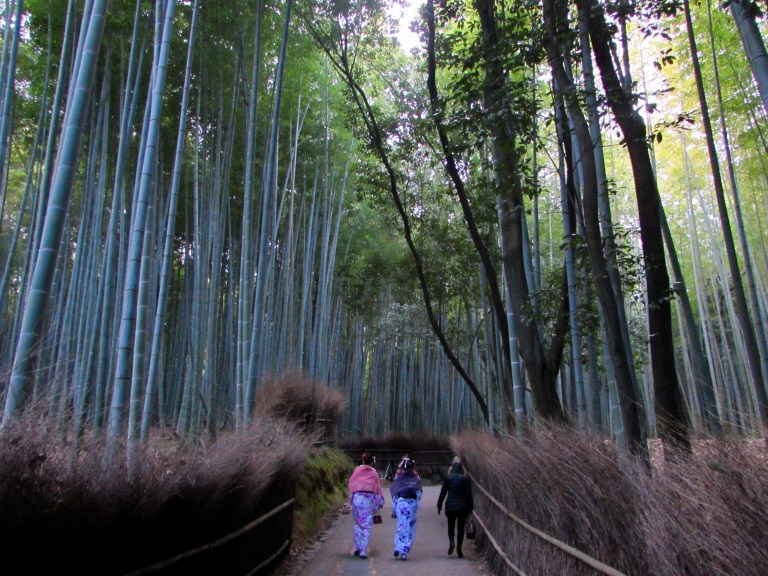
Walking through the bamboo forest.

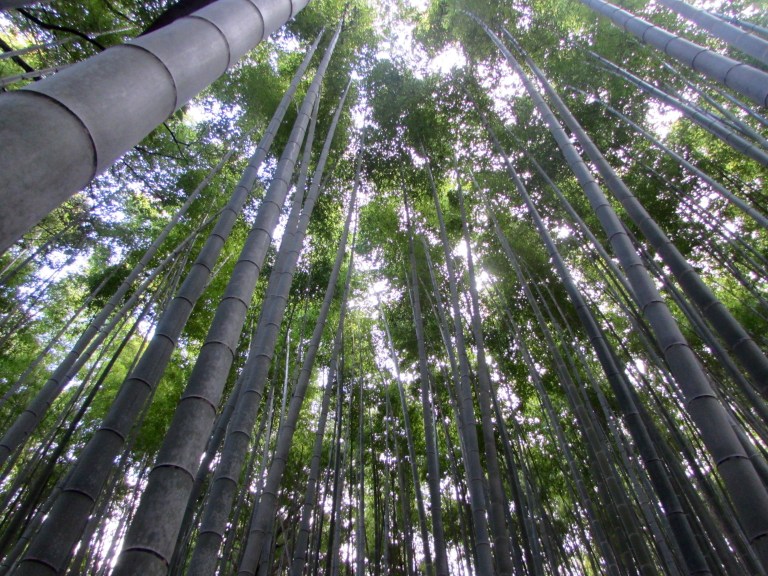
The grounds of this temple were small however and we soon found ourselves at the exit, which conveniently sat at the entrance of the sight that we had traveled to the area to see: the bamboo forest. In the pictures we had seen of it before the trip, each one appeared to be dipped in green with the only deterrence from the different shades of the hue being the brown dirt path running down the middle. But, as we walked up to the forest, the dim light of the late afternoon gave it a more ominous feel than the bright colors we had seen in the pictures. The only sunlight that made it into the forest shined down in slivers that had managed to slip through the thick canopy of leaves sitting on top of the stalks. This, and the cool air we felt as we entered the forest, gave it an eerie feeling. As we walked down the dirt path further into the endless stretch of bamboo stalks, the strange feeling that accompanied our entrance quickly became one of fascination as we took in row after row of thick bamboo trunks shooting up into the sky. To take everything in, we walked back and forth through the forest several times before leaving for good and crossing the river again to head back to our hostel.
IMG_7633
Looking up at the bamboo stalks.
IMG_7618
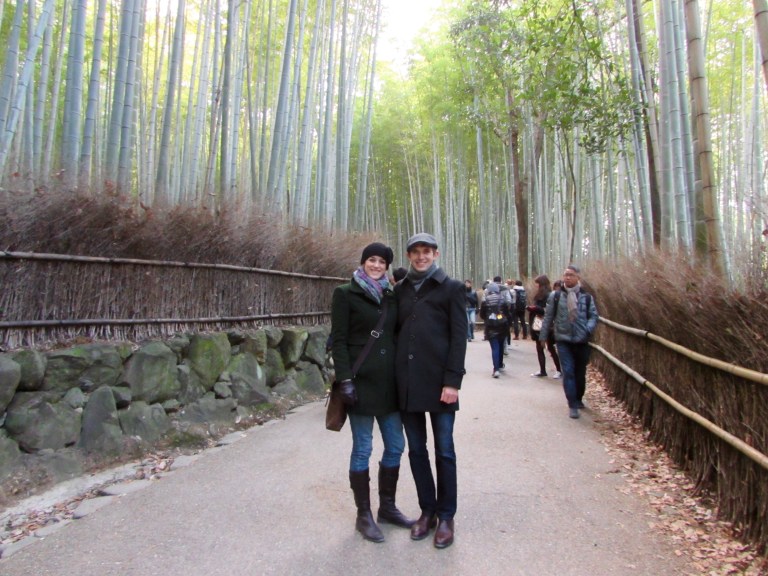
Stopping for a picture in the forest.

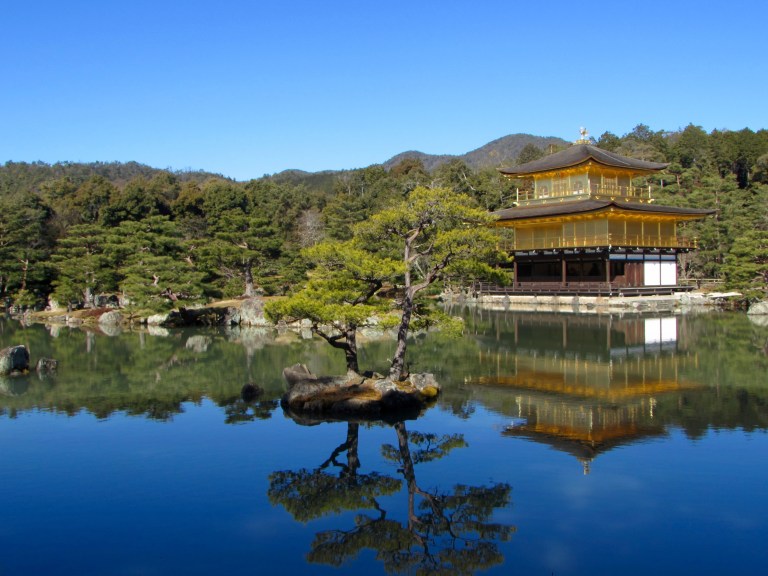
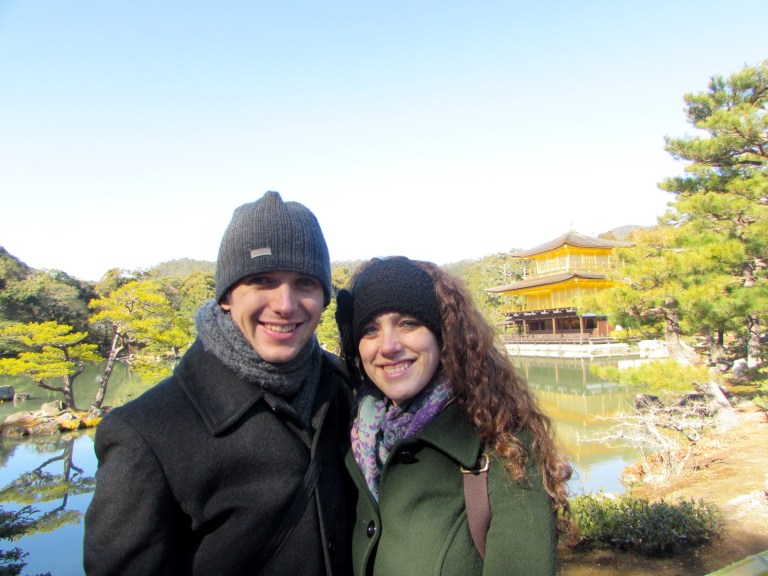
Our second day started early as we wanted to beat the crowds to our first destination: Kinkaku-ji, or the Golden Pavilion, one of the most visited sights in the city. As we entered the grounds though, we were disappointed to find hordes of tour groups wandering about, rendering our efforts of early arrival moot. Eager for a view of picturesque gardens rather than a sea of like-colored hats, we maneuvered our way through the crowd, finally coming to a stop at the edge of a small pond where we had a beautiful sweeping view of the temple’s scenery. Dominating the view was the appropriately named Golden Pavilion, which warranted the crowds moving around it with its completely gold exterior which was duplicated almost perfectly in the mirror-like reflection in the pond below.
IMG_7662
Our first view of Kinkaku-ji and the Golden Pavilion.
IMG_7685
Enjoying the views.

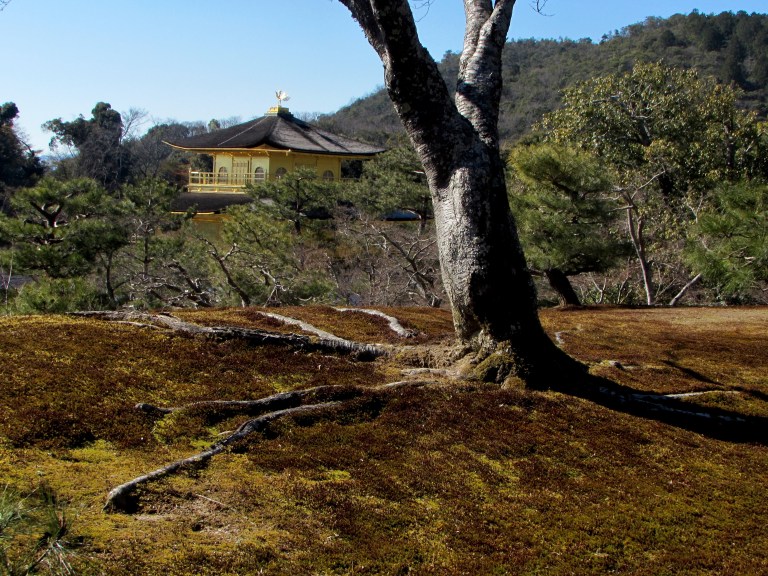
As our trip to Japan was in early February, the landscapes we saw were not filled with cherry blossom trees or the rich foliage of autumn, but rather the bareness of winter. Though this couldn’t compare with what we imagined the other scenes to be, it still had its own beauty and the colors that did exist were more striking amidst the dull browns and whites of the trees. Of these colors, that of the moss blanketing the surrounding hillsides stuck out the most, taking on an almost lime green shade as the sunlight reflected off of it.
IMG_7711
Another view of the pavilion from inside the gardens.

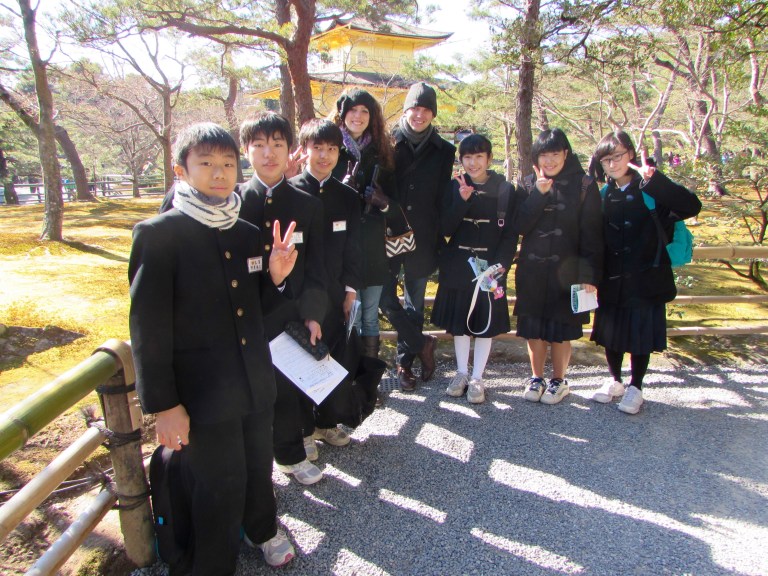
As we made our way around the grounds we noticed a group of students eyeing us intently and soon after their professor approached us wanting to know if we’d be willing to answer a few of their questions for a school project. This would be the first of many encounters with students looking to complete their school work, with most of them being scripted and very few of them being based in any sort of interest in what we had to say. Regardless, they were sweet and we had fun talking with them.
IMG_7703
One of the school groups that interviewed us.

After Kinkaku-ji, we grabbed a bite to eat around our next stop, Nijo Castle. The food at the restaurant wasn’t anything special, but the experience we had there was. Upon entering, instead of a waitress taking orders, we went to a vending machine, chose a picture of what meal we wanted, slipped a bill into the machine, and took the two tickets that popped out. Tickets in hand, we sat down and gave them to the waitress who brought our food out shortly after. It’s funny how what’s the most mundane of tasks for some people can be so exotic for others.
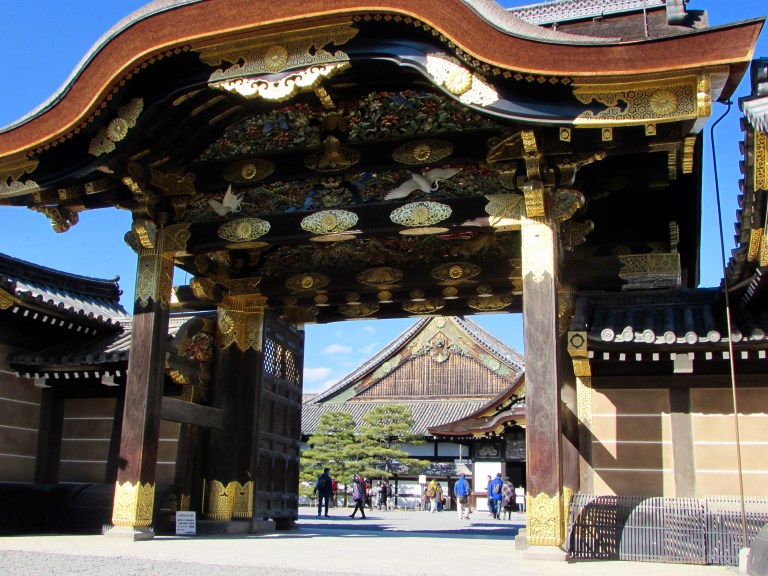
IMG_7749
The elaborate main gate of Nijo Castle.  We thought it resembled a dragon’s mouth.

With full stomachs, we headed to the castle, which was different from any concept of a castle we had ever known apart from the moat that surrounded it. Rather than tall spires reaching into the sky, the structure stretched outward with curve-tipped eaves. Inside the walls, the many rooms contained minimal furniture or decorations, making it difficult to imagine a luxurious royal lifestyle ever taking place there. The one exception to the humble interior design was the beautiful murals adorning the walls of the different rooms, with each scene being different from the next. Of all those that we saw, the one that stuck out to us the most was of tigers lounging under a shade tree. What made them unique was that the paintings weren’t based on any first-hand knowledge of tigers by the artists, but rather of descriptions they had heard through stories. Because of this, the tigers took on a stocky, muscular look, slightly different from the sleek versions that we are familiar with.

The aesthetics of simplicity didn’t just stop with the visuals though, the air in the castle halls was still and cool, the smell clean, and the sound, aside from the soft murmurs of visitors in the distance, consisted of only the creaking of the wooden floors. This, as we found out, was no accident as the creaking was designed to make sure that any intruder looking to off an imperial would not be able to do so quietly. Because of the bird-like sound of the creaking that accompanied each step, the floorboards were dubbed “nightingale floors.”
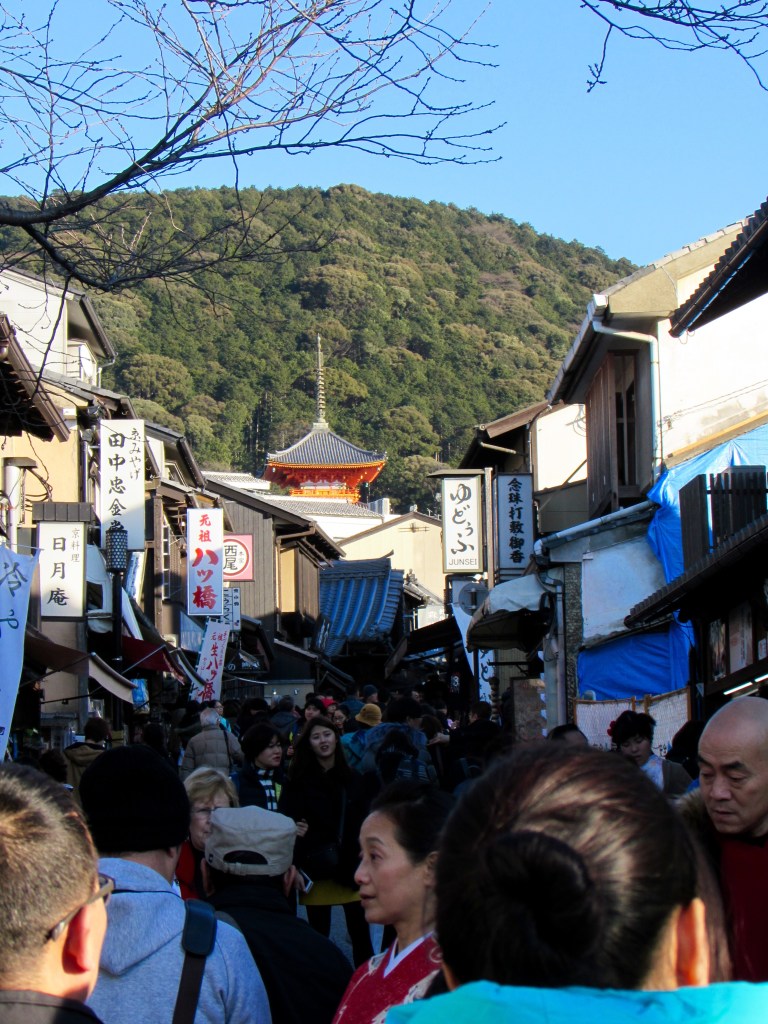
IMG_7770
The crowds leading up to Kiyomizu-dera.

After the castle, we made our way to Kiyomizu-dera, a temple whose crowded, bustling atmosphere was a world apart from the peaceful one we had just visited. The temple was perched atop a hill and to get to it we had to walk up a crowded street full of vendors. The atmosphere, which would have triggered a fit of hair pulling in Shanghai, was comparatively charming being on vacation and we strolled up the hill to reach the temple’s main pagoda. The first thing that caught our eye as we approached it was the white and orange adorning the exterior of the different buildings which seemed to glow in the light of the setting sun.

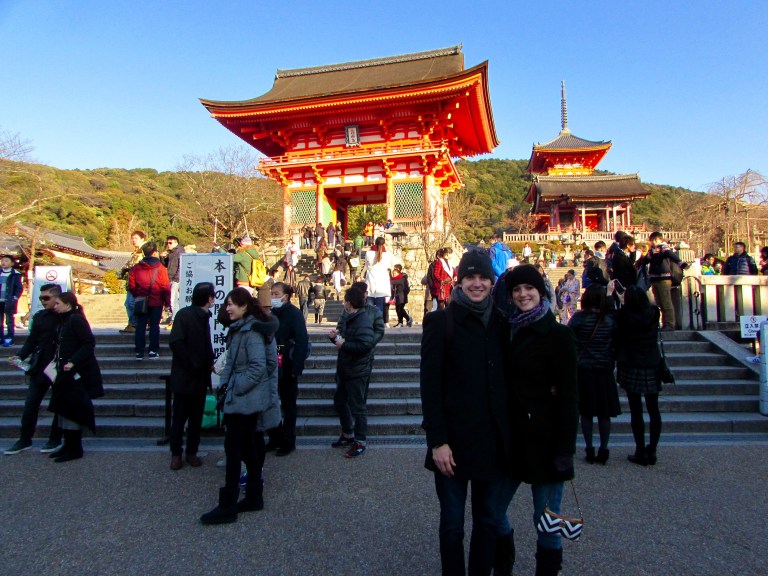
IMG_7819
The bright orange of the temple’s buildings.
IMG_7777
Standing at the entrance of the temple.

As we explored the different corners of the grounds, we came across what we thought to be one of the more unique parts of the temple: the “Love Walk.” As legend has it, if you can walk from one of the small rocks marking the start of the path to the other at the end with your eyes closed, you have found your true love. The area, naturally, was populated by packs of giddy teens who we pushed through to partake in the testament of love. Ryan, who went first, quickly and confidently made it from one stone to the other. Kate however, veered off course rather quickly and ended far away from either stone.

IMG_7851
Kate sending a clear cosmic message.

With our future together now in question, we decided to move on. The rest of our time in the temple was spent wandering around the grounds, taking in views of the city slowly darkening below and the landscape obscured by twilight. As street lamps slowly flickered on around us, we decided to move on and begin our hunt for dinner.

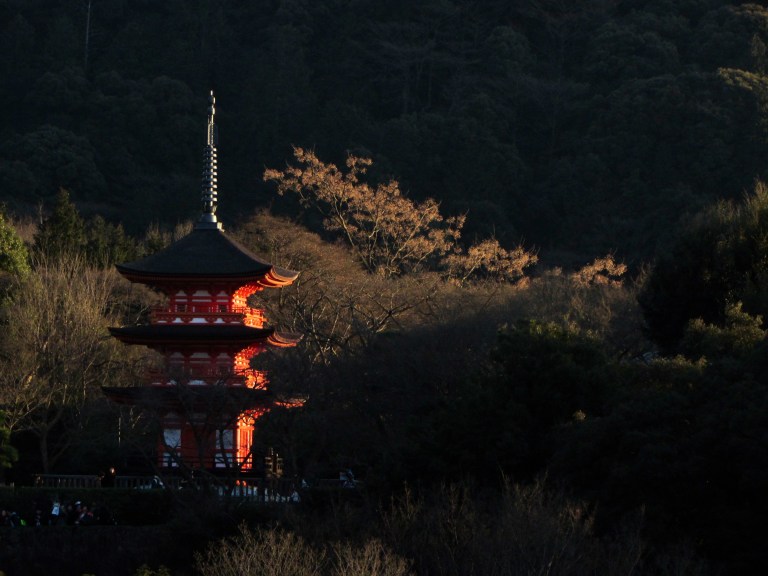
IMG_7814
View of the city.
IMG_7829
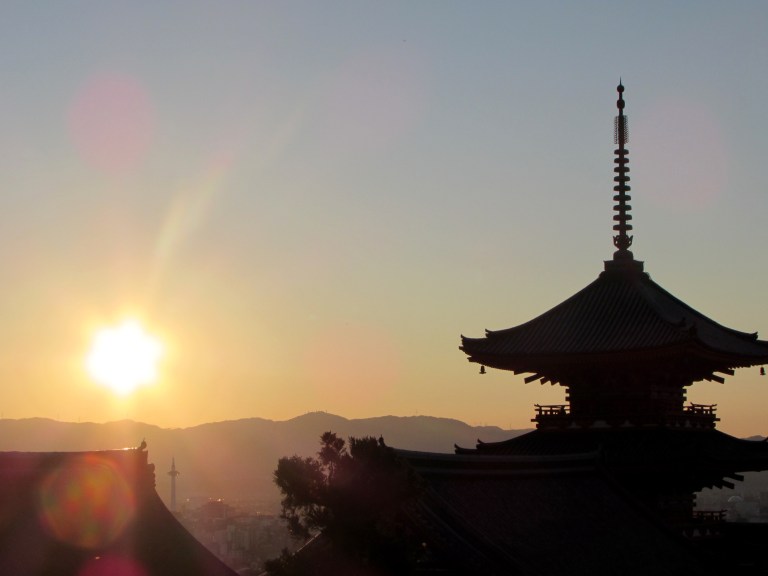
A pagoda holding on to the last traces of sunlight.
IMG_7848
Sunset at the temple.

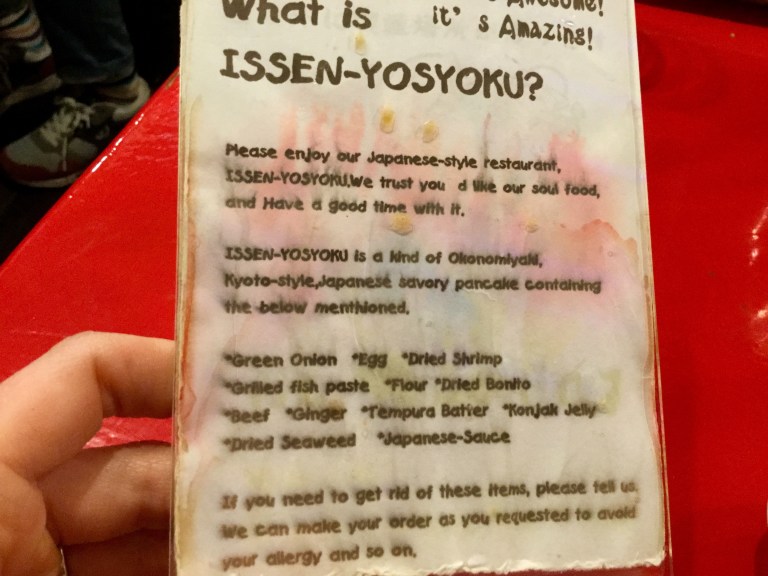
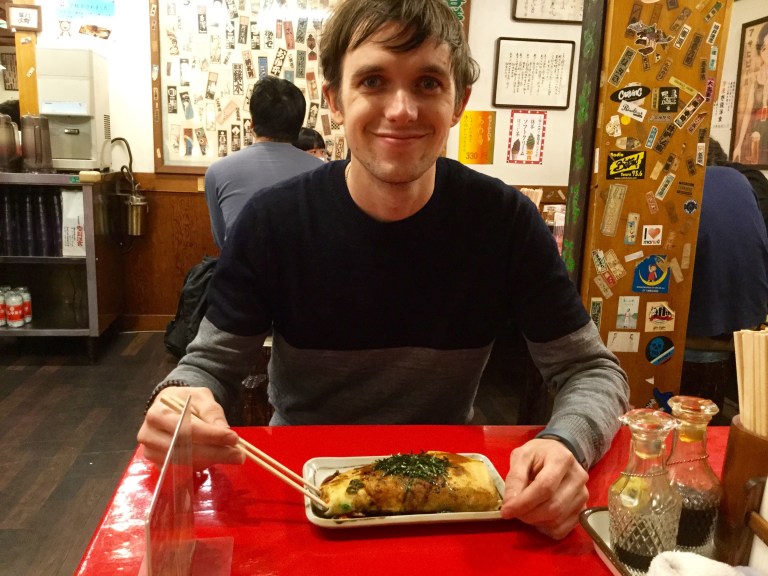
Our search took us to a restaurant where they made a dish called issen-yosyoku, which could best be described as Japanese tacos, and the only dish they served. We took this, along with the fact that the restaurant was packed, to mean that the mad concoction of ingredients we watched the cooks stuff into the tacos was worth trying. After nibbling at first, unsure of the questionable combination of ingredients, we were happy to find that our assumptions of deliciousness were correct and we devoured the tacos.

IMG_7892
Chefs making the issen-yosyoku.
IMG_0149
Ryan eating his Japanese taco–the first time ever with chopsticks!
IMG_0151
Ingredient list.

Our last day in Kyoto started as the previous one had, with some yogurt, muesli and a cup of coffee in our hostel’s common room, though the feeling was much different as we knew that we would soon be leaving one of the most comfortable and beautiful cities we had ever visited. Anxious to make the most of the time left to us before our train left for Tokyo, we headed to the Shinto shrine of Fushimi-Inari, one of the sites we had been looking forward to seeing the most.

After going basically from temple to temple over the course of the past two days, we were worried that the all-too-familiar temple fatigue (the point when the sights and sounds of different temples start to bleed together into one, losing their allure) would set in and diminish our appreciation of the place. This worry was quickly replaced by one of excitement though as we walked up an alleyway to the temple through a haze of odorous smoke emanating from the various fried food vendors lining it. After somehow managing to elude the temptation to try one of the many delicious-looking treats, we emerged from the alley and were met with the first of what would be thousands of orange torii gates, the unignorable symbol of the temple that lined the surrounding hillsides in an endless fashion.

IMG_7924
Crowds entering the torii gates.

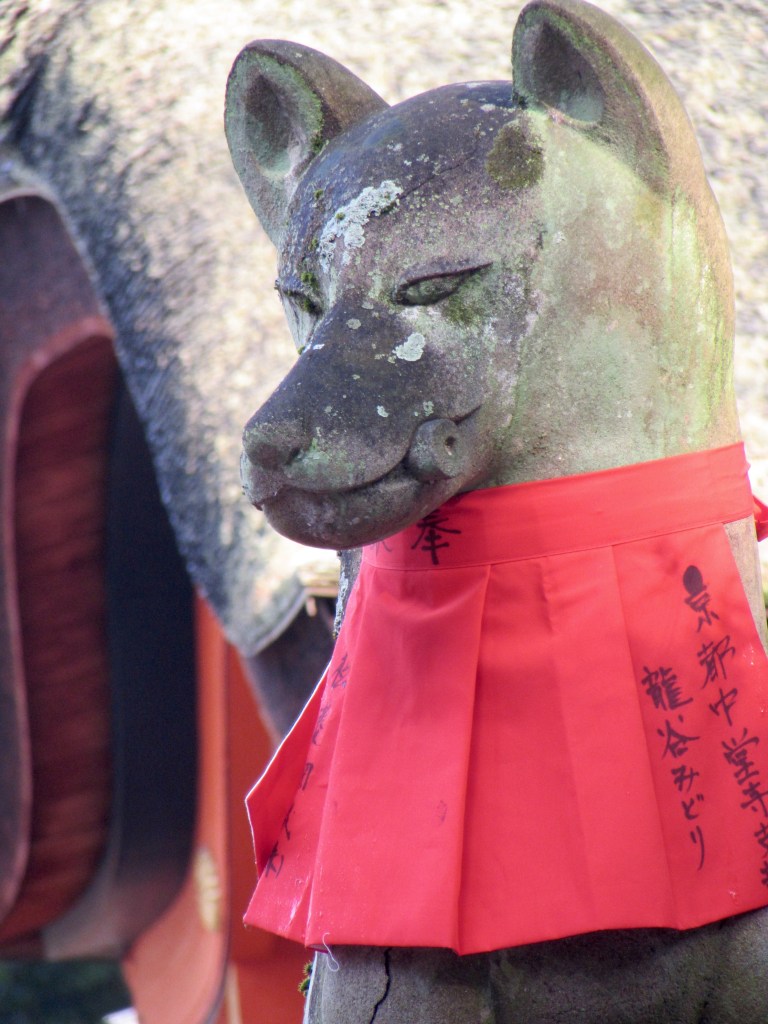
As we began to explore the grounds more it was hard for us to imagine the temple as a place of worship for some as any sign of tranquility was lost amidst the mob of tourists weaving in and out of each other. For us it was exciting but a meditating monk might think otherwise. One thing we noticed in our exploration was the various statues of foxes scattered around the grounds and sitting in front of the different shrines and buildings the way lions do in China. We later learned that the foxes represent messengers to Inari, the god of grain and business. This helped give some context to the torii gates too, as each one was individually donated to the shrine as an offering to Inari for good fortune in their financial endeavors.
IMG_7914
One of the many foxes in the temple, this one holding a key to the granary in its mouth.

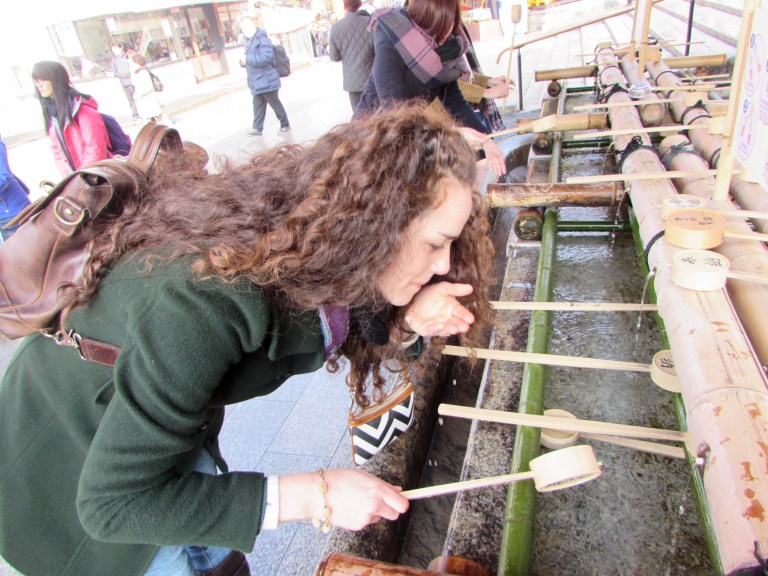
Before entering the maze of torii gates that began where the temple grounds transitioned into forest, we stopped off at a mouth-rinsing station where we used a large bamboo ladle to rinse out the inside of our mouths as was custom for visitors to the temple. Because sincerity is a fundamental aspect of Shintoism, the mouth-rinsing represented a purification of the heart.
IMG_7906
Kate purifying her heart…finally.

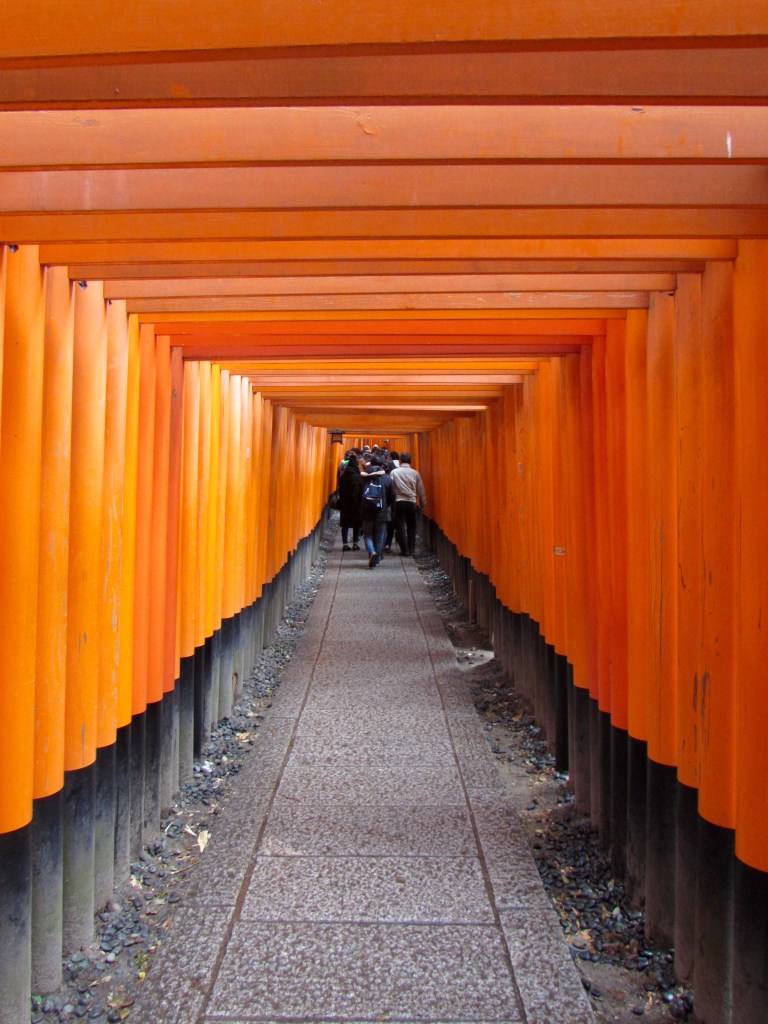
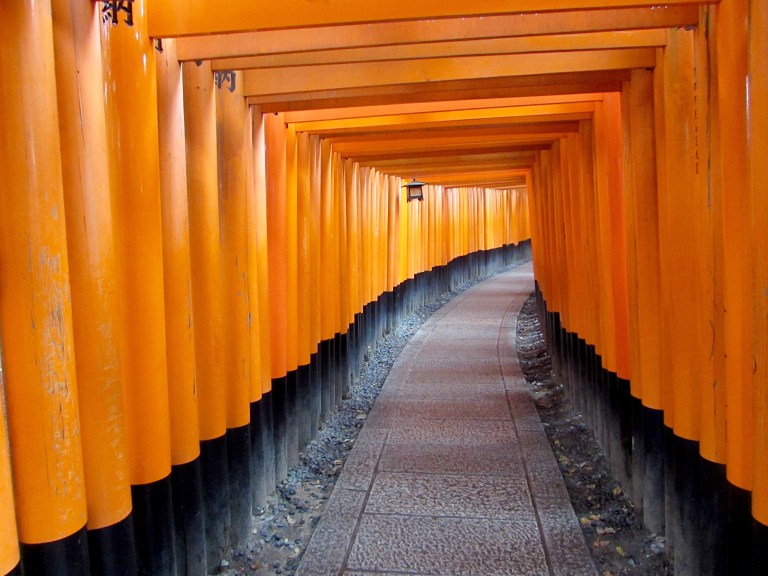
With clean mouths (and hearts!), we entered the stretch of gates which made for a kind of hallway that would serve as our guide up and eventually back down the hillside. The gates were packed together pretty tightly so as we walked through them, it created an illusion of walking down an orange painted tunnel that extended as far as the curves of the hillside would allow. At some points, where the stretch ahead of us was flat, the gates created a miniature hallway effect, where the people walking by us would gradually shrink as they walked on, eventually disappearing into the tiny square of light waiting at the end.
IMG_7958
Walking through the torii gates.
IMG_7937
A rare crowdless view.

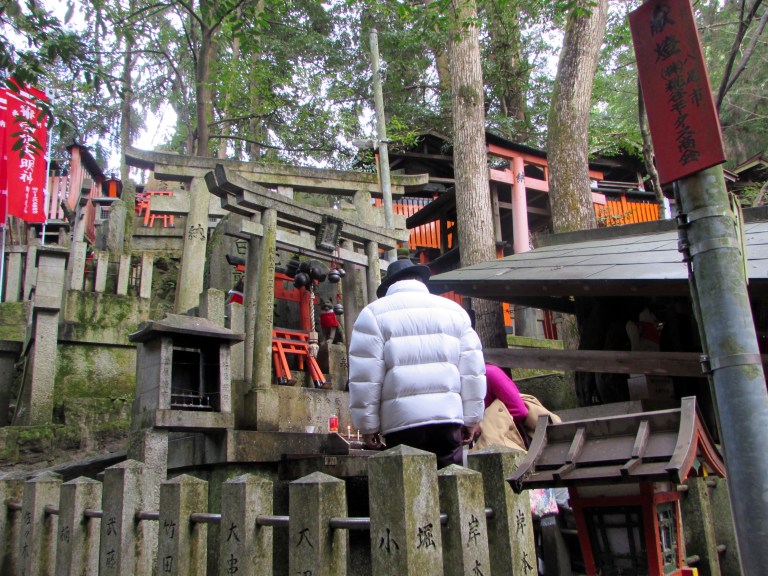
We walked on and on, waiting for a break in the gates, but it rarely came and when it did, it was brief. Some of the gaps included small shrines with the familiar fox statues adorning them, an area with tiny huts that families could reserve and go to to make offerings, and, of most use to us, large maps that always reminded us that we had not walked nearly as far as we thought we had.
IMG_8049
One of the family shrines.
IMG_8042
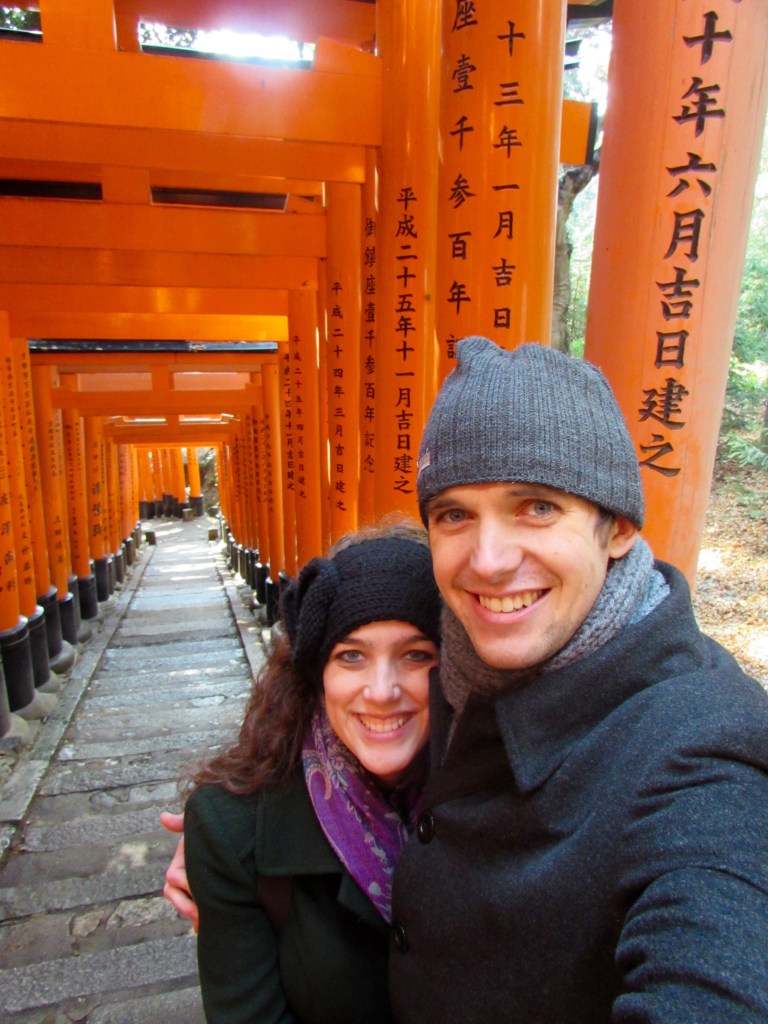
On our descent.

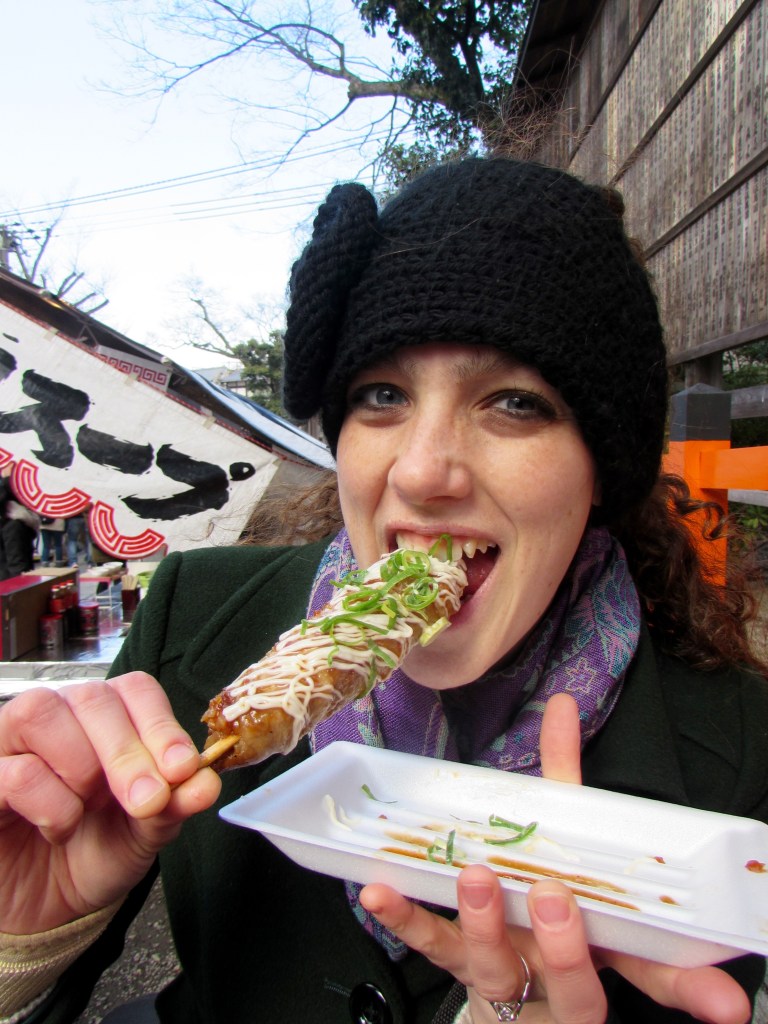
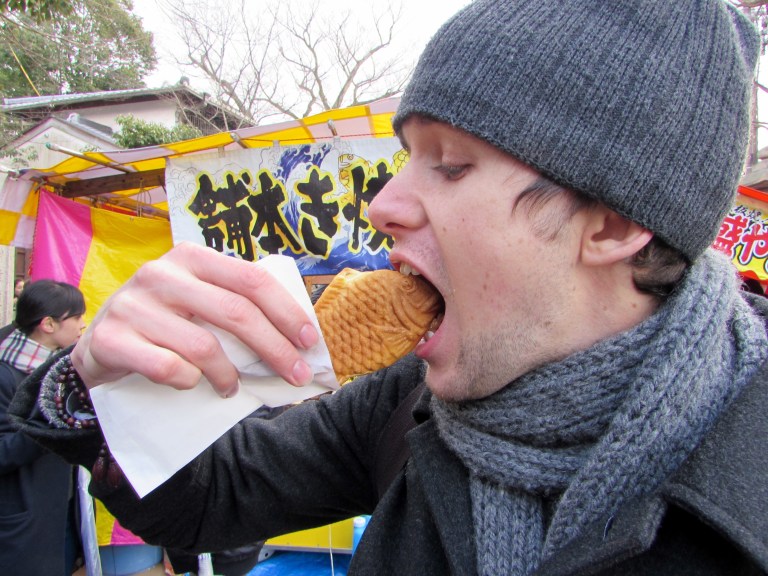
After walking for an hour and a half, we realized that at least another hour of climbing awaited us before reaching the hill’s summit. So, with our departure to Tokyo looming ever closer and one more temple to visit on our list, we reluctantly decided to turn around and begin our descent. After winding back down the mountain and emerging from the gates to the main temple grounds again, we succumbed to the array of fried foods that had tempted us on the way in. As we examined the food more closely, we realized that our choices were basically a variation of either meat on a stick or seafood on a stick. We tried both, which were equally delicious, along with some of the dessert options and then made our way to our last stop in Kyoto: Nanzen-ji.
IMG_8061
Kate eating her seafood corndog.
IMG_8065
Ryan eating a custard-filled fish pastry.

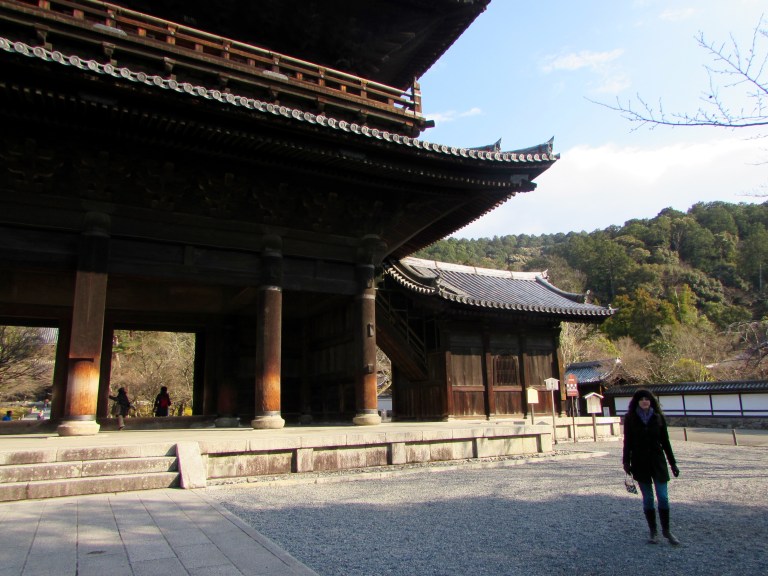
The temple, quiet and secluded, offered us a nice retreat from the crowds of Fushimi-Inari and a peaceful end to our tour of the city. Walking up to the temple, we were met with a massive 500-year-old gate that was unrestored, a rarity in Asia we’ve found, as most temples we come across are restorations due to their wooden nature. Another feature of the temple that we had been looking forward to seeing was the aqueduct running alongside it, which looked very European and seemed out of place in the Japanese landscape. The temple, nearly void of tourists, was fairly free range and we were able to climb up on top of the aqueduct and walk along it through the forest ahead. Looking to avoid a mad dash to the train station that seems to be a trademark of all of our trips, we didn’t walk too far or for that matter spend too much time at the temple. After leaving, we grabbed our bags from the hostel and boarded our train for the nation’s capital.
IMG_8072
Kate outside the main gate at Nanzen-ji.
IMG_8082
The aqueduct.

Our time in Kyoto was far too short but, despite barely grazing the surface of the abundance of sights and culture packed into the metropolis, undoubtedly one of the more enjoyable experiences we’ve had in our travels.
Yuanyang

Our journey to see the rice terraces of Yuanyang, which took an exhausting 17 hours to get to, officially began as our minivan rolled into the village of Duoyishu, which sits in the south of the Yunnan province near the border of Vietnam. Being nighttime when we arrived and in the middle of rural China, we opted to have an ayi (which literally means “auntie”) from Jacky’s Guesthouse meet us as we got out of the minivan. We were thankful to have her as our guide as we were led through a labyrinth of dimly-lit streets, dodging piles of water buffalo dung along the way, before arriving at the guesthouse, a destination we most likely would not have reached on our own and most definitely would not have reached with clean shoes without the help of the ayi. Upon entering the hostel we were met with a candle-lit common room and were told that the village had no electricity that night. The warm glow of the candles created an enchanting atmosphere and gave us a feeling of escape from modernity that we had wanted from this trip.

The dinner was a sampling of Yunnan cuisine, something we were excited for as our favorite restaurants in Shanghai feature food from the region. We were not disappointed as the ayis brought us dish after dish of heaping platters of delicious food that included vegetables, chicken and, of course, rice. We were convinced that one of the dishes served to us, which had a rubbery texture and meaty taste, was either a foreign meat we had never tried before like water buffalo or an organ. Out of curiosity (but mostly politeness) we picked away at the mysterious brown strips, though most of it was left uneaten as we returned the plate to the kitchen. After dinner, exhausted from our day, we retired to bed, anticipating the scenery that we would be seeing the next day.

For those who aren’t aware, China has a single time zone across the whole country, which would be like San Francisco and New York sharing the same time. This, however strange, worked to our advantage as what would normally have been a 5:00 in the morning, drag-ourselves-out-of-bed experience to see the sunrise, ended up being a pleasant 7:00 alarm. A point even more important as our first morning was obscured by fog and rain, rendering the terrace-filled horizon in front of us nearly invisible. After realizing that neither were going away any time soon, we ate our breakfast of instant taro oatmeal packets and headed out to explore the village, whose feeling of timelessness was furthered by the presence of the fog.

IMG_7110
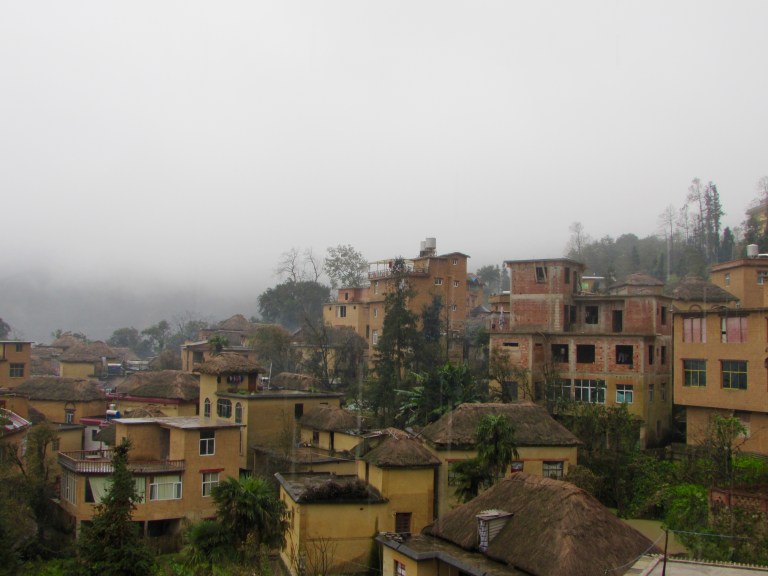
Duoyishu, the village we stayed in
IMG_7144
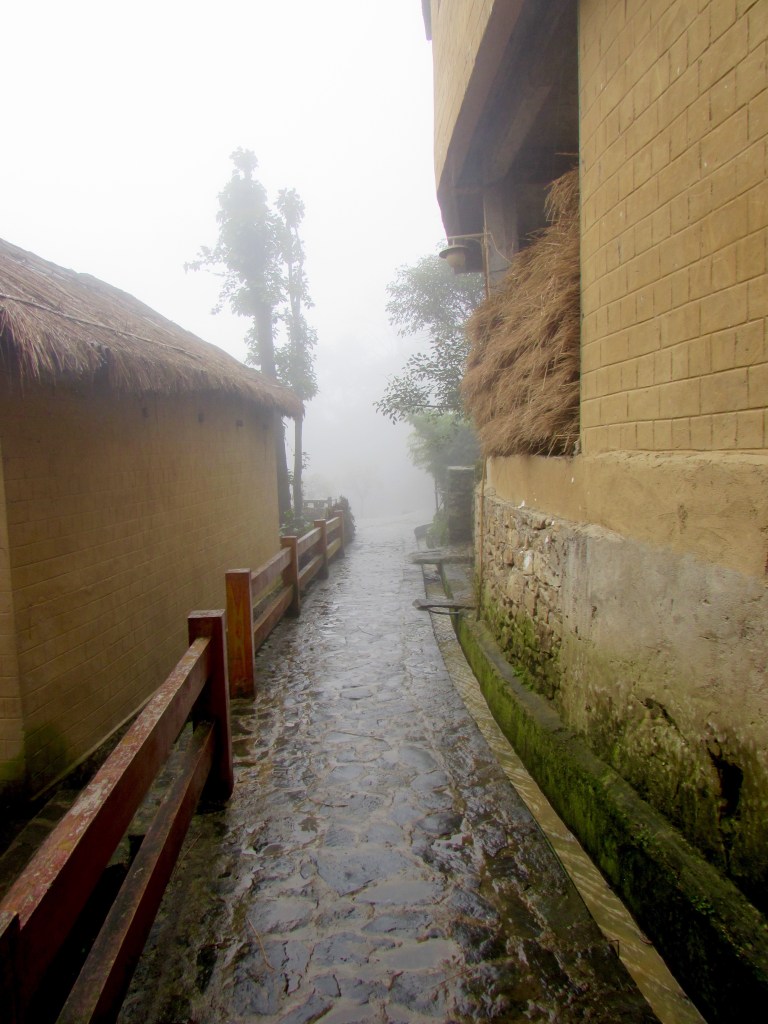
Village streets on a foggy morning

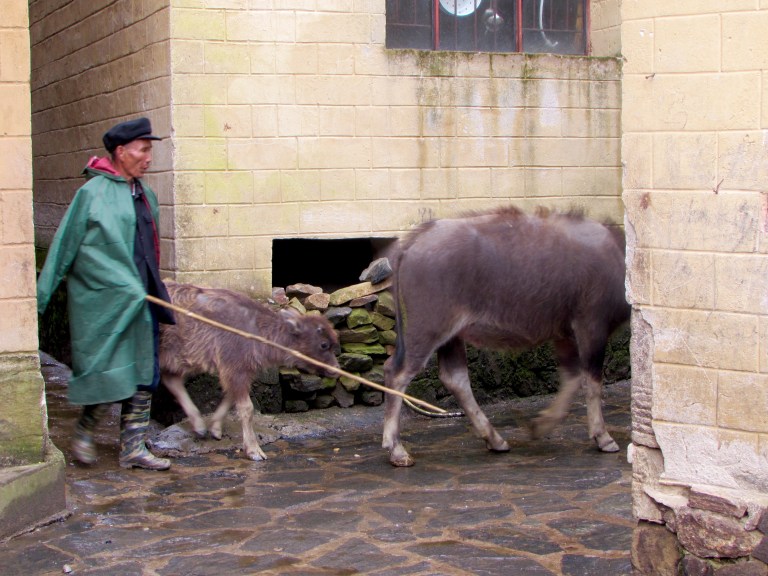
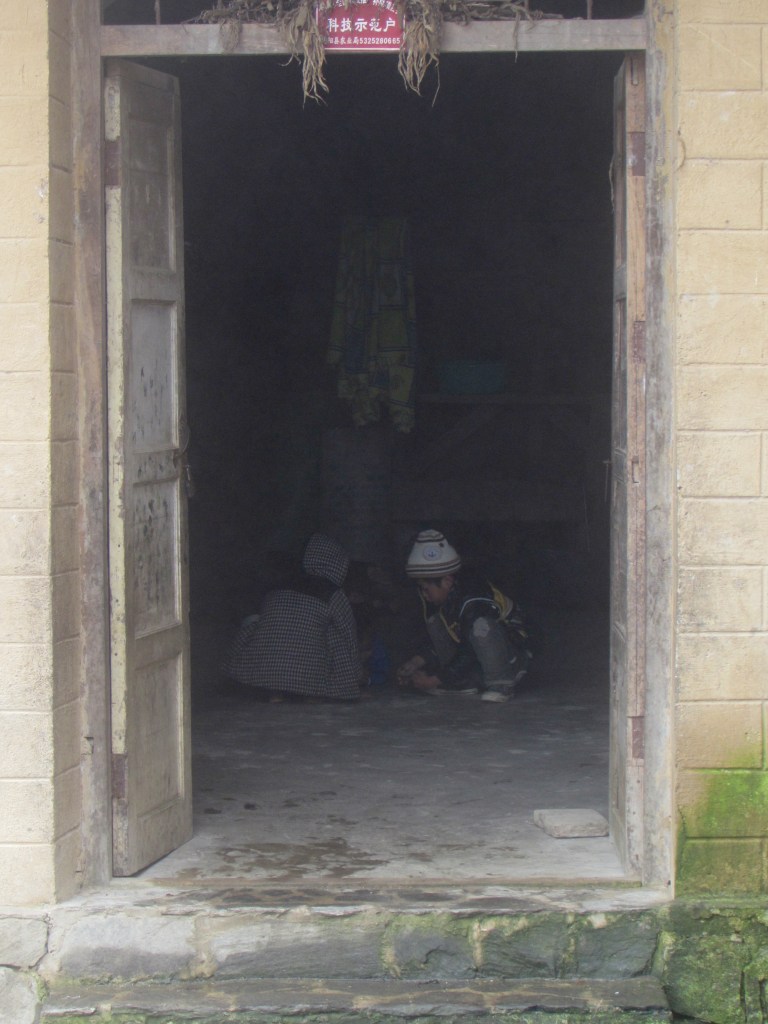
The pathways of the village, narrow and barely removed from being dirt roads, wound through the mushroom-topped buildings in no discernible pattern and were bordered by narrow and gushing canals of water making their way to the terraces. As for the village inhabitants, they seemed to consist mostly of farm animals. For every adult you would see, chickens, roosters, ducks, pigs, dogs and an occasional water buffalo would amble after, roaming freely through the streets. Amidst the animals were groups of children, most of them playing in the first floors of their homes which also served as the family barn. The game of choice for them was some form of marbles that used stones, which served doubly as ammunition to repel foreigners whose curiosity drew them in too close. One girl, wary of throwing rocks, resorted to spitting on us. Both sent a clear message to move on, which we did, shifting our focus to the terraces as they had become visible again.

IMG_7185
Taking the water buffalo for a walk
IMG_7177
Children playing in their house

All throughout our first day, like clockwork the fog would slowly creep up the mountainside, absorbing the village and the scenery around it before receding soon after, making the valley seem alive as the rhythmic rise and fall of the fog gave the illusion of the valley breathing. As it began to inhale once more, we made our way back to the hostel and were glad to find Jacky there as we had some pending questions, among them what to do if we were fortunate enough to have clear weather the next day. We discussed these as well as his long list of travel experiences (which included a 3-year UNESCO photography project that took him from Barcelona to Bangkok and everywhere in between) over some flaky rose-filled pastries and coffee around the resident wood-burning stove.

We also asked him about the mystery meat from the night before. We were surprised to find that it wasn’t meat at all, but a root (most similar to cassava) that Jacky and the ayis had painstakingly sought it out on the mountain several days prior to us arriving and dug it out of the ground with their own hands over the course of several hours. A feat they were extremely proud of as it was heavily documented in photographs. The more the story carried on, the lower we sunk in our seats out of shame for leaving it uneaten. For the rest of our meals, we practically licked every last grain of rice from the plate.

As our rose cake and coffee supply dwindled along with our conversation, due to more guests arriving, we were told of a secluded outlook to watch the sunrise, which we decided to map out on foot that evening before the little daylight we had left ran out. The route took us out of our village and to the outskirts of another, where, at the edge of a cliff, we were given a sweeping view of the valley, which was flooded with terraces out with mountains climbing out of them in the distance. If the weather was cooperative the next day, we knew the sunrise would be a memorable one.

IMG_7204
A farmer making his way back home as the sun sets

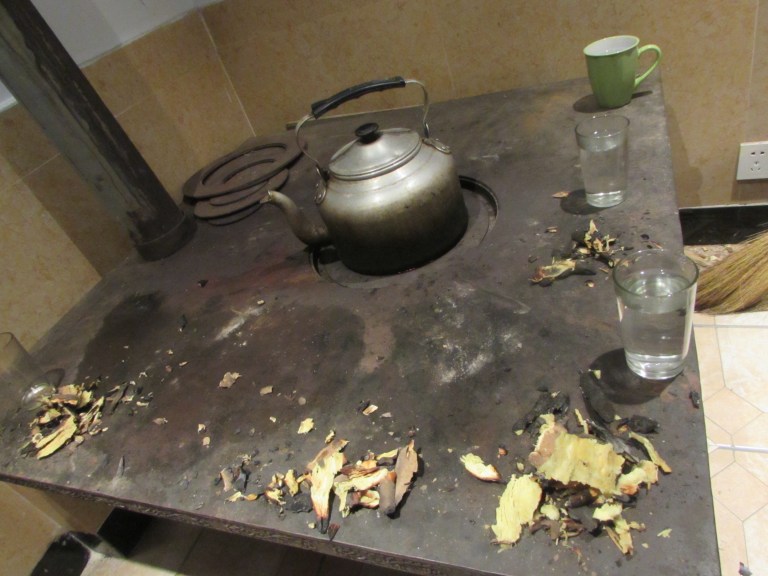
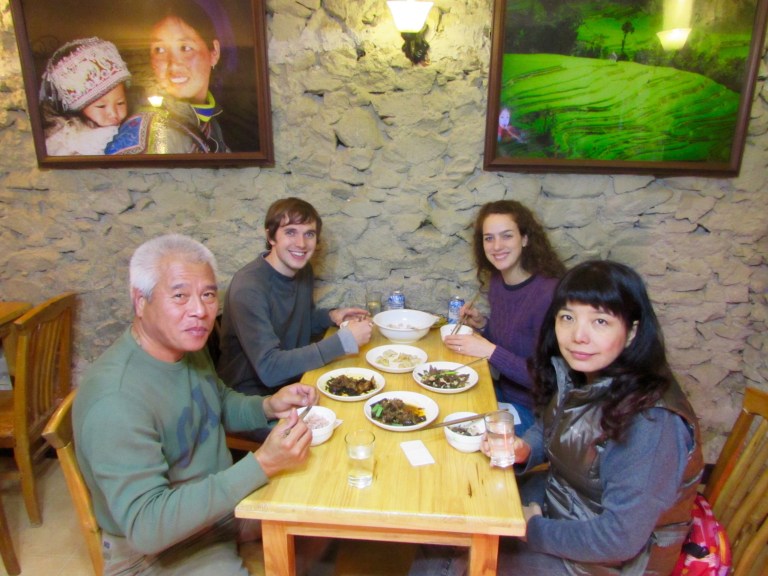
Back at the guesthouse, we were welcomed with sweet potatoes roasted in the wood-burning oven that we had sat around earlier. About halfway into our first potato, a Taiwanese couple joined us and, through our broken Chinese and their unfailing patience, we somehow managed to carry out a conversation that lasted all the way through dinner. Afterwards, to the amusement of the ayis, we played a couple card games to soak in the heat of the stove a bit longer before retiring to our ice box of a room, anxiously awaiting the next day.

IMG_7219
Remnants of sweet potatoes on the wood-burning stove
IMG_7220
Eating dinner with the Taiwanese couple, our patient new friends

We set out in the dark with only a small flashlight to guide us down rain-slicked paths to the outlook for the sunrise. Periodically, out of the darkness, beams of light in the distance would slowly materialize into schoolchildren as they passed us on their way to school. Each was holding a metal pail filled with noodles, rural China’s version of breakfast on the go. Along the walk, to our dismay, the fog swallowed the valley whole which made us dubious about our prospects of seeing the sunrise. Nonetheless, we continued and, once off the beaten path, we trudged through patches of mud on a narrow trail before making it to the cliff we had mapped out the evening before. As we looked out, trees not even 10 yards in front of us, let alone the valley of terraces below, were barely visible due to the clinging darkness and shrouding fog that had, for us, become synonymous with the early mornings of the village.

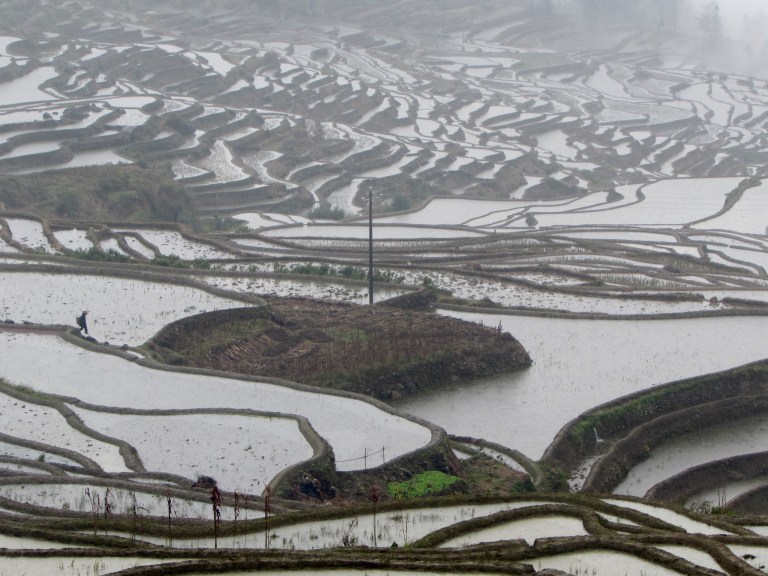
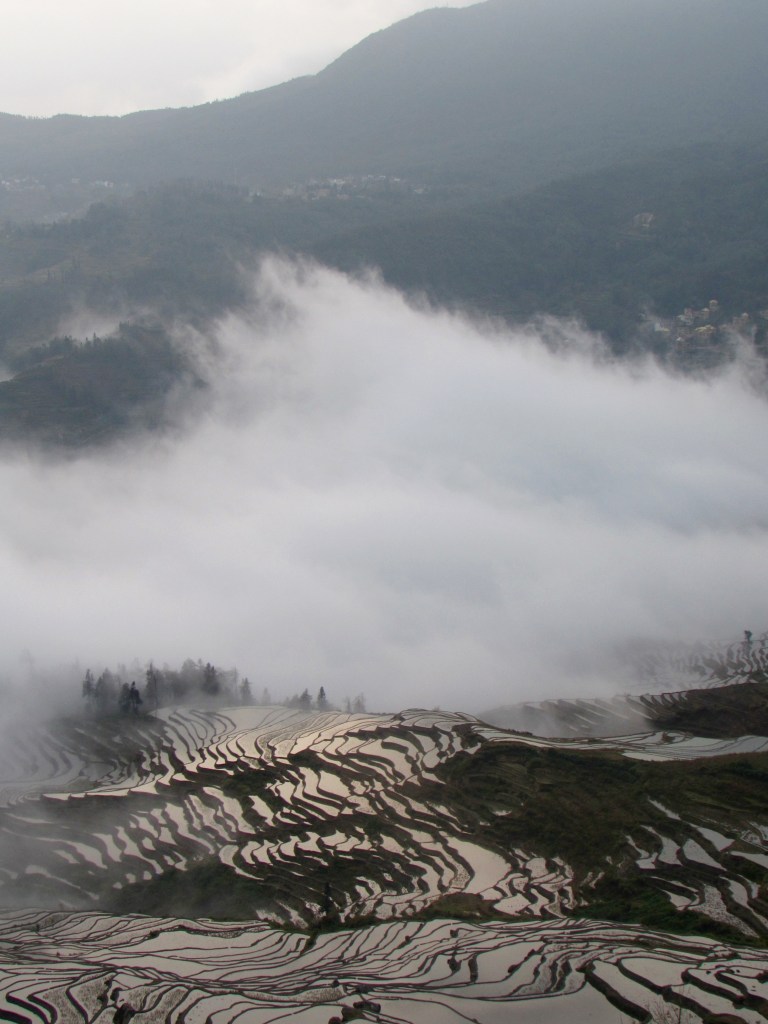
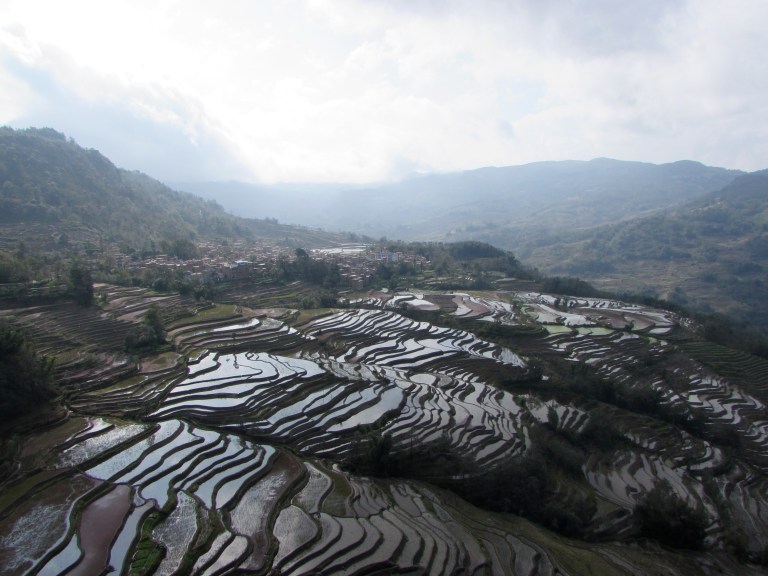
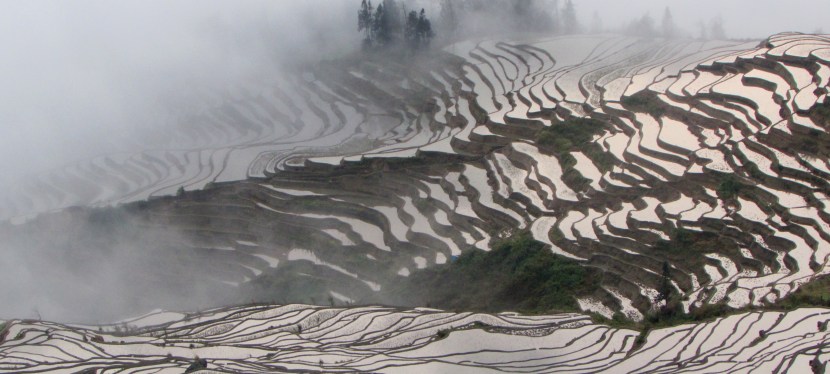
Just as we were beginning to lose hope of seeing the sunrise, the fog began to recede, revealing the faint outlines of the terraces below. Shortly after, although the sun stayed behind the clouds, the valley slowly began to illuminate. As the light made first contact with each pool of water, the valley became an artist’s palette of dark blue and silver pastels with one transitioning to the next until the entire valley seemed to glow. At that point, the only detail separating the sky from the terraces were the black veins of clay running along each pool of water.

IMG_7256
The terraces at dawn
IMG_7245
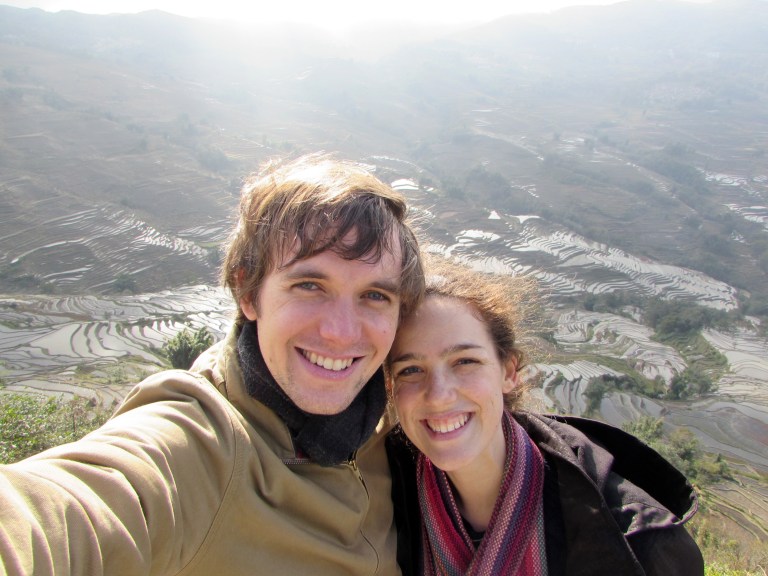
Taking in the views

Our appreciation of the beauty playing out before us was interrupted by an intoxicated villager, reeking of cheap alcohol, who stumbled up to us and tried to charge us for watching the sunrise. A crumpled piece of paper pulled from his pocket with Chinese characters scribbled on it was clear justification for this. When we wouldn’t pay he began shouting at us until we begrudgingly left the spot and moved down another hundred yards or so where we were pleased to find the scenery was unchanged. The solitude of our newfound location dwindled however, so we decided to return to the guesthouse for breakfast before embarking on the long day ahead of us. Once back, we were faced with two choices, taro oatmeal in a glass cup or homemade noodle soup. Although we debated briefly, our choice was obvious and we ordered two bowls of tomato and egg soup, which were complimented surprisingly well by a cup of coffee.

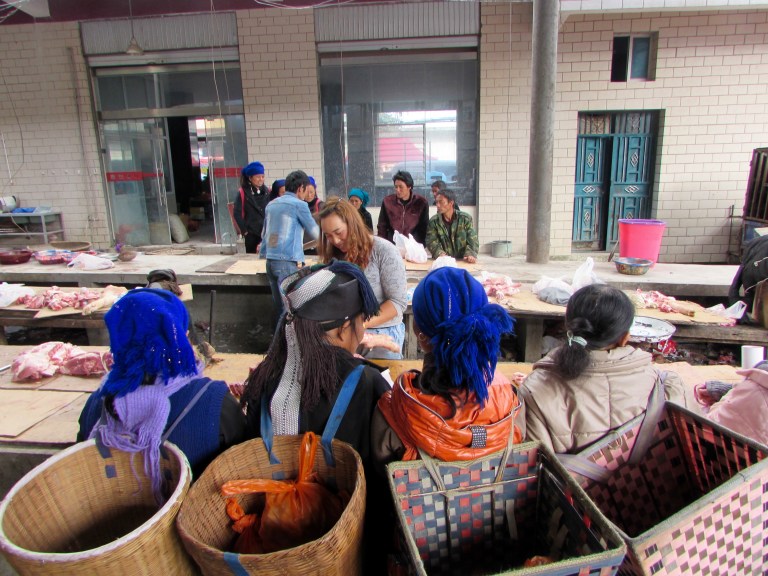
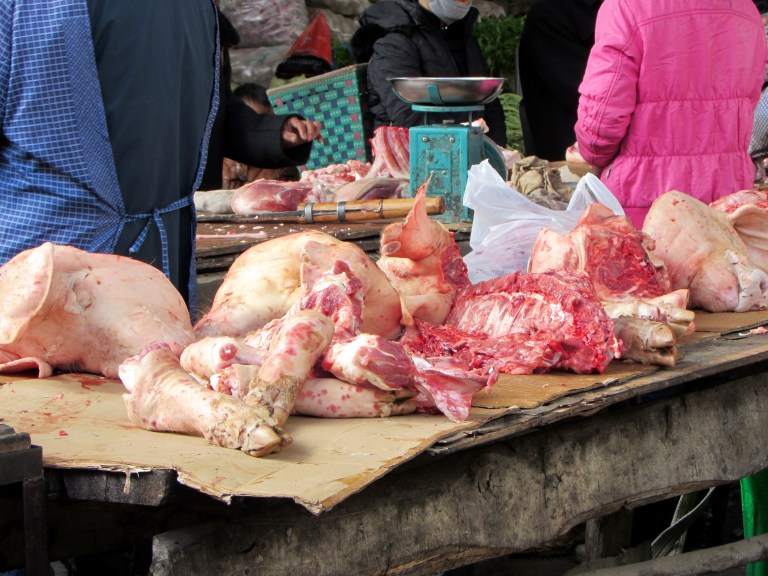
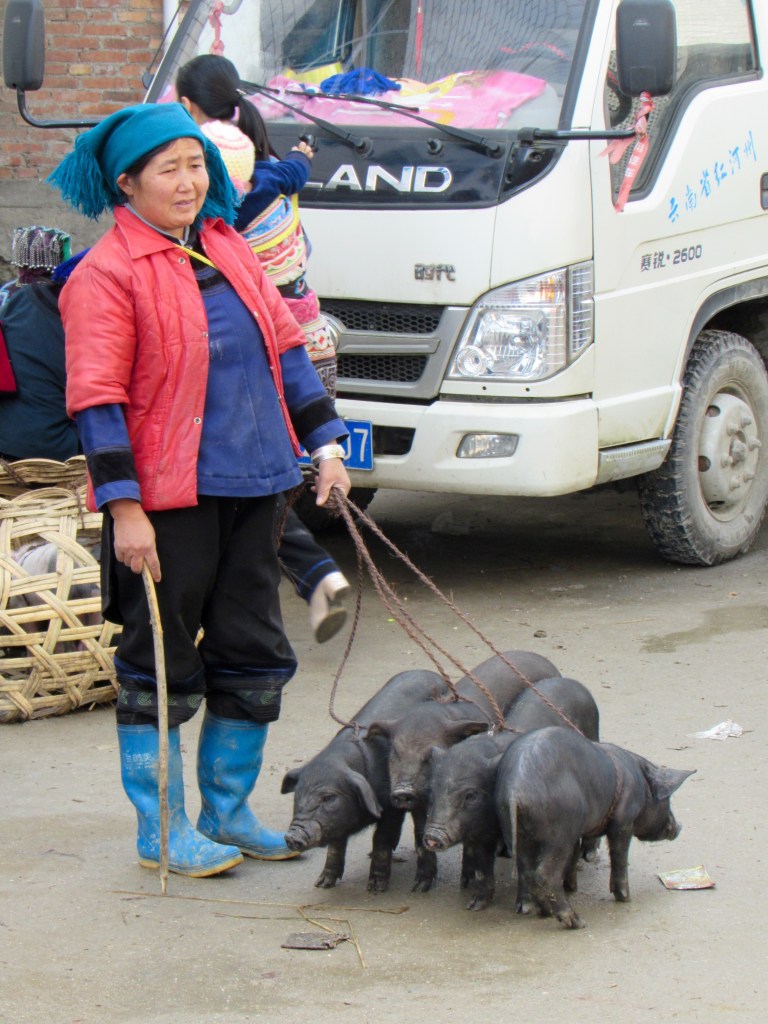
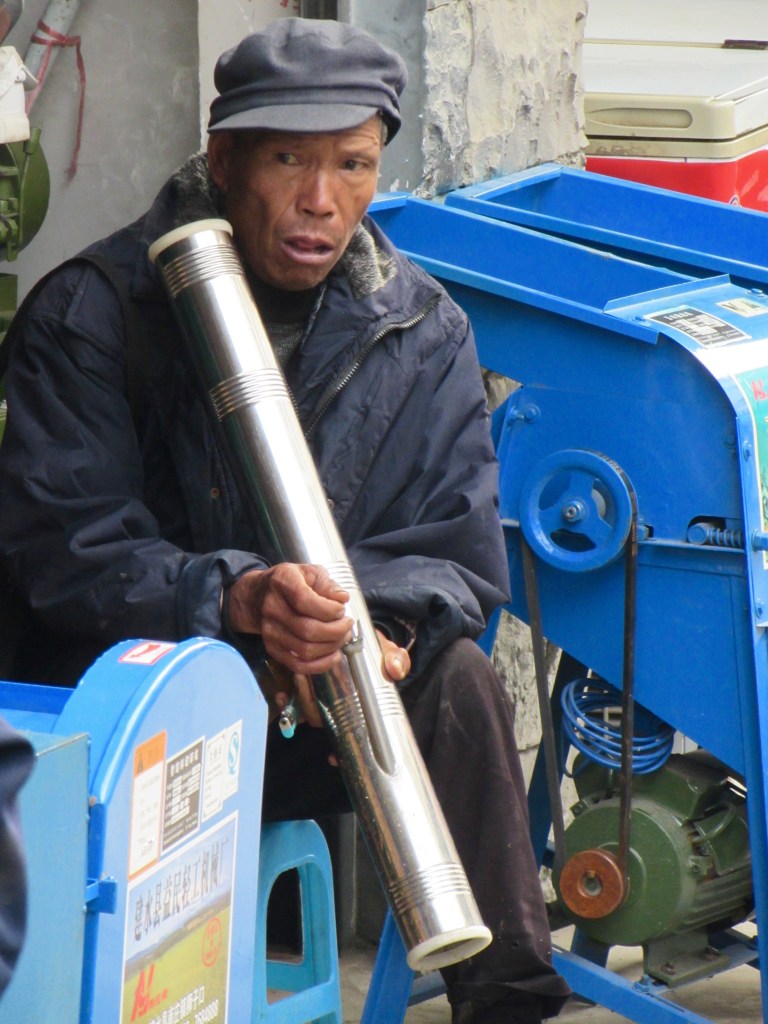
Our day’s agenda consisted of trekking through the countryside along the edges of the terraced valley following a hand-drawn map Jacky had given us the night before. Our route started at a local market, which was an experience unto itself as all of the inhabitants of the surrounding villages descended onto one street to sell their goods, which included everything from fruits and vegetables to live ducks to freshly slaughtered pigs whose heads still sat perched on the tables where the rest of their body was being sold (it may be a while until we eat bacon again!). Perhaps the most interesting part of the market though were the people, dressed in their traditional clothes and carrying on with their traditional lives, with only minor traces of the modern world woven into them. It was not uncommon to see a woman walk by with a basket on her back filled with live chickens and large vegetables. Nor was it uncommon to see groups of men (who, it should be noted, do not like to have their picture taken) huddled around each other smoking tobacco out of aluminum bongs. For us, everything was so foreign, but for them it was simply life.

IMG_7305
Local women lining up at the butcher’s counter
IMG_7307
This little piggy went to market…
IMG_7312
Pigs on a leash
IMG_7513
Local man smoking tobacco

As the region was still fairly new to the tourist scene and well-marked roads quickly disappeared into overgrown dirt paths, we stuck closely to Jacky’s hand-drawn maps to guide us along the way. We soon found out that, however charming and personal the map was, it didn’t quite live up to our expectations of reliability, which was crucial given that we were in an area more accustomed to taking the water buffalo for a walk than interacting with tourists. After about an hour of walking and not seeing anything that resembled the checkpoints on the map, we realized that, in our excitement to begin the trek, we had confidently marched off in the complete opposite direction from where we should have gone. So, we backtracked our steps all the way to the market where, to our relief, we saw the first checkpoint, a large red sign literally pointing us in the right direction. We swallowed our pride and, after winding down a road for nearly half an hour, made it to our next checkpoint: a cliff overlooking an unobstructed view of some terraces.

IMG_7369
Midday rest after finally finding the correct path

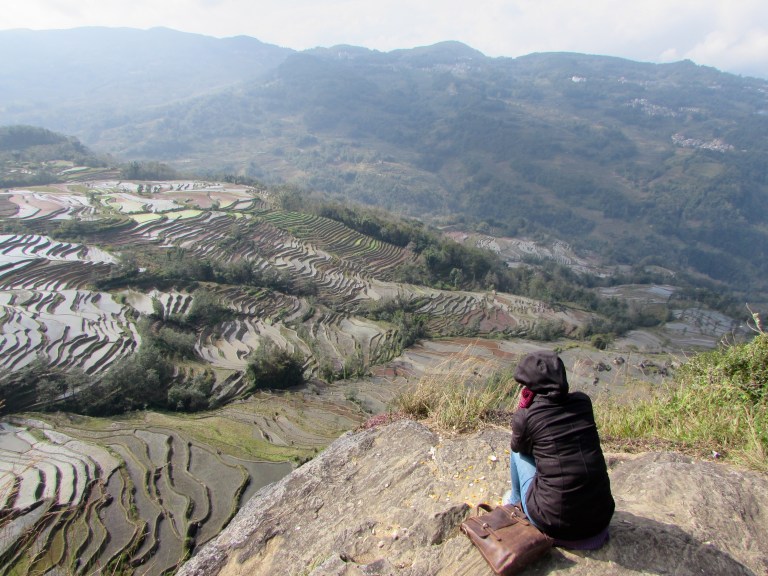
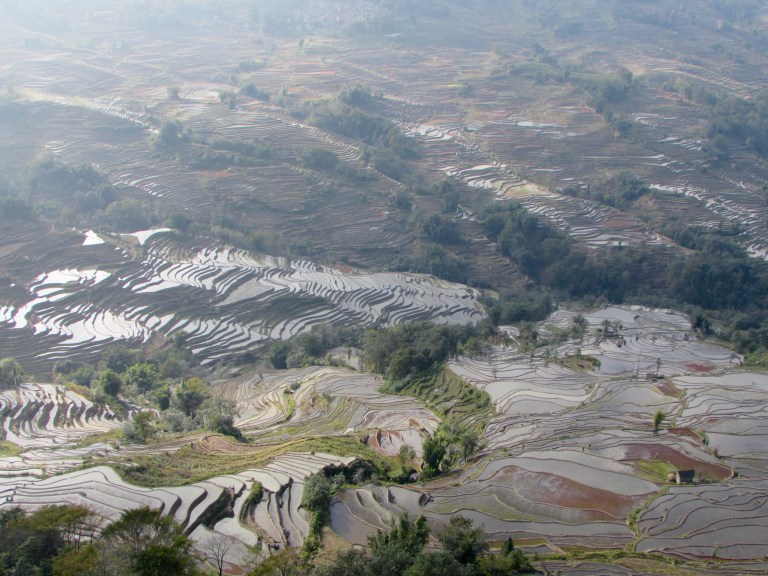
We perched ourselves on one of the cliff rocks and looked down into the valley, following the seemingly endless levels of terraces climb up the side of the mountain where they eventually disappeared into the sunlight. Each pool of water took a different form from the next, fitting together like a puzzle to fill the landscape. The water that filled them also followed no particular pattern as the color they reflected was determined by how the light touched them. Some glistened in the direct rays of the sun, while others took on the appearance of a mirror, an opaque silver reflecting the sky above. As we drew our gaze inward to the more minute details, an occasional stable would dot the valley and we could even see a farmer and his water buffalo toiling away in the water, unaware that we were watching his everyday life in amazement. With an abundance of other details waiting to be discovered, we decided that there was as good of place as any to have our lunch, which humbly consisted of some oranges bought at the market and a pack of crackers.

IMG_7362
View of the terraces from the cliff
IMG_7413
A stable among the terraces
IMG_7374
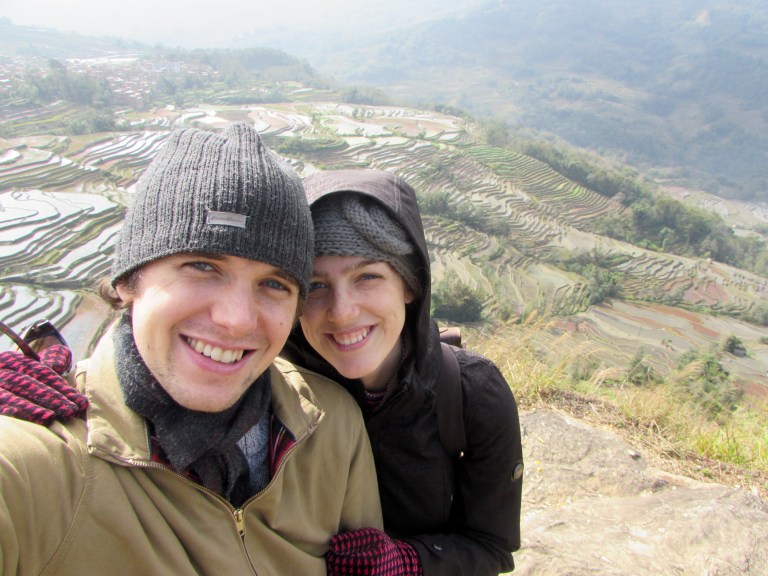
One last picture before continuing

After finishing, we put the terraced valley behind us and began wandering from small village to smaller village. Most of our energy along the way was used to decipher Jacky’s map, which was equal parts adventurous and frustrating as some of the checkpoints included things like “two trees” and “a large rock.” Luckily for us, a friendly local would point us in the right direction every few hundred yards or so and we soon arrived at the next major spot on our trek: the Bada terraces.

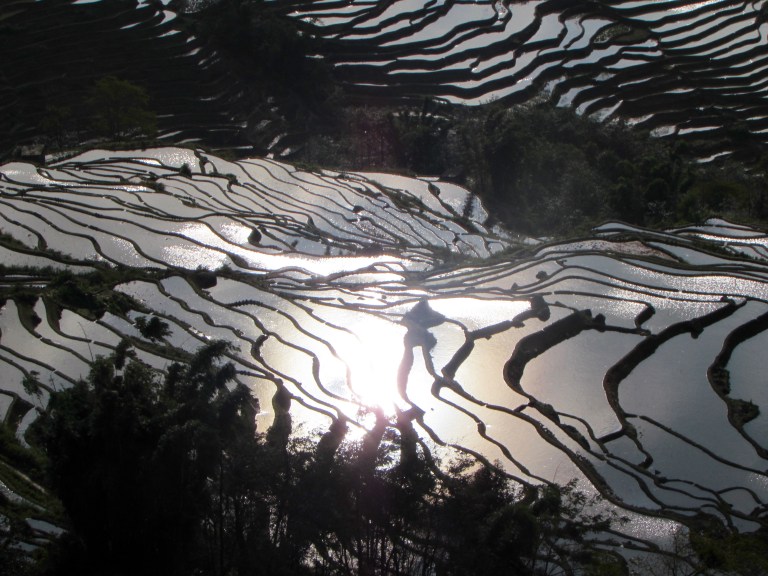
Although the terraces looked no different from the two we had seen before, it was still easy to lose ourselves in their intricate patterns. By now, the sun was beginning to set and the pools that it’s light hit stood out even more drastically than the rest, emitting a bright white glow. The waning sunlight nudged us along as we began making our way through the quickly diminishing remains of our journey. For the next hour we were taken down overgrown dirt paths clinging to the hillside where we would pass women collecting twigs for their nightly fire, over the terraces themselves, balancing on the narrow, slippery clay mounds that separated each pool, along mud strewn paths where it was difficult to discern between water buffalo dung and mud, and through the roads of a small village which eventually led up to the area’s main road, marking our last checkpoint on the map and, sadly, the end of our journey.

IMG_7410
The Bada terraces
IMG_7424
The waning sunlight reflecting off of the pools
IMG_7409
Nearing the end of our trip

For us though, our long day hadn’t been long enough and, with an hour left until sunset, we hailed a minivan to take us back to the Bada terraces where we found a secluded spot and watched the light slowly recede from the valley. The day, and entire trip for that matter, had given us everything we wanted: a complete and peaceful seclusion from the world around us. The scarce person we would see along our walks seemed to be just as anxious to get away from us as we were from them. It was the perfect escape, making it all the more difficult to say goodbye as our minivan pulled away from the village the next morning.

Suzhou

For our inaugural blog post, we decided to highlight our most recent trip to the city of Suzhou, an ancient city located in the suburbs of Shanghai (if such thing as a 4 million person suburb exists!) The city, filled with narrow canals and lush gardens, offered us a glimpse into China’s rich past, which is something that’s hard to come by in the ultra modern and always changing Shanghai.

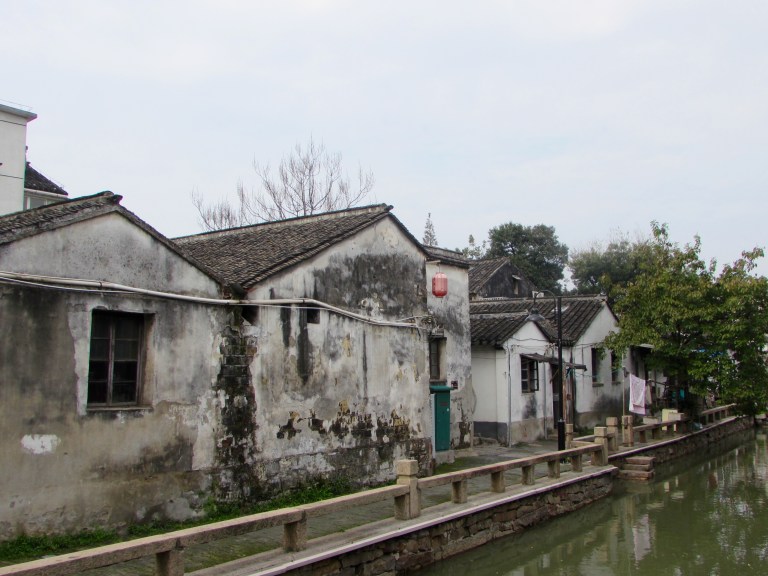
Our journey started as always with an early morning trip to the railway station. To punctuate the enormity of the city we’ve come to call home, our commute to the train station was twice as long as our ride from Shanghai to Suzhou! When we arrived, we traded a train seat for a subway seat and began our search for Mingtown Youth Hostel, which took a little trial and error to find (and holding the map right side up!). Luckily for us though, it sat on one of the most famous streets in the city: Pingjiang Lu, a cobbled lane that stretched along one the city’s many canals. After dropping our things off and taking a quick nap, we were on our way exploring the city.

IMG_6720
Some of the white-(not so) washed buildings that sat along Pingjiang Lu

Upon leaving the hostel it didn’t take long for us to discover the charms of Suzhou while we walked down Pingjiang Lu, taking in the beautiful scenery it created on the way to our first stop: the Humble Administrator’s Garden, which was humble in name only as one could spend hours exploring its sprawling grounds filled with flawless landscaping. The garden, much like many of the temples we have visited during our time here, offered us a rare shot at tranquility and an escape from the daily grind of the city. Upon entering the grounds, we were met with several different routes for exploration. The first path we chose, a secluded stone walkway snaking into a bamboo forest, led us directly to…a bathroom. To its credit, it was in a beautiful old building, but our second route was chosen more wisely.

IMG_6741
Entrance to Humble Administrator’s Garden

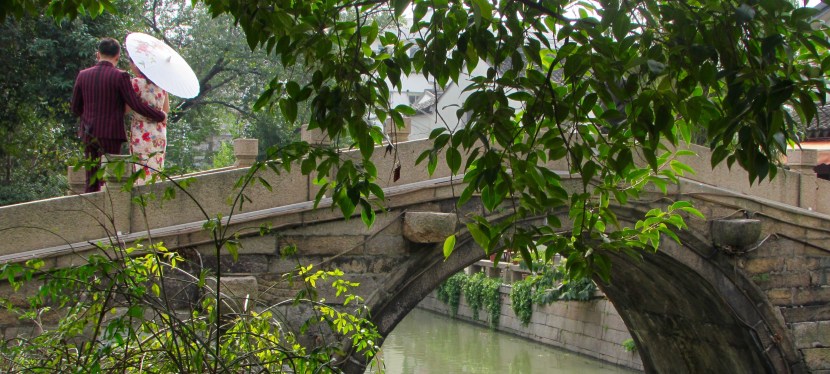
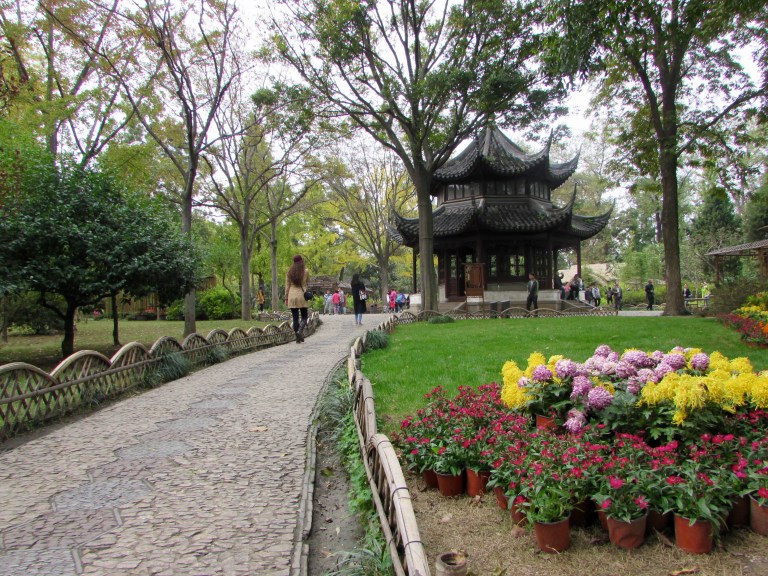
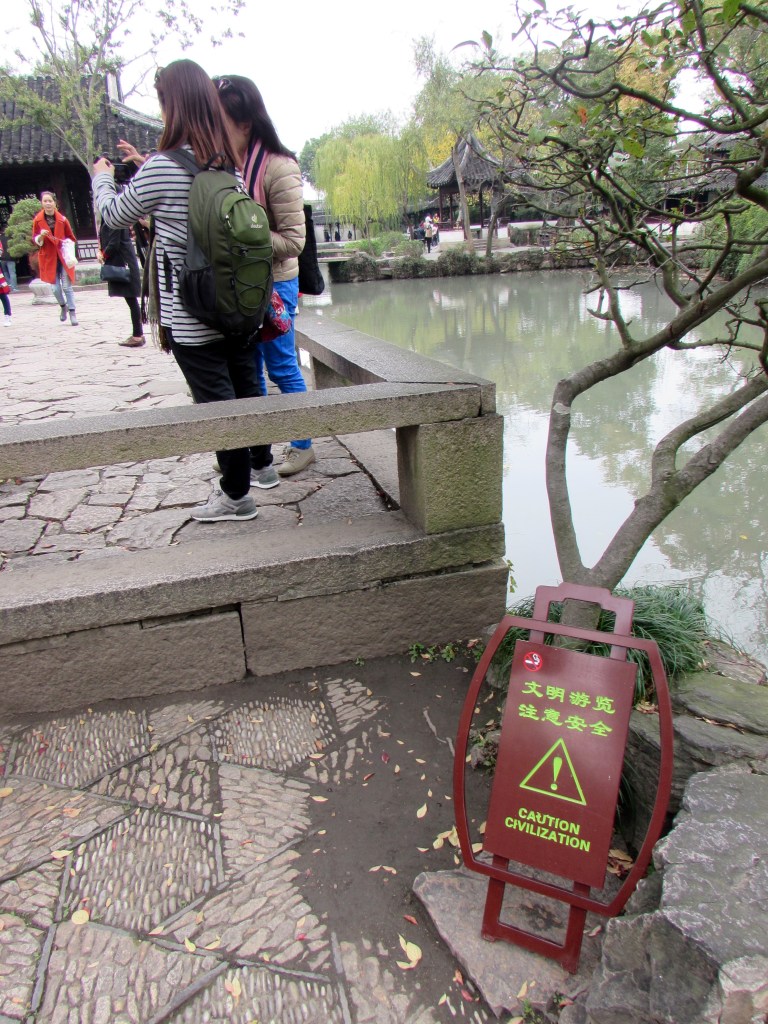
Shortly after starting down this path, we found ourselves in a quintessential Chinese scene: a pagoda rising up from the horizon in the distance, traditional gazebos dotting the hills of the grounds, and a pond criss-crossed with stone bridges, all surrounded by a nature-filled landscape dominated by weeping willows swaying in the breeze. We were brought back to reality by a sign that warned us of the looming danger of civilization, which, if you’ve lived in China before, you know is a fair warning! To fully enjoy the scene we perched ourselves on some pond-side stones, where we ate our lunch and watched as the falling autumn leaves collected in the water.

IMG_6755

IMG_6753
A picturesque scene in the garden

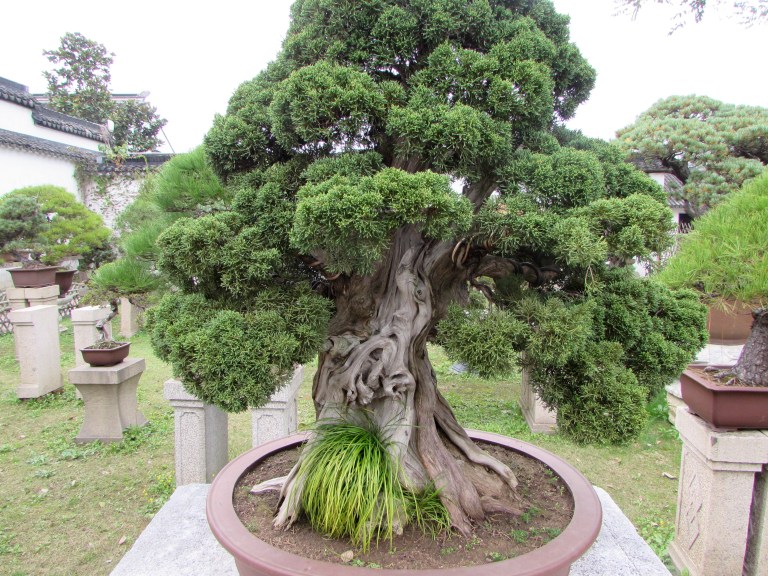
Our lunch was followed by a slow wander through the rest of the garden, making detours off the beaten path for different points of interest, among them a bonsai tree garden where each tree was its own optical illusion. To look at them was to expect a scale of enormity, but in reality they only climbed a mere two feet. Aiding in the illusion were small rocks made to look like mountains, a theme that carried on throughout the grounds even after the bonsai trees ended. After nearly two hours in the garden, our meandering eventually led us back to where we started, so we decided to move on to our next site—the Lion’s Forest Garden.

IMG_6795
One of the bonsai trees

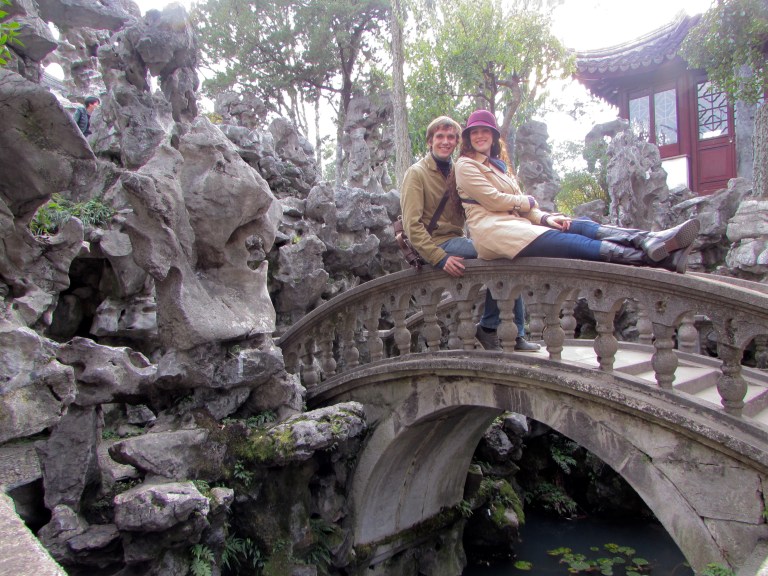
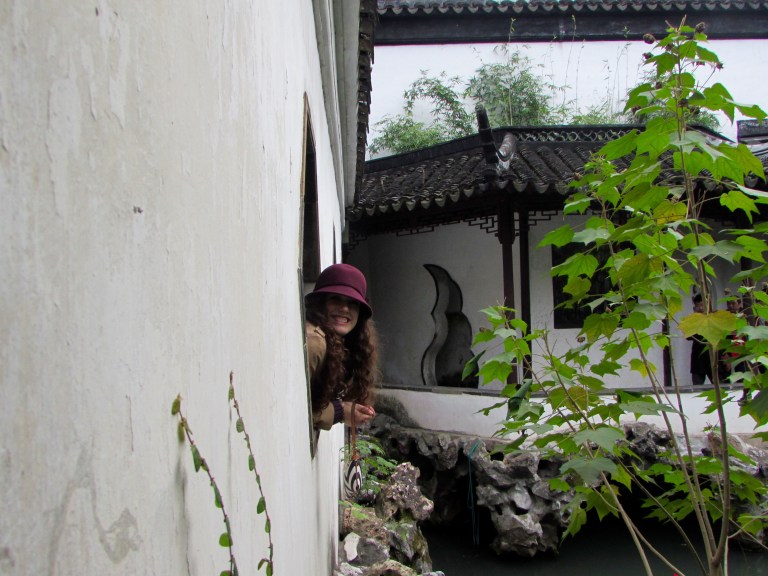
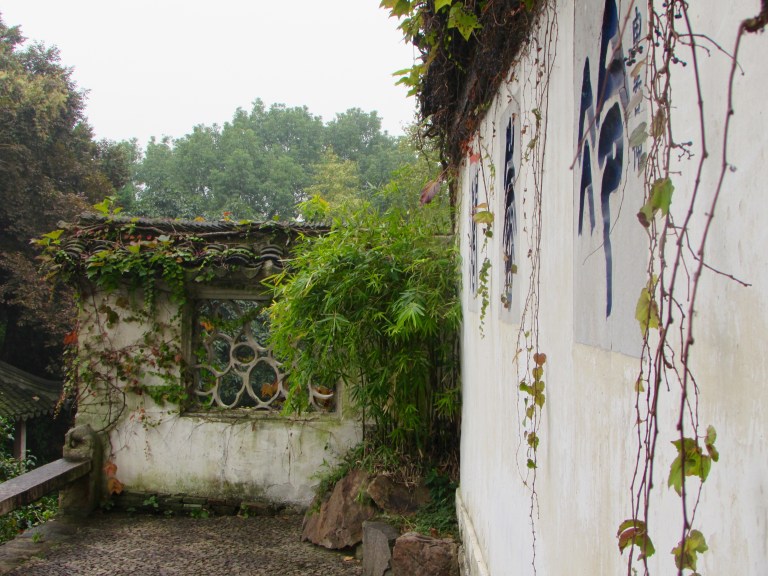
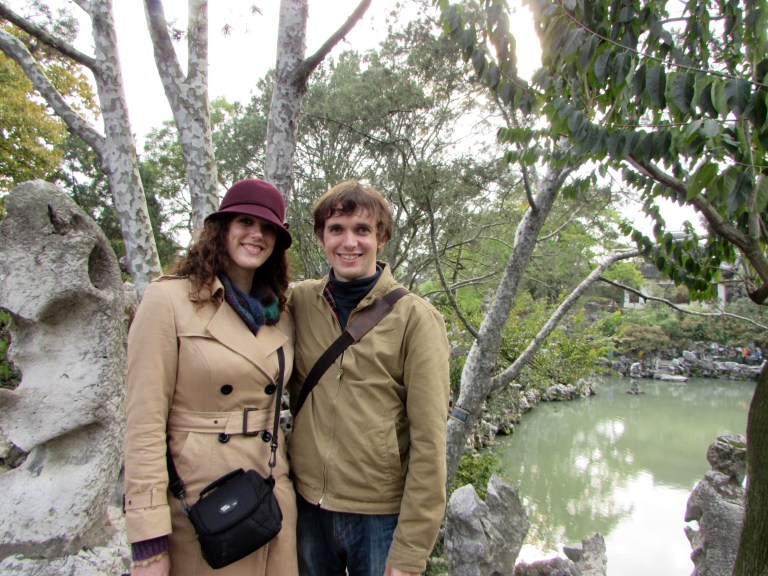
Although both shared the title of garden, the two were completely different. The latter was more compact and featured an area filled with large rocks; despite the numerous signs against it, we and many other tourists used the rocks as a personal playground to pose for pictures as the opportunities were too good to pass up. After getting our fill of pictures, we descended into the jagged hallway created by the rocks and emerged to find ourselves alongside a small pond. One great feature of the Chinese gardens we’ve seen so far is that they don’t follow any rules or pattern in terms of layout or architecture. We were hard pressed to find a window that was square, a door that was rectangular or a wall that stretched straight into the distance. This garden was no exception, as each turn offered something new and unexpected.

IMG_6899
Sitting amidst the forest of rocks at Lion’s Forest Garden
IMG_6935
Kate peeking out of a misshapen window

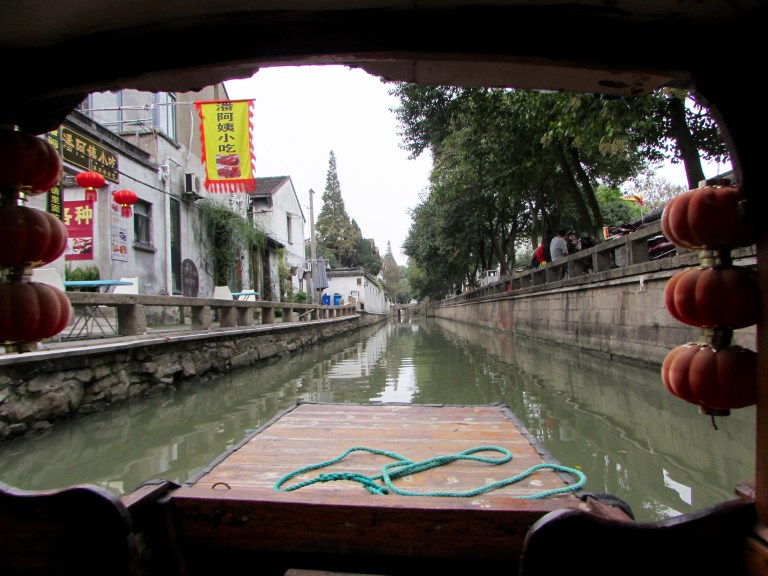
Though the beauty of the park didn’t wear off as we continued to explore, our energy level did and we decided to take advantage of the waning light with a boat ride down the canal near our hostel. The dim light of the twilight hours ended up creating the perfect atmosphere for the ride and a feeling of complete detachment from the world moving around us. About halfway into the boat ride, our “captain” began loudly singing Chinese folk songs. Though we couldn’t understand anything about the songs and the singing was more of a screeching cat than a serenading Sinatra, it added to the charm of the experience. After 40 minutes, we were steered ashore and embarked on our hunt for dinner.

IMG_6963.jpg
View of the canal from our boat ride

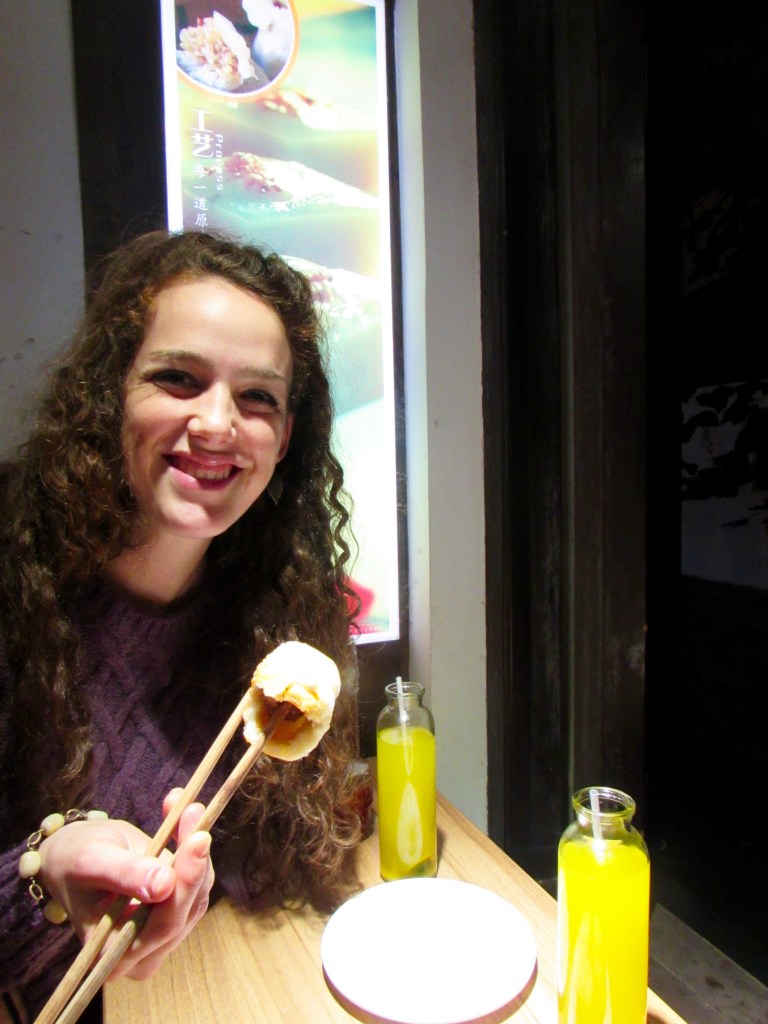
The restaurant we settled on sat alongside the canal with a beautiful view of the waterway which slowly began to fill with ripples from the oncoming rain as we watched it from within, which created a warm atmosphere for our dinner of dumplings and vegetables. As we stepped out into the night, the rain became less enchanting and more of a nuisance as we had to scurry back to our hostel without an umbrella. After getting back and suffering through an ice cold shower, we layered ourselves into bed and waited for the next day to begin.

IMG_7006
Eating dumplings while looking out at the canal

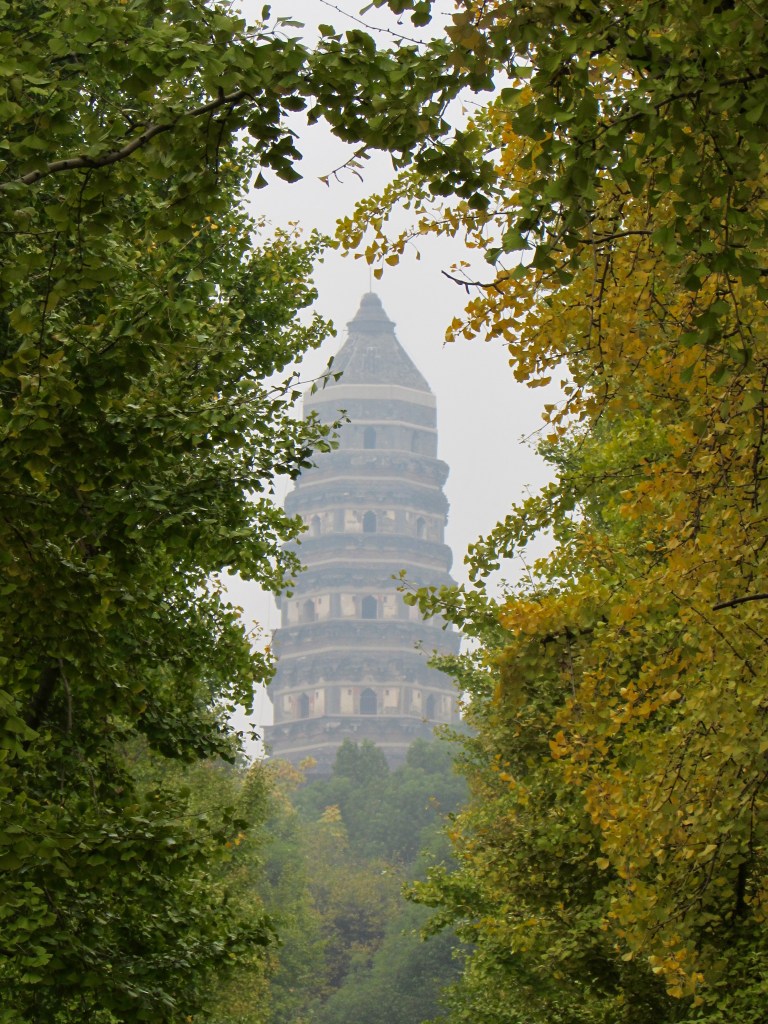
Our first stop on our second day in Suzhou was to Tiger Hill. Before going, we were hesitant to go to any place that featured ‘hill” in it’s name, fearing any sort of incline as our last trip took us up the side of an entire mountain at Huashan. A city bus dropped us off at the foot of the hill and we were welcomed with the sight of a 1,000-year-old pagoda that made the site a popular tourist attraction. As we approached the hill, our path was lined by trees whose leaves were seemingly stuck between their transition from summer green to autumnal yellow, giving them an almost lime green shade. The leaves framed the pagoda, which foreshadowed our entire experience in the park: a seamless coexistence between nature and man-made structures making it hard to imagine one being there without the other. One element that added to this mystique was the damp air and wet ground that had been a result of a recent rain shower that had passed just before we arrived.

IMG_7031
View of the pagoda through the trees
IMG_7054
The overgrown foliage at Tiger Hill

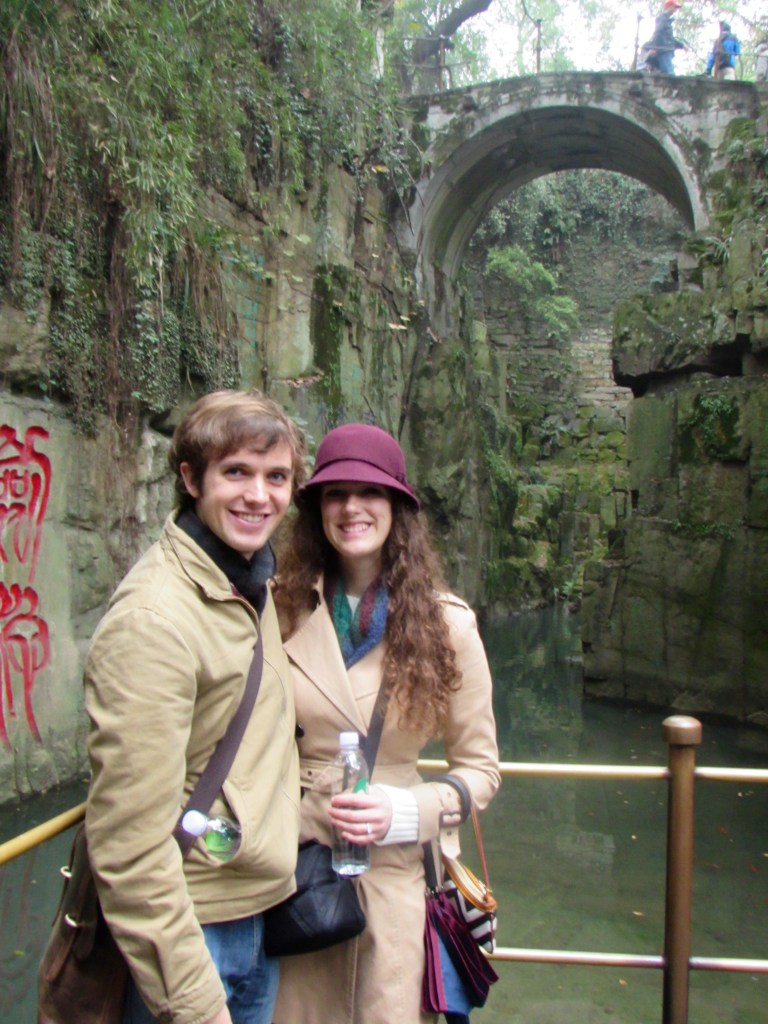
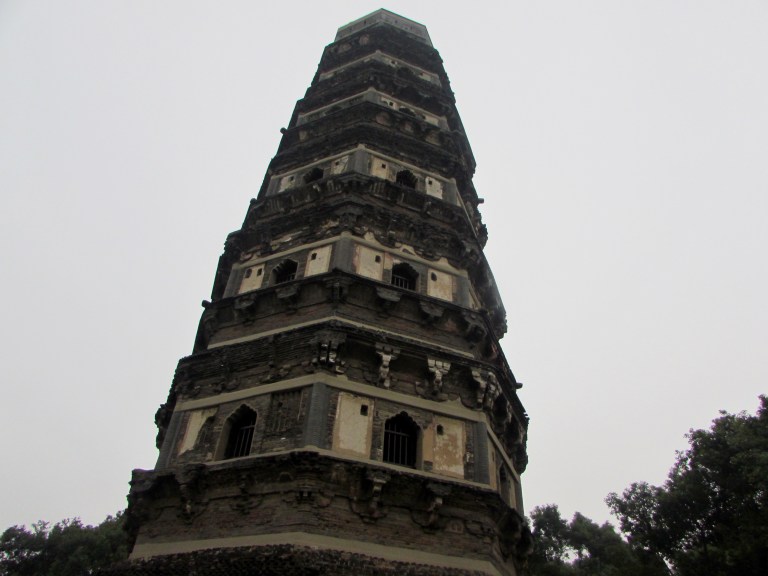
As we worked our way further into the park, we came upon a large, open area with a lily pad-strewn pond in its center surrounded by moss-covered rocks towering above. Among the many things to look at was a bridge that had perched itself on two of these rocks, creating a beautiful scene to accompany our hike to the top of the hill, which was surprisingly shorter than we had anticipated. Before we knew it, we were were gazing up at the pagoda, which we were pleased to find out was an original, not having been destroyed and reconstructed like countless other temples and pagodas throughout the country. It’s originality came at a cost though, as the wear and tear of time caused the tower to lean (like in Pisa), displacing it’s top by 2.5 meters from its base. A feature of it that became very obvious as we stood at the foot of the tower, staring slantedly up at it.

IMG_7069
Standing in front of the bridge
IMG_7087
A good picture showing the pagoda’s lean

After giving the tower its due contemplation, we slowly made our way back down the hill, soaking up the scenery once more as we descended. Once back in the city, we sought out a place for lunch. The search for the perfect place became drug out and, although we wanted something new, we settled for the restaurant where we had had dinner the night before. We were saved from the disappointment of repetition by a rather large and leggy centipede that scuttled out of our menu’s binding as we opened it. We left the restaurant as fast as our swift-footed friend had, which turned out to be a blessing in disguise as we found a great dumpling restaurant a little further down the the road whose menu thankfully featured a larger assortment of dumplings than insects.

After filling up on various varieties of jiao zi, we made our way through the rain to the Suzhou Museum. Sadly, our trip there was short-lived due to a combination of lethargy and a lack of exposure throughout our life to Chinese culture and history. While living in Spain, it was easier to digest the mountains of information packed into each museum and put everything we saw into a context having been brought up learning about Western history and culture. In China though, without that exposure, we’ve found the appreciation of it all to be much more difficult to come by. However short-lived our visit was, we still enjoyed the museum and all it had to offer outside of the traditional concept of a history museum such as it’s large, outdoor koi pond.

Our remaining time in Suzhou was spent napping on a table in our hostel’s common room waiting to leave for the train station. Walking along the canal for the last time on our way there, we knew we were going to miss the charms of the city. Living in Shanghai makes it difficult to experience the concept of traditional China. In Suzhou however, with its white-washed building walls accompanying tree-lined canals, rain-slicked cobblestone streets, and old buildings seemingly forgotten by time, the city made this concept infinitely more attainable.

IMG_6926
At Lion’s Forest Garden